
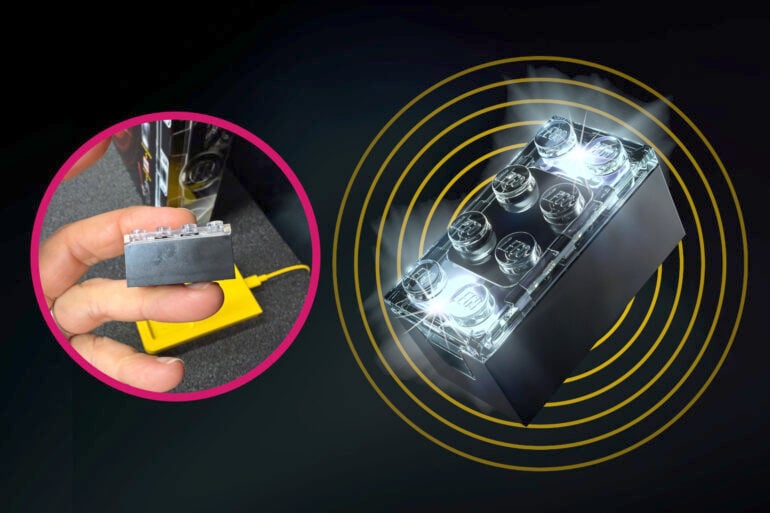
Yesterday, Lego announced something big at its first-ever CES keynote. Called the “Smart Brick”, it’s one of the biggest changes to Lego in its history.
Lego’s keynote kicked off with a short film about the history of Lego brick innovations, including the shift in minifigure types from the original 1975 figures that didn’t have arms or legs, to the ones we recognise today. Then, Julia Goldin, Chief Product and Marketing, came out on stage to say that this new Smart Brick was the next major innovation to the Lego system after the Minifig in 1978.
That’s a big call, given the huge number of evolutions to the Lego system over the years. Even the last 15 years have seen major changes, such as the Mini Doll, and technological forays into Mindstorms (robots with sensors), Ultra Agents (AR), Lego Super Mario (interactive figures), Vidiyo (AR again), Hidden Side (AR once more), light-up bricks, sound bricks, and far more.
But Lego seems more enthused by the Smart Brick, and is hyping it to a level that I haven’t seen with their other technological dabbles in the time I’ve been covering them. That alone is reason to give it a look. Luckily for Lego, in the hour or so I’ve spent with the Smart Play system, I can confirm that it, like everything, is awesome.
Kids are going to be obsessed. Adults will be obsessed.
Lego Smart Brick in action
Inside the Smart Brick is a silicon chip that’s smaller than one of the studs. This chip is packed with sensors, including accelerometers, and light and sound sensors. The bricks then interact with the built-in multicoloured LEDs and speaker, alongside an onboard synthesiser. That’s then paired with a Smart Tag that tells the Smart Brick what it’s supposed to be, such as an engine, duck, plane, train, lightsaber, or something Star Wars-y (which is the technical term). There are also Smart Minifigs, which can interact with the Brick.
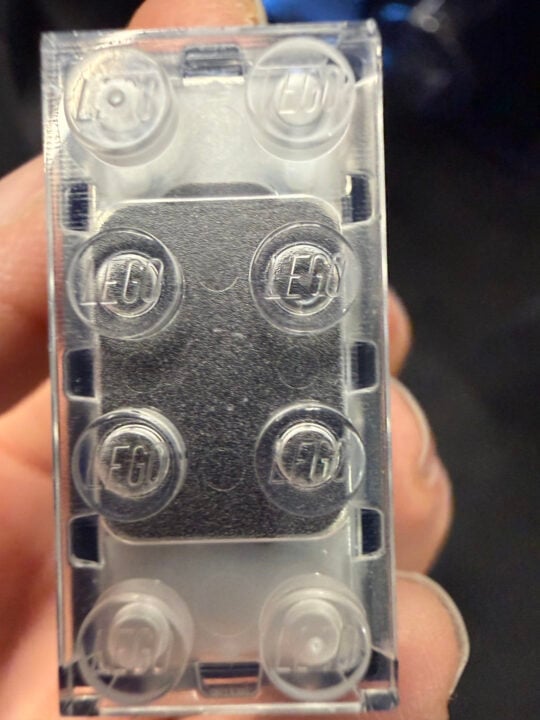

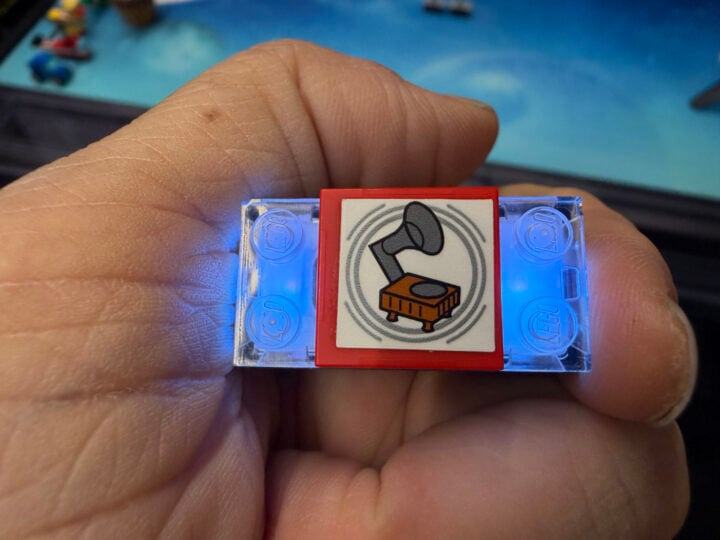
Most importantly, the brick doesn’t have any pre-recorded sounds. It’s all created in the moment using the on-board synthesiser, which means that once kids have a couple of Smart Bricks, all they need are more Smart Tags and Smart Minifigures (which contain RFID tags and no batteries, making them a much cheaper component).
The potential options for Smart Tags are limitless. In the demo alone, I saw loads of fun combinations. There were ducks, a dinosaur, a trophy that determines a winner based on how close things get to it, and a cupcake that prompts the ducks to sing happy birthday when you ‘blow’ its candles out.
The technology responds to different Minifigs in clever ways. I saw a police car trigger an alarm when the robber gets in, but play a siren when the police officer is in the driver’s seat.
What was cool was seeing how every adult in the room immediately turned into a happy child when flying around an X-Wing, making whooshing noises, shooting at a TIE Fighter. Everyone in the room giggled when putting Darth Vader near the brick played his entrance music. The lightsaber battle in the throne room made all the satisfying lightsaber noises, too. Honestly, I could’ve played with the Smart Bricks all day.
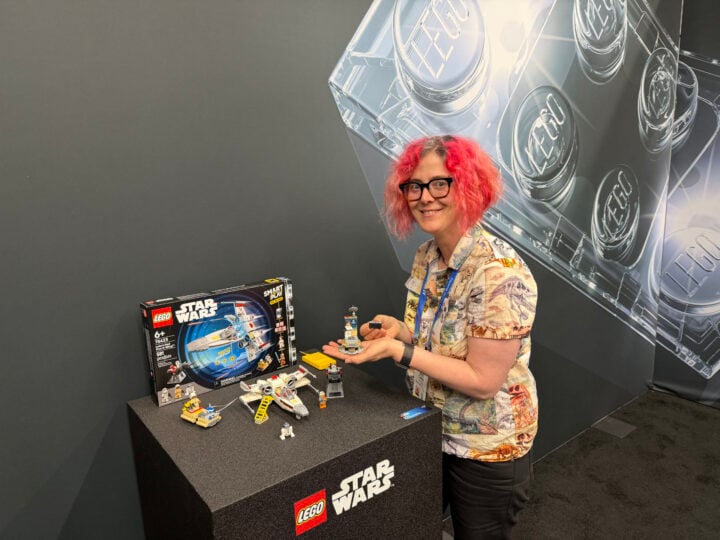

Yes, building these models looks like a lot of fun; there’s plenty of detail in there. But the Smart Play System ensures that more of the magic lives in the play after the figure is built. If a kid has an X-Wing Smart Tag, then no matter what they build and put that tag in, it will sound like an X-Wing.
I expected to find a limit on what could be imagined, enjoyed or played with, but it actually turned out to be thrilling. Having a T-rex flying around making spaceship noises was utterly delightful, and it means that anything can be a spaceship with enough imagination. If anything, it gives older kids more freedom and permission to break the rules of what a thing should look like without feeling silly by making the noises themselves.
How much will it cost?
Star Wars will lead the new Lego Smart Brick range, starting with three sets. The cheapest is the Darth Vader TIE Fighter set, which will cost $99 in Australia. Each set includes at least one Smart Brick, one Smart Minifig, and one Smart Tag. Pre-orders start on 8 January, before the sets arrive at retail in March.
- Lego Star Wars Smart Play: Darth Vader’s TIE Fighter building set (75421): $99.99
- Lego Star Wars Smart Play: Luke’s Red Five X-wing building set (75423): $149.99
- Lego Star Wars Smart Play: Throne Room Duel & A-wing building set (75427): $249.99
Everyone I spoke to at Lego emphasised that Star Wars is just the beginning. I suspect it won’t be long until we start seeing Creative Boxes coming with a bunch of different tags for kids to build using their imagination, and then using the Smart Play system to make it come to life.
If this goes well, I think we’re currently witnessing the next evolution for Lego. I can’t wait to see what happens next.
Alice Clarke attended CES 2026 as a guest of Lego and Intel.
The post Hands-on with Lego’s ‘biggest innovation since the Minifig’ appeared first on GadgetGuy.


0 comments:
Post a Comment