

Intel has just announced its brand new Panther Lake range of processors, known as Intel Ultra Core Series 3, at CES 2026. It follows on from the previous-gen Lunar Lake processors Intel launched in 2024. As the chip competition continues to heat up between Intel, AMD, and Qualcomm, the big focus this year is on faster, more efficient performance, and longer laptop battery life.
Notably, Panther Lake is Intel’s first system-on-a-chip (SoC) made using the company’s new 18A foundry process. It’s a pretty big leap in how processors are made that allows them to be more power-efficient, while still being powerful.
Intel’s new process uses RibbonFET, which is a new kind of transistor technology. It changes the shape of transistors to make them smaller and more efficient, effectively stacking ribbons on top of each other to save space. Another part of the process is PowerVia, which puts the power on the back of the die, so everything else can be on the front, which is different to how chips used to be made.
More configurations than before, and more efficient
Unless you’re building your own computers or work for a company designing computers, the fact that the Panther Lake chips are available in more die package configurations likely means nothing to you. But it does mean that PC makers will have more options for how they can use these chips at a wider variety of price points, in ways that are more targeted to certain groups of users.
On its own, this isn’t something you’ll see advertised in tech catalogues. But what the PC makers do next will be really interesting.
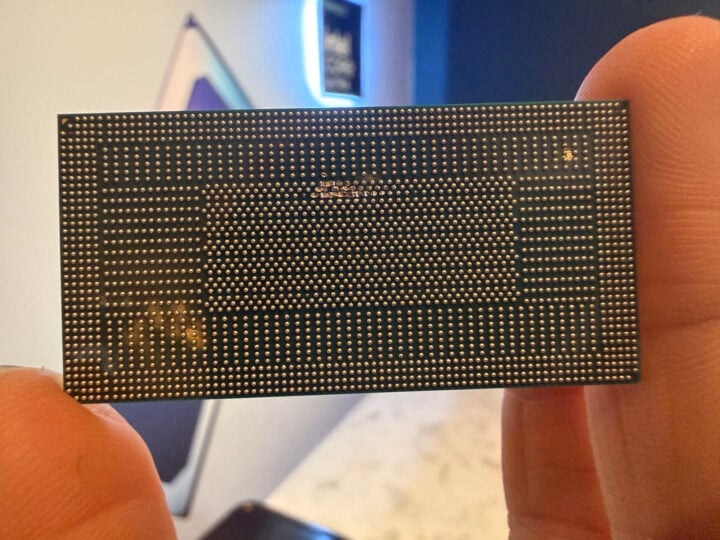
With Panther Lake, Intel promised up to 27 hours of battery life on laptops. That is so much battery life. Along with the advertised all-day battery life, Intel claims its new chips deliver up to 77 per cent faster graphics than Lunar Lake, and up to 60 per cent faster CPU performance.
It will likely be expensive to get PCs with the fastest chips, but the quoted performance gains are cool.
Of course, the US is having a bit of a time with tariffs, so it makes sense that these Series 3 Intel Ultra Core processors are being made there. It’s also notable, given that most of the world’s chips are made in Asia.
What does Panther Lake mean for you?
Intel shared a lot of information about its latest processors. There were specs, buzzwords, and promises of how generative AI will improve your life, just as soon as they work out how to make it accurate.
The thing is, though, that raw numbers don’t really tell you what that means in the real world. People are excited about the benchmarking numbers their PC can do when they’re buying it, or when they’re showing it off to their friends. But long after they’ve stopped checking the Geekbench stats, they’re stuck using these devices through which we run much of our lives.
So, with that in mind, I spent a few hours over the last couple of days playing with computers running on these brand new Panther Lake chips. These are some of the practical things I think will actually make a difference to the average user.
Better power efficiency
Intel’s new Core Ultra chips are a lot more energy efficient because they can move some processes to other parts of the chip (like shifting some of the display’s work from the GPU to the compute tile when it’s not doing anything wildly demanding) to conserve energy. It’s like how power walking instead of sprinting can sometimes be the faster way to travel a longer distance.
What that meant practically was that a laptop that had been running a YouTube live stream, a Zoom call and Slack at the same time since 9 AM still had more than half its battery life left by 2 PM. That signifies all-day battery life for power users, and several days of battery life for people who are just using a word processor and email.
That’s nothing new for Apple users who benefit from Apple’s walled garden approach, but it is very impressive given the complexities of the comparatively more open Windows platform.
This is really the upgrade that will make the biggest difference to the most people.
Better graphics and less time working on graphical tasks
A ridiculously powerful (yet relatively low power-using) integrated Intel Arc GPU on the SoC sounds like something that’s aimed towards gamers, because it is. But it’s also good for video editors at all levels.
The demo that we saw used DaVinci Resolve to change the colour of the jacket a skateboarder was wearing on a 60fps video. The guy running the demo clicked maybe six things, and suddenly her jacket was blue and stayed blue, with red popping in only a few times around the edges. It was all rendered and ready to scrub through within milliseconds.
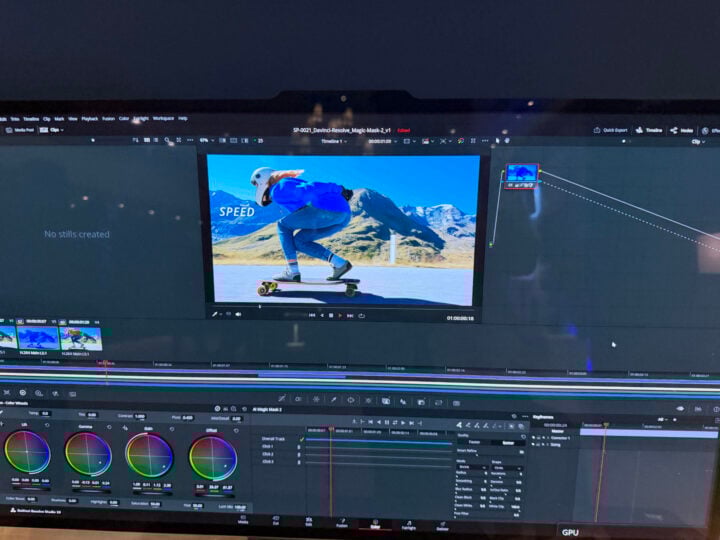
That means that photographers and videographers will be more able to do editing in the field. It also means that it’ll be a bit easier and less frustrating to edit that presentation for work, or edit that video for your friend’s birthday.
Plus, even people who don’t play games enough to justify getting a gaming laptop with a discrete GPU will still be able to get excellent gaming performance in a more portable laptop. It’s great news for casual players (depending on pricing and availability, of course).
The good parts of AI
While you would still very much die of alcohol poisoning if you made a drinking game out of hearing the AI buzzword at CES this year, there does seem to be less of an emphasis on the ‘AI PC’.
Don’t get me wrong, generative AI was still a huge part of the Intel press conference, and the demo I went to included a demo on how you could use the Airgap AI app trained on your own data and documents to find information (it was accurate in almost half the queries it was given, which is pretty good for generative AI).
It was also shown how the PC could access Perplexity (it had similar issues with being factual). But the focus was less on “this is an AI PC!” And more on “this is how the non-generative parts of AI can make a meaningful difference to your life”, and having a powerful onboard neural processing unit (NPU) is a huge part of that.
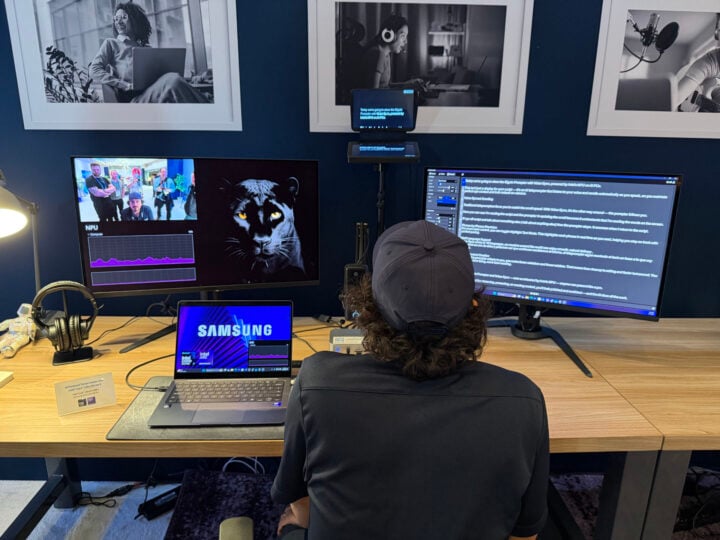
One of the demos used Elgato’s AI teleprompter with voice sync, running on an Intel Core Ultra system. Most teleprompters work by automatically scrolling at the pace the director or producer wants you to read at. What makes this one special is that it syncs to the speed of the narrator, following what’s being said, pausing when the speaker goes off script, and automatically starting again.
It was able to follow the person doing the demo in both English and Spanish, and it was a really practical example of how an NPU could be useful for someone who had to give a presentation at work and didn’t want to have to manually scroll their notes to be more natural.
The power of that NPU also adds extra frames to games to give a smoother picture. It’s practical, and something that can actually make a difference for people.
Alice Clarke attended CES 2026 as a guest of Lego and Intel.
The post What do Intel’s new Panther Lake chips mean for users? appeared first on GadgetGuy.


0 comments:
Post a Comment