
A few months ago, I attended a robotic vacuum launch where they discussed the yearly advancements in technology, to the point that robotic vacuums now use the same technology in self-driving cars to help navigate around your home.
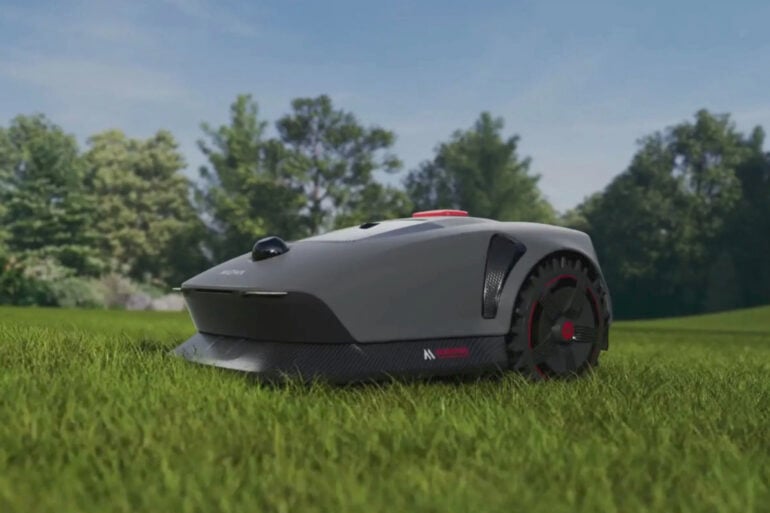
I saw 2025 as being the year for robotic vacuums, and I anticipate that 2026 will be the year for robotic lawnmowers. To that end, I recently took a look at the Mova 1000 robot lawnmower to understand if this new breed of mowers is up to the task.
To test the Mova 1000, I decided not to use my lawn but instead my parents-in-law’s lawn. They currently pay a family member $100 each time they mow their lawn. The Mova usually retails for $1,999, which means this robot would pay for itself in 20 cuts.
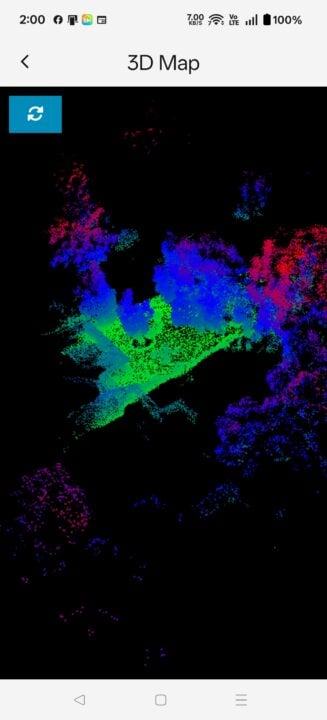
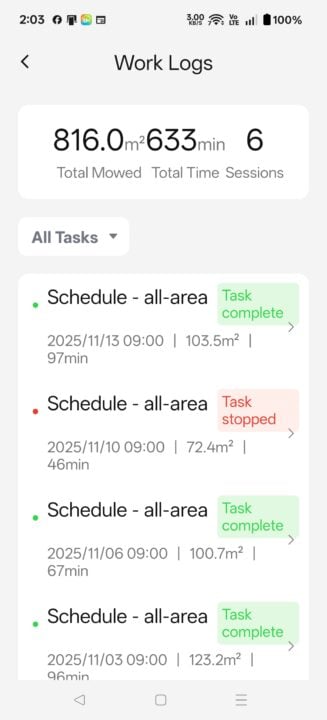
My mother-in-law has named the robot “Toby”, and she gives me regular updates on what Toby is up to. I can see we will have to buy Toby as she has become very attached. I do not, however, need the updates as I can see not a camera view from Toby but rather a map of the mowing area, a location and a log of what Toby has been up to on the Mova app from my house. Toby also calls me for help when his base station has mistakenly been disconnected.
The adventures of Toby the robot lawnmower
To get the Mova started, you assemble the base station, charge the mower, and set up your app. You then manually control the mower around the boundary of the lawn. Once you return to the start, a mowing area is established. A no-go zone, such as a garden bed, is set up within the mowing area in a similar fashion.
You can set up additional mowing zones using the same technique, as well as mapping the path the mower must follow to commute. If this distance is too great, Mova recommends purchasing an additional charging station. You will need access to mains power for each charging station.
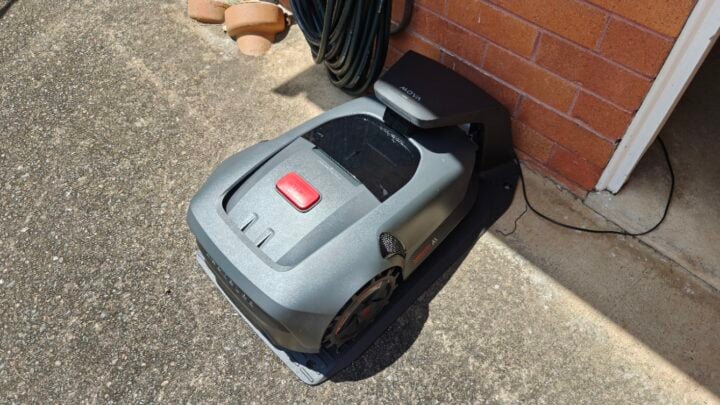
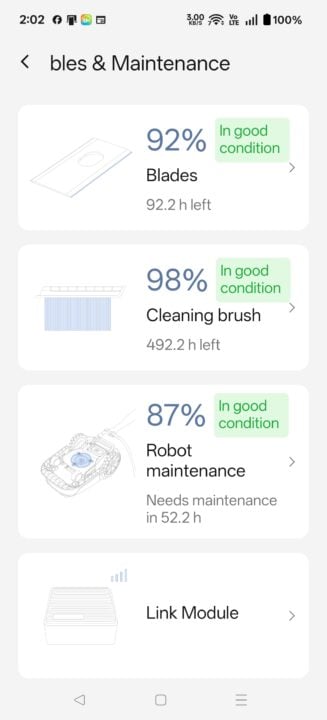
The mower works by regularly cutting the lawn, in this case, every second day. Razor blades, which must be replaced regularly ($39 for 12 blades; uses four and should last a year), trim the tips of the grass and let the clippings fall to be mulched. The app keeps a record of mowing time and will recommend when blades need to be changed, as well as indicate whether you need to clean the camera or the cutting deck.
The robot’s high-tech radar not only accurately maps your garden for navigation, but also ensures the mower does not approach animals, people, or outdoor objects like a play set or outdoor furniture. Beyond its built-in smarts, it also has a big red stop button on the top. This technology does not require any guide wires or a GPS base station.
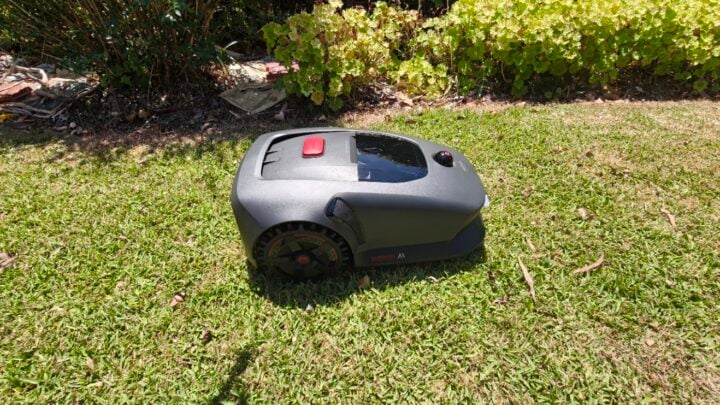
Mow heights and custom mowing patterns can be adjusted if you want to customise how your lawn looks, but for me, I want a lawn that looks neat, and the Mova certainly does that. Being super quiet in its operation, you can even have it mow at dawn and dusk so the lawn mower is not in the way during the day. Mova says the mower will work up to a 45-degree incline. A rain sensor will send the mower back to its dock during rain to improve cut quality.
What robot mowers will not do is edging. The whipper snipper will still need the occasional run. My mother-in-law has come up with a solution in her garden long before Toby came on the scene; she uses Roundup to kill the grass around the edges.
Aside from the Mova 1000 my family tried, there’s also a cheaper $1,799 Mova 600 robot lawnmower, which has a 600 square metre mowing capacity. This will suit most suburban Australian lawns.
With the Mova 1000, you get a robot that supports up to 1000 square metres and has a larger battery, faster charger and more aggressive drive wheels. An optional garage or charging station cover is available for $139, which will help protect the unit.
The post My family grew fond of the handy Mova 1000 robot lawnmower appeared first on GadgetGuy.


0 comments:
Post a Comment