Two new creative appliances have just landed in Australia: the Cricut Joy 2 and Cricut Explore 5, with both adding more tools, materials, and guidance to kickstart craft projects.
The Cricut Joy 2 is the sequel to the brand’s smallest cutting machine, made for creating your own labels, cards, and decals. Priced at $249, the Joy 2 comes as part of a bundle that includes an assortment of cardstock, vinyl, transfer tape, and iron-on sheets out of the box.
New to Cricut’s upgraded compact cutting machine is the ability to make fully coloured stickers. Its “Print Then Cut” sensor can recognise printed images and precisely cut around them, making the customised stickers possible.
Another upgrade comes in the form of the Cricut Joy 2’s ability to cut more materials. Cricut advertises compatibility with “75+” materials, up from the original Joy’s (and the Joy Xtra’s) 50+.
Launching at the same time, the Cricut Explore 5 is a slimmer iteration of an appliance that can do all sorts of cutting and design projects, including customised clothes. It’s 30 per cent smaller than the previous model, taking up less space.
In Australia, the Cricut Explore 5 costs $449 for the Essential Bundle, including many of the same materials as the Joy 2, albeit in larger sizes. Both appliances hit stores, including Spotlight and Officeworks, on 6 March.
Across Cricut’s entire range, the company has also updated its Design Space app. It’s a platform that helps control each device, including a library of designs and instructions for different crafts.
New to the updated platform are “Guided Flows” to help walk Cricut users through projects step-by-step, including what materials and tools they need. When using one of these guides, projects automatically apply the size of the selected medium (i.e. shirts or mugs), providing a preview of the end result.
A lot has been mentioned about Samsung’s new hardware, namely the impressive Privacy Display on the Galaxy S26 Ultra. But a lot of the new stuff this year is software-driven, like the Photo Assist image editing tool that relies on generative AI.
I tried Photo Assist during an early hands-on session, and it’s quite surprising how naturally it works. For those not confident in using traditional editing software, it makes it easy to move subjects while also adding subtle shadowing to retain a natural look.
One of the demos I saw let me add more drinks to a photo of a Korean buffet just by using a text prompt. Photo Assist did a good job of filling in the negative space with some rather realistic-looking beverages. It’s a pretty neat feature, and you can see it in action via this video.
Valens Quinn attended Galaxy Unpacked in San Francisco as a guest of Samsung Australia.
Almost identical to its predecessor, yet significantly worse in a few key ways, the Motorola Moto G57 is one to avoid.
As technologies mature, it’s only natural that each new release becomes evolutionary rather than revolutionary. When it comes to smartphones, you don’t expect leaps and bounds – each year’s new model is typically only an iterative upgrade on its predecessor.
Motorola’s broad range of handsets has been a pretty good example of this over the years, which is why it’s a surprise to see that the new $299 Motorola Moto G57 fails to make any headway on last year’s $299 Motorola Moto G56. Actually, it’s a major step backwards in terms of ruggedness, expandability and software support, which simply isn’t good enough.
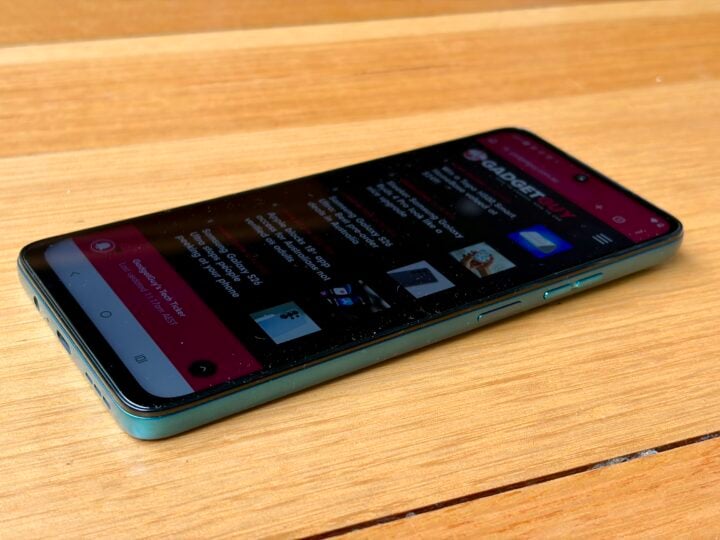
Apart from the fact that it comes in a new range of fancy Pantone colours, the Motorola Moto G57 is indistinguishable from last year’s Moto G56. In turn, the G56 offered a few improvements on the old Moto G55, as it did on the Moto G54.
The new Moto G57 sticks with a 6.7-inch, 20:9 aspect ratio to ensure it’s tall but not too unwieldy. It’s still a plastic frame with a vegan leather back.
At first glance, the Motorola Moto 57 is a carbon copy of its predecessor. Image: Adam Turner.
It retains the Moto stock standard configuration of a well-placed power button on the right, incorporating the fingerprint reader, with volume buttons above.
The SIM card slot remains on the left, supporting one nanoSIM and one eSIM, but you lose the added advantage of microSD support for expanding the onboard storage.
Look closer, and it’s the same 2400 × 1080-pixel LCD panel, although it now boasts a High Brightness Mode of “up to 1050 nits”. This is only a smidgen brighter than the Moto G56’s 1000 nits, but still not enough to support HDR watching Netflix.
The rear camera is still dual lens, with the same 50 MP Sony main shooter that still lacks optical image stabilisation. It’s accompanied by an 8 MP ultrawide, along with a depth sensor and flash. Around the front, the selfie camera remains 32 MP.
Across the bottom of the handset, Moto G57 sticks with USB-C 2.0 30 W TurboPower charging, with no AC charger in the box. You’ll also find an old-school 3.5 mm headphone jack.
Motorola still includes a basic transparent protective case, while sticking with Corning Gorilla Glass 7i and MIL-STD 810H6 ruggedness.
One major disappointment is that it abandons the Moto G56’s IP68/IP69 design, which could survive a serious dunking and blasts from high-pressure water jets. Instead, the Moto G57 dials it back to IP64, which means it’s only splashproof and less likely to survive misadventure.
Motorola Moto G57 specifications and price
Display size
6.7-inch, 20:9 aspect ratio
Display resolution
2400×1080 pixel, 391 ppi
Display technology
LCD
8-bit colour
Refresh rate: 120 Hz8
Touch sampling rate: 120 Hz
Water Touch
High Brightness Mode: up to 1050 nits
Display Colour Boost
Bands
2G GSM, 3G WCDMA, 4G LTE, 5G Sub-6
Chipset
Qualcomm Snapdragon 6s Gen 4 (4nm) Mobile Platform with 4×2.4 GHz Cortex-A78 + 4×1.8 GHz Cortex-A55
The Moto G57 ships with Android 16 and minimal bloatware thanks to Motorola’s Hello UX. Yet when it comes to operating system updates, you get none. Nada. Zip.
That’s right, Motorola offers absolutely zero Android OS updates. At least it still throws in 2.7 years of bi-monthly security updates and a two-year warranty, but you miss out on the security and feature improvements of Android 17, which you’d get from other smartphone makers, even at this price range.
In comparison, Samsung’s similarly-priced Galaxy A17 gets an impressive six years of operating system updates and six years of security updates. Meanwhile, the Oppo A5 5G receives three Android OS updates and six years of security patches.
Keep in mind, Motorola’s lack of OS updates for the Moto G57 is not a technical limitation of the hardware; it’s a business decision. When Motorola restricted the last batch of budget Moto handsets to only one Android OS update, it told me the decision was “based on value proposition” rather than a hardware issue.
Reducing its support obligations to zero OS updates and downgrading the ruggedness are presumably some of the ways that Motorola has managed to avoid a price increase from last year’s G56.
It’s a shocking way to treat customers and puts them at unnecessary risk, considering that budget handset buyers almost certainly intend to hang on to their phone for more than 12 months. They’re also likely to be less tech-savvy users who are more vulnerable without software updates.
The Motorola Moto G57 won’t get even a single Android OS upgrade.
Looking under the bonnet uncovers one of the Moto G57’s few hardware changes, with Motorola swapping out MediaTek silicon for Qualcomm. It has also switched the IMG BXM-8-256 GPU for the Qualcomm Adreno 710. These sound like a step up, but wait until you see the benchmarking results before you get too excited.
Meanwhile, you’re still limited to 4 GB of physical RAM, although it’s now expandable up to 12 GB with RAM Boost, rather than 8 GB. As for onboard storage, you’ve still got 128 GB, but the SIM card slot no longer accepts a microSD card for expanding that.
When it comes to bands, the Moto G57 supports Australia’s sub-6 GHz 5G networks but not faster millimetre wave 5G, as you’d expect at this price point. It’s accompanied by Wi-Fi 5 and Bluetooth 5.1.
To keep things chugging along, you’ve got the same 5200 mAh battery, which should easily be able to go for 24 hours before recharging if you don’t push it too hard.
If you’re looking around online, don’t get the Moto G57 confused with the Moto G57 Power, which packs a much bigger 7,000 mAh battery but isn’t offered in Australia.
Quality
The switch from MediaTek to Qualcomm silicon has been a mixed blessing, with Geekbench 6 results of 1,002 single-core, 2,733 multi-core and 1,798 GPU OpenGL. That’s a slight step down from the G56’s 1,039 single-core, but a step up from its 2,304 multi-core (the G56 wouldn’t run the OpenGL test).
All that is enough to muddle through simple day-to-day tasks, but the handset does feel a bit sluggish at times.
It’s a similar story when it comes to photography. The results are mediocre, although somehow a slight improvement on the old Moto G56 I dug out of its box (which is still running Android 15).
The Moto G57’s rear camera (left) is a clear improvement on the G56 (right), which likely comes down to software and image processing. Images: Adam Turner.The Moto G57’s selfie camera (left) also offers a slight improvement on the Moto G56 (right), but still isn’t much to get excited about. Images: Adam Turner.
Who is the Motorola Moto G57 for?
While Motorola can be commended for avoiding a price rise, cost-cutting measures mean the Moto G57 is less rugged, less expandable and less supported than its predecessor. Of all these shortcomings, it’s hardest to forgive providing zero Android OS updates, and hopefully, there is enough pushback that Motorola is shamed into doing better next time.
Last year, it felt like the mediocre $299 Moto G56’s primary job was to make the $499 Moto G86 Power look fancy and the $199 Moto G35 feel affordable. This time around, it feels like the mediocre $299 Motorola Moto G57’s job is to see how much Motorola can strip away and expect people not to notice.
It might’ve come a month later than usual, but Samsung followed through on its yearly launch cadence, announcing the Galaxy S26 range in San Francisco overnight. Paired with a new set of buds, Samsung’s new phones look familiar, with a lot of the heavy lifting left to AI features.
Of the lot, the Galaxy S26 Ultra was the standout, gaining an eye-catching Privacy Display feature that obscures the screen from unwanted onlookers. Samsung also announced the Galaxy Buds 4 range, led by major audio improvements to the flagship Galaxy Buds 4 Pro model.
As expected, given current economic factors, there were some price increases along the way. To help offset that, there are some compelling Galaxy S26 pre-order deals to help soften the blow.
As for everything else, read on for all the major announcements from Samsung’s latest Galaxy Unpacked event.
Price increases across the board
Amidst the backdrop of a global memory shortage, more expensive consumer technology was always on the agenda. One of the first major examples came courtesy of Samsung, with price increases across the entire Galaxy S26 range.
$50 more for the 256GB Galaxy S26 Ultra isn’t too steep a hit, but the next tier down is where it’s particularly noticeable. Compared to last year’s phones, the Galaxy S26 and S26+ are $150 pricier for the base storage configuration. Look at the next storage option, and you’ll see a $250 price hike.
No matter which way you slice it, that’s a steep increase.
Galaxy S26 Ultra Privacy Display stops snooping
Image: Samsung.
Samsung’s 2026 flagship phone improves in all the expected areas, while keeping some things the same. It has faster processing power, relying on the Snapdragon 8 Elite Gen 5 chipset to power its on-device smarts.
Privacy Display is the S26 Ultra’s biggest addition, a technology that helps obscure the screen when out in public. Often, the people who buy top-end phones use them for work, so the security of confidential files is a concern. Exclusive to the Galaxy S26 Ultra, Privacy Display makes it nearly impossible for passersby to read the screen.
When the feature is enabled, only the person viewing the screen head-on can see the displayed contents clearly. Everyone else sees the equivalent of a tinted window, with Samsung’s feature concealing the screen. People sitting next to you on the bus, or anyone peeking over your shoulder in public, can’t see a thing.
S26 range doesn’t support Qi2, but there are options
Image: Belkin.
Some punters hoped that Samsung would add native Qi2 wireless charging support to the new Galaxy S26 devices. They were partially let down by the lack of magnetic technology on show, but at least the S26 Ultra gained faster wireless charging speeds.
Fortunately, for prospective Galaxy S26 owners eager to use magnetic chargers, there are some workarounds. Samsung sells a magnetic charger that supports 25W wireless charging speeds on the S26 Ultra, but you’ll need a compatible case to benefit from the magnetic alignment.
Overnight, Belkin announced a range of accessories for the latest Galaxy phones, including a Qi2 charging dock capable of powering three devices simultaneously. To take advantage of the magnetic component of Qi2, Belkin’s Sheerforce cases include built-in magnets. When fitted with one of the cases, you can slap one of the Galaxy S26 phones on a Qi2 charger and not worry about alignment.
Sleeker Galaxy Buds 4 range steps up quality
Image: Samsung.
Samsung usually waits until midway through the year to announce new earbuds. The Galaxy Buds 3 Pro came out in July 2024, alongside the Z Flip 6 and Fold 6 phones. This year, Samsung decided to launch the Galaxy Buds 4 Pro and Buds 4 earlier, alongside its flagship S26 range.
Now with more compact stems and a nice brushed metal finish, the Galaxy Buds 4 look more stylish than the previous-gen earbuds. Most importantly, the Galaxy Buds 4 Pro have a larger woofer and better active noise cancellation, designed to improve the listening experience.
Samsung’s latest Galaxy Unpacked showcase lifted the lid on the new S26 Ultra, the brand’s flagship phone for 2026. It’s more powerful, has better cameras, and an eye-catching display that can prevent onlookers from snooping. If you want to find the best way to pre-order a Samsung Galaxy S26 Ultra in Australia, you’ve come to the right place.
Getting your hands on the latest and greatest handset doesn’t have to cost a big chunk of money up front. Thanks to various telco plans and trade-in deals, there are several ways you can make the upgrade cheaper.
Most of the Galaxy S26 Ultra pre-order deals run until 10 March, so read on to find out how you can save money on Samsung’s next top phone. You’ll also find some good deals on Samsung’s new Galaxy Buds 4 range.
Samsung Galaxy S26 Ultra price
Starting at $50 more than last year’s Galaxy S25 Ultra, the S26 is slightly more expensive when looking at an outright purchase.
$2,199 (256GB)
$2,499 (512GB)
$2,949 (1TB)
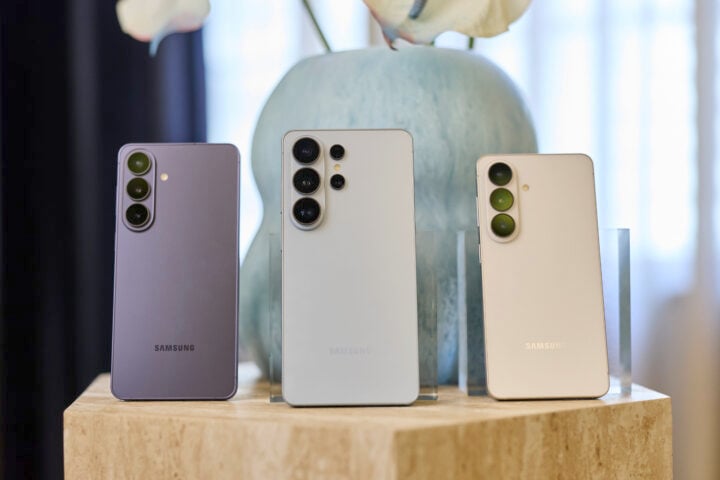
From left to right: Galaxy S26+, Galaxy S26 Ultra, Galaxy S26. Image: Samsung.
If you don’t think you need to go all the way to an Ultra, here’s how much the Galaxy S26 and Galaxy S26+ cost outright:
Samsung Galaxy S26
$1,549 (256GB)
$1,849 (512GB)
Samsung Galaxy S26+
$1,849 (256GB)
$2,149 (512GB)
As you’ll see further on, there are a few different ways you can save money when pre-ordering each phone.
Samsung Galaxy S26 Ultra pre-order deals
Samsung’s online store
In addition to the Silver Shadow and Pink Gold colours exclusive to Samsung’s online store, there are a few more upsides to pre-ordering the Galaxy S26 Ultra directly from the brand.
From now until 11:59 PM AEDT on 10 March, pre-ordering any Galaxy S26 device nets you $300 towards a storage upgrade. In the case of the S26 and S26+, where there’s a $300 difference between storage variants, it acts as a free storage upgrade.
At the same time, Samsung also offers a 10 per cent discount on either of the new Galaxy Buds 4 or Buds 4 Pro earbuds, plus a 30 per cent discount on various accessories.
If it’s just the buds you’re after, pre-ordering either model with the code ‘BUDS4YOU’ takes a bit of money off. It brings the Galaxy Buds 4 Pro down to $319, and $249 for Galaxy Buds 4. In the same order, you can also get 30 per cent off Buds 4 accessories.
Telstra
Kicking off the telco deals, Telstra’s main deal is based on trading in your existing phone. For the Samsung Galaxy S26 Ultra specifically, Telstra offers up to $1,000 off when you pre-order the phone on a payment plan, which includes a trade-in bonus on top of the existing value of your phone. The deadline on that one is 10 March at 11:59 PM AEDT.
Telstra also has a pre-order deal across the Galaxy Buds 4 range. Pre-ordering the Galaxy Buds 4 Pro through Telstra discounts the earbuds by $125, while the Buds 4 get an $80 discount. This deal lasts a bit longer than the Galaxy S26 offers, valid until 7 April.
Optus
Optus has one of the longest-running Galaxy S26 Ultra pre-order deals, giving you until 8 April to pull the trigger.
Pre-ordering the S26 Ultra through Optus on an eligible plan saves $700 on payments. You can also save $500 on the Galaxy S26 and Galaxy S26+ via the same method.
Like Telstra, Optus also offers a pre-order discount on the Galaxy Buds 4 range, although it’s not quite as deep. As long as you get your pre-orders in, the Galaxy Buds 4 Pro are $80 off through Optus, while the Buds 4 are $50 off.
Vodafone
Vodafone’s Galaxy S26 Ultra pre-order deal is similar to Optus’, in that you save money when connecting to an eligible plan. You don’t have as long to think about it, though, with the deal ending on 10 March at 11:59 PM AEDT.
It starts with a $700 saving on the Galaxy S26 Ultra, followed by a $500 saving on the Galaxy S26+, and a $400 saving on the base S26 model. Plus, if you trade in your existing phone, Vodafone will add a bonus $300 of value on top of what the device is already worth.
As for the buds, Vodafone offers $160 off the Galaxy Buds 4 Pro and $100 off the Buds 4. If you want Samsung’s new earbuds, Vodafone seems like the early winner.
JB Hi-Fi, Harvey Norman, and Officeworks
Across the major retailers, pretty much all the heavy hitters offer the same $300 storage upgrade bonus as Samsung. Then there are a few specific deals per retailer.
Starting with JB Hi-Fi, the tech franchise offers $1,800 off a Galaxy S26 Ultra when signing up to its $99 mobile plan over 24 months. As an FYI, JB Hi-Fi’s mobile plans run on the Telstra network.
Providing a slight variant, Harvey Norman’s deal includes a Galaxy S26 for $0 by signing up to the store’s $69 Optus-powered mobile plan over 24 months.
Officeworks, on the other hand, doesn’t have a regular discount as such. Instead, its pre-order deal is 20x bonus Flybuys points when you buy any Galaxy S26 phone.
Across all major retailers, the Galaxy Buds 4 Pro are discounted to $318 until 18 March, while the Buds 4 temporarily cost $248.
GadgetGuy occasionally uses affiliate links and may receive a small commission from purchased products.
Every few months, Aldi’s eclectic Special Buys aisle has a super-cheap robot vacuum that people all around Australia go nuts over. That time has come once again, with Aldi gearing up to sell the Ecovacs Deebot Neo 2.0 at the end of next week.
Like previous sales, Aldi alternates between selling the Neo 2.0, which contains just a robot vacuum, and the Neo 2.0 ‘Plus’, which includes an auto-empty station. This sale includes just the robot vacuum, but that means the price is even lower.
Taking a look at the specs for a moment, the Deebot Neo 2.0 includes up to 5,000Pa of suction power and a battery that lasts up to 180 minutes between charges. That’s all pretty good for a robot of this price, making it ideal for keeping on top of daily cleaning.
Its specialty is vacuuming, which shouldn’t come as a surprise given that it’s a robot vacuum, after all. Mopping is more of a secondary feature, especially for a sub-$300 device. Using a single detachable mopping plate, the Deebot Neo 2.0 isn’t a scrubbing specialist, so adjust your expectations accordingly. It’s great as an automatic cleaner that doesn’t cost thousands of dollars.
Like all of Aldi’s Special Buys deals, the Deebot Neo 2.0 is very much a limited-time affair. You can only buy the robot vacuum in store, so put 7 March in your diary and prepare to brave the crowds. You can also browse the rest of the upcoming sale items in Aldi’s latest catalogue.
Apple is one of the latest tech companies to limit users’ access to content unless they are verified to be an adult via “reasonable methods”.
As confirmed via a recent update on Apple’s developer site, the company will block Australian users from downloading software from the App Store rated 18+ if they are not “confirmed to be adults through reasonable methods”. This restriction, which took effect on 24 February, also applies to users in Brazil and Singapore.
Apple did not elaborate on the definition of “reasonable methods” in the update beyond explaining that “the App Store will perform this confirmation automatically”.
Apple’s update to developers also said that “developers may have separate obligations to independently confirm that their users are adults”. App developers can access what is called the “Declared Age Range API”, which lets users provide an age signal without giving up sensitive data, like birthdates.
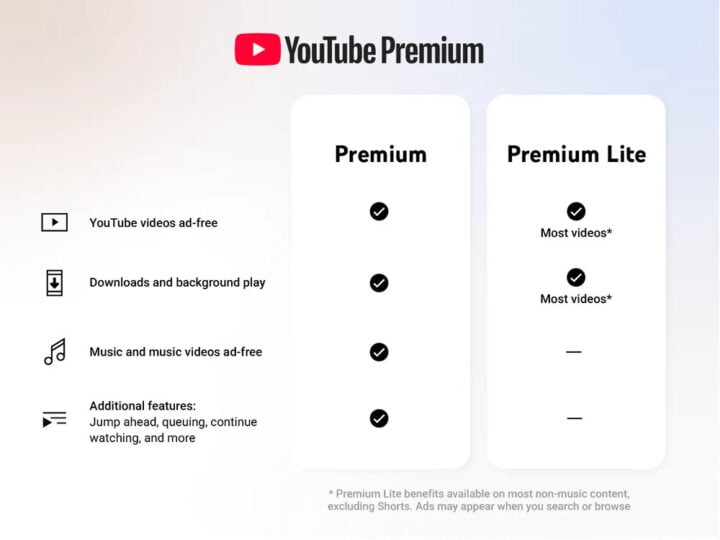
When YouTube launched its Premium Lite tier last year, it introduced ad-free viewing across most videos at a lower price than its full-priced subscription. However, Premium Lite missed out on a few popular features. Now, Premium Lite supports offline viewing and the ability to play videos in the background on mobile devices.
Like much of the internet in the 21st century, YouTube is riddled with ads. Before videos, during videos, and even after videos, you’re faced with a barrage of advertisements, many of which are unskippable. In recent years, if you wanted to dodge YouTube advertising, a $16.99 monthly Premium plan has been the main method.
YouTube’s main subscription tier removes ads from videos, while granting access to the YouTube Music streaming service. YouTube Premium Lite, on the other hand, which costs $8.99 per month in Australia, doesn’t include ad-free music streaming. Instead, it only removes ads on non-music-related videos.
Image: YouTube.
According to a recent announcement from YouTube, both offline viewing and background play will roll out to Premium Lite subscribers in the coming weeks. Previously, Premium Lite didn’t let you download videos for offline viewing. Nor did it allow background viewing on mobile, pausing videos when the screen turns off, or the YouTube app is minimised.
Some users found a workaround by accessing YouTube in a mobile browser instead of the app, making background viewing possible without a subscription. That workaround appears to be on its last legs, though, with YouTube cracking down on the practice.
So while YouTube Premium Lite isn’t quite at feature parity with the more expensive tier, it’s now better value than it once was. If you already have a music streaming subscription elsewhere, Premium Lite might be the ticket to avoiding an onslaught of unskippable ads.
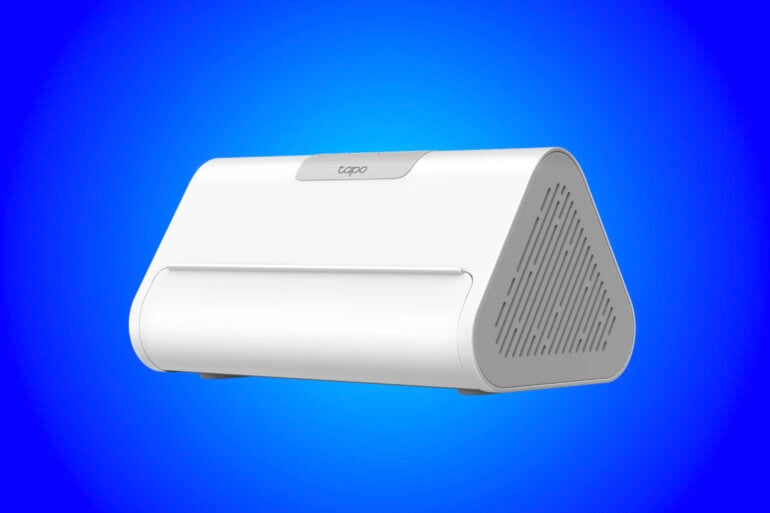
Smart homes can do many things: take care of security, adjust your thermostat when the temperature drops, and even identify water leaks. But just because a smart home can do all those things, it doesn’t mean that it requires a complex setup. That’s where a smart hub like the Tapo H500 Smart HomeBase comes in handy, and GadgetGuy has one to give away courtesy of Tapo!
As noted in our review of the Tapo 500, the device is one of the best ways to simplify smart homes. Pairing particularly well with Tapo’s range of smart cameras, sensors, and video doorbells, it unlocks each device’s full potential.
Capable of connecting to various Tapo security cameras, the H500 lets you manage various feeds from one central location. With 16GB of onboard storage, you can store footage locally, away from the threat of cloud breaches, and without a costly subscription fee. Plus, the smart hub’s capacity is expandable via USB storage.
Connected cameras also benefit from premium features, aided by the hub’s processing power. Person, vehicle, and pet detection are enabled when connecting a compatible Tapo camera to the H500.
With the hub installed, you can then set up sensors throughout your home to make things even easier. Temperature sensors can help keep your home at a comfortable temperature, while water leak sensors alert you to any issues before they become a big problem.
How to win a Tapo H500 Smart HomeBase
Thanks to Tapo, GadgetGuy has one H500 Smart HomeBase, valued at $249, to give away to one lucky reader. For your chance to win, simply follow the instructions below.
First, fill out the entry form contained in the following widget. Every entry method you complete via the widget gives you more chance of winning. If you can’t see the widget, visit the entry page directly.
Entries are open now until 4:00 PM AEDT on 7 March 2026, so get your entries in now before you miss out! All the eligibility details, including terms and conditions, are included in the entry form.
Once you’ve entered, share the love by sending the giveaway to your friends and sharing it on social media. Good luck!
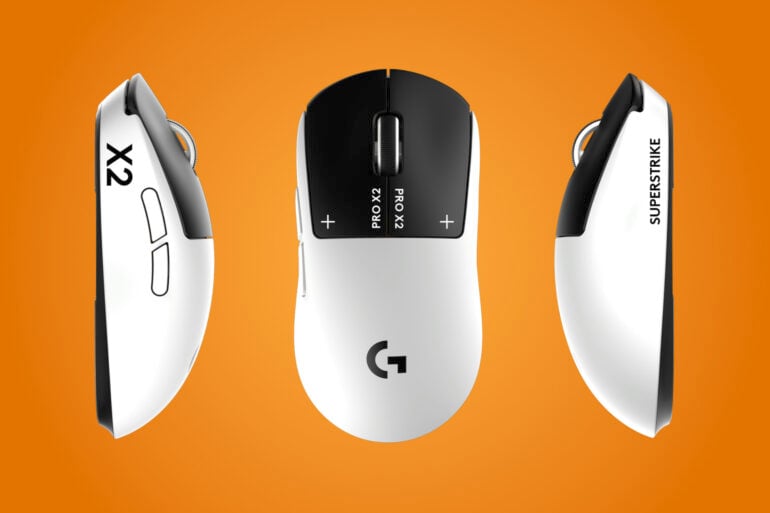
By now, it’s reasonable to think that we might have seen everything there is to see in computer mice. But when gaming is concerned, there’s always room to try something new. To try to give gamers a competitive edge, Logitech claims that the G Pro X2 Superstrike Lightspeed produces the fastest click going around.
It’s a wireless mouse with not only a lot of proper nouns in its name, but an interesting customisable click technology. Similar to Logitech’s productivity-focused MX Master 4 mouse, the Pro X2 Superstrike doesn’t have a traditional ‘click’ as such. Instead of using mechanical technology, it relies on electromagnetic fields paired with haptic feedback to let you know when you’ve ‘clicked’.
Because of the lack of mechanical components, there’s less latency between when you press down and when the mouse registers the input. According to Logitech, click latency is cut down by as much as 30ms by using the technology it calls the “Haptic Inductive Trigger System”, with the apt acronym of “HITS”.
Images: Logitech.
HITS enables a decent level of customisation, like how quickly a click is registered. It also supports six different levels of haptic feedback. Due to the magnetic hardware, you don’t necessarily ‘feel’ the click, so the customisable haptics let you know when a click registers.
How does the Pro X2 Superstrike actually help?
Of all the things Logitech says its high-end gaming mouse can do, responding faster to inputs sits firmly at the top. From the company’s claims, pro players benefit, but casual players might get the most performance improvements.
During a pre-launch briefing, Logitech’s engineers pointed to data it collected during the mouse’s development. Based on the company’s data, pro players reduced click latency by an average of 15ms, while casual players benefited from a 26ms latency reduction.
In fast-response competitive games, like League of Legends or Counter-Strike 2, there’s a bit to factor in. Players need to pick up on visual cues, register them, and then click accordingly. With its new mouse, Logitech doesn’t want to be the weak link in determining whether a pro player lands a headshot or narrowly misses an ult.
This type of technology is very new, coming with a high price point to match. In Australia, the Pro X2 Superstrike costs $299.95, making it one of the more expensive gaming mice on the market.
Pro players could easily justify the cost based on the tangible performance gains, with every millisecond important. Logitech’s internal data suggests that its mouse narrows the gap between casual and pro players, but the price might make it a harder sell for those who only dabble in online gaming.
Still, a mouse with such touted benefits could appeal to gamers who want to rise the online rankings, regardless of professional aspirations.
Trials for a new “optical tracking technology” are set to kick off this AFL season at Marvel Stadium, placing dozens of cameras around the venue to improve the gameday experience for fans and teams.
A result of a partnership between the AFL, Telstra, and Champion Data, the technology is being touted as a boon for fans and broadcasters, as well as football staff. It expands on the existing technology that powered the “Touch and Track” system, which provided a tactile way for blind or low vision footy fans to follow the on-field action.
40 cameras will be installed throughout Marvel Stadium midway through 2026, up from the 14 used for the existing tracking system. Following the ball and players, the cameras will help capture data that can be used by broadcasters to give fans more information, and even help umpires with goal-line decisions.
It’s also said that the expanded camera system will assist coaches in making more informed tactical decisions, while providing medical staff with more data when assessing injuries, such as potential concussions.
Once the cameras supporting the new optical tracking technology are installed, a two-year trial will take place. This will help inform how the technology could be rolled out to other AFL grounds.
Herald Sun‘s Glenn McFarlane previously reported on Champion Data’s “secret” trials of the optical tracking technology throughout the 2025 AFL season. It’s expected that the more precise player and ball movement data recorded by the technology will be accurate to within 10cm and “available to within a second”.
Telstra’s involvement in the partnership also involves upgrading network capacity to support the technology. The telco recently rebuilt its network infrastructure at Marvel Stadium, improving the venue’s Wi-Fi, 4G, and 5G connectivity.
Perplexity will appear on Samsung’s upcoming Galaxy phones, as the company seeks to expand the number of ‘AI agents’ on its devices.
According to Samsung’s internal data, nearly 80 per cent of its users “rely on more than two types of AI agents”. In other words, people don’t use AI apps like ChatGPT or Gemini exclusively; they swap between them depending on the task.
As such, Samsung intends to tweak Galaxy AI — its collection of generative AI-powered features — to support “a choice of integrated agents”. When Samsung first launched Galaxy AI with the Galaxy S24 range in 2024, Google was the biggest AI partner, supplying the smarts for the Circle to Search visual lookup feature.
Now, it seems likely that Samsung will let users choose between Gemini, Perplexity, and other generative AI apps to power various features within the Galaxy AI platform. Samsung’s announcement says that Perplexity will be “deeply embedded” within its apps, able to operate across various first-party and third-party apps.
This platform-agnostic approach is consistent with Samsung’s messaging in recent years. When the Galaxy Z Flip 6 and Fold 6 launched midway through 2024, Eric Chou, Samsung Australia’s Head of Mobile Experience, described the company’s approach as one that uses whichever technology gets the job done.
“Rather than actually thinking about ‘is it Gemini, is it Samsung, or is it OpenAI’, it’s more about intuitively integrating [AI] into every single one of our apps and services so that it is intuitive to users,” Chou said at the time.