This is default featured slide 1 title

Go to Blogger edit html and find these sentences.Now replace these sentences with your own descriptions.

This is default featured slide 2 title

Go to Blogger edit html and find these sentences.Now replace these sentences with your own descriptions.

This is default featured slide 3 title

Go to Blogger edit html and find these sentences.Now replace these sentences with your own descriptions.

This is default featured slide 4 title

Go to Blogger edit html and find these sentences.Now replace these sentences with your own descriptions.

This is default featured slide 5 title

Go to Blogger edit html and find these sentences.Now replace these sentences with your own descriptions.

Sunday, 1 November 2026

Wybot S3 robot pool cleaner review: Premium hands-free cleaning

Wybot S3 robot pool cleaner review: Premium hands-free cleaning

8.5

Having a pool is wonderful when you want to use it, but not so great when you have to maintain it. Vacuuming the leaves and scrubbing the sides is a chore that can consume hundreds of hours a year. Robot pool cleaners have solved this time drain, but there’s still a bit of work involved.

Most robot pool cleaners still need to be manually lifted out of the water. Especially when waterlogged, they can be quite heavy. They also need recharging, and the waste basket emptied, so it’s not an entirely hands-off process.

I recently tested the Wybot S3 robot pool cleaner to see how much of this process can be automated.

Wybot S3 features

The Wybot S3 is a robot pool cleaner that self-docks, charges, and transfers its waste basket contents to outside the pool. When you first open the box, it is a little daunting, but once you start assembling it, it’s like a small Lego set that comes together easily.
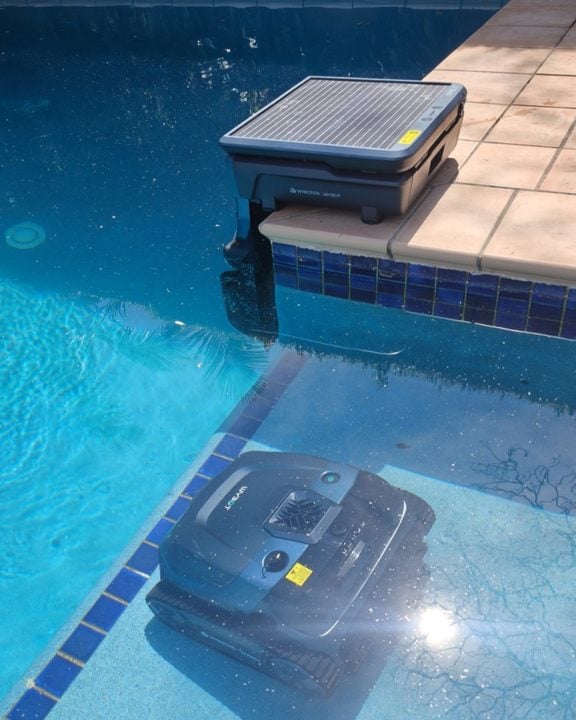
Wybot S3
Image: Angus Jones.

Lifting a pool cleaner in and out of your pool to charge, especially when it may be full of water, is heavy, and you’ll likely get wet. The Wybot S3 solves this by docking itself underwater in a wall-mounted cradle.

From this cradle, it charges its battery and empties its waste basket contents into the docking station’s storage cassette at the edge of the pool. Wybot claims that between the 10-litre cassette and 3-litre waste basket, you won’t have to manually empty anything for up to a month. This, of course, depends on how much leaf litter and debris falls into your pool.

Either way, this robot is self-sufficient for a period when other robots would need charging and waste emptying after every clean.

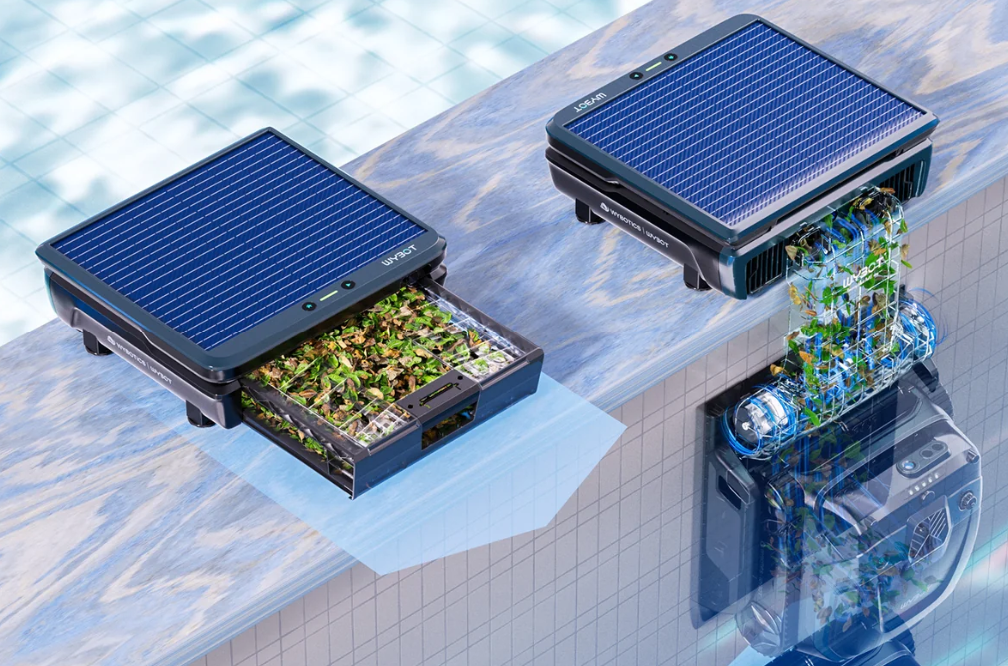
Running a power cord to your robot pool cleaner is, honestly, a hazard. A cord lying on the ground with running kids sounds like a disaster waiting to happen. In theory, the Wybot S3 is self-sufficient with its solar panel if you clean your pool only once a week. With full sun, the solar panel will recharge the batteries in both the base station and robot in about three days. This will take longer if the panel is shaded for part of the day or the weather is cloudy.

I like the idea that if the base doesn’t get enough sun, you can temporarily run a cable to boost the unit. A removable cord also improves the aesthetics, removes the trip hazard and saves you from making cosmetic changes around your pool.

The internal battery lets the robot run for up to 2.5 hours and supports pools up to 300 square metres (about a 15m pool), which is more than enough for the average Australian pool. Charging the robot from the mains takes about three hours. Whilst working, the robot will suck 14,000 litres per hour.
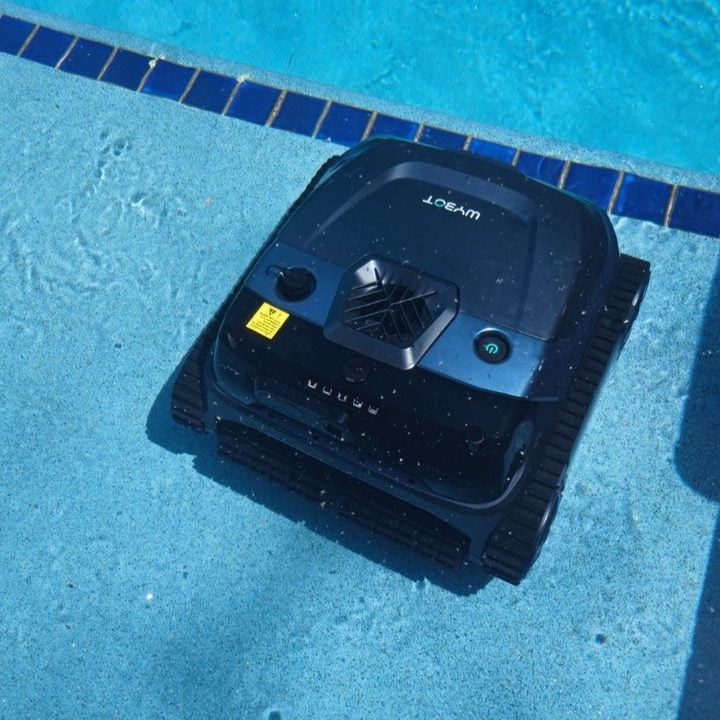
Wybot S3 cleaning pool step
Cleaning pool step. Image: Angus Jones.

The Wybot uses technology it calls AI Vision on the pool floor. This allows the robot to target areas of your pool that need cleaning using 36 sensors. In simple terms, it can chase leaves and save power by not cleaning every square centimetre in AI Vision mode.

You can select five cleaning modes: Floor, Wall, Wall then floor, Advanced Full, Turbo Floor. The AI mode can be switched on and off but only works with the Floor modes and not Advanced Full. Advanced will reach every spot, ensuring any fine grit is removed.

Wybot S3 specifications and price

Cleaning areaUp to 300 square metres
Battery life2.5 hours
Basket capacity3 + 10 litres
Dimensions76 cm x 48 cm x 74 cm
21kg
Price (RRP)$4,999
WebsiteWybot Australia
WarrantyTwo years

Using the Wybot S3

When you first commission the robot, it will create a 3D map of your pool to help it navigate. With each additional clean, it refines that map and its navigation techniques to ensure it reaches all underwater spots, including steps.
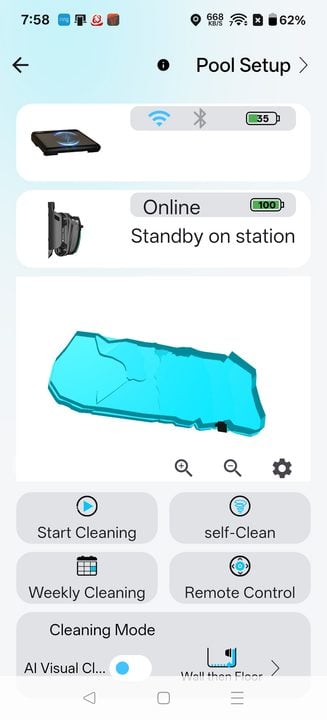
Wybot app
App with 3D image of pool. Screenshot: Angus Jones.

The docking station also enables underwater communication, something most robot pool cleaners can’t do. You can change cleaning modes on the go in the app. The app lets you see real-time progress and manually steer your robot to areas of the pool that may need special attention.

In the app, you can also schedule cleans over seven days and use different modes on different days. For example, on Monday you could clean the pool floor, on Wednesday the walls, and on Saturday do a complete clean. A key feature of the wall cleaning is that the robot lifts itself above the water line. This is an area where water, air, and sunlight combine to grow algae. This cleaning motion removes that algae and keeps your pool looking nice.
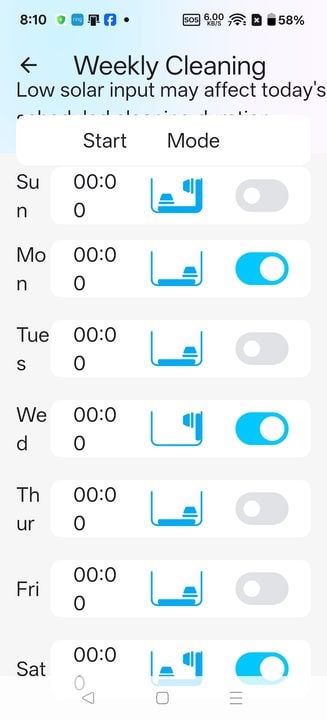
Wybot S3 scheduling
Scheduling. Screenshot: Angus Jones.

Whilst the robot pool cleaner seems maintenance-free and doesn’t need to be removed from the pool, that is not actually the case. The robot comes with three filter screen levels. The first is the standard 380 microns, which is the size of the holes in the basket. This is great for catching leaves, which are easily transferred to the base station waste drawer. 180-micron inserts allow finer particles to be captured in the basket, and a separate 10-micron filter can also be added into the unit to capture fine silt and pollen.

These finer filters don’t clean properly with the automatic water waste transfer to the dock. To clean them, remove the robot from the pool and flush the basket and filters with a good-pressure garden hose. Wybot recommends doing this every two weeks. If your pool starts dirty, add the filters after every few cleans to avoid the fine filters getting blocked immediately.

The standout negative of this pool robot is its price. With an RRP of $4,999, that puts the Wybot S3 at the super premium end. Other robots in this price bracket will also clean the surface, but the S3 has self-docking and basket cleaning.

Wybot does offer specials, though; at the time of publication, it listed the S3 for $3,799.99. In the past, Wybot has also done bundles with a solar-powered pool skimmer that collects leaves from the surface of the pool. I’m a big fan of pool skimmers because they catch debris before it sinks to the bottom.

Who is the Wybot S3 for?

The Wybot S3 is for people prepared to pay for extra convenience. If you have a robot pool cleaner, it saves you from cleaning your pool by hand. The Wybot S3 also saves you from removing the cleaner from the pool to charge and emptying the waste basket every time. This model is also suitable for people who would struggle to remove a robot pool cleaner from the pool.

If you have good sunlight to charge the dock, you may get away with not running a permanent power cord, which suits those with access issues, aesthetics, and safety.

Wybot S3
The Wybot S3 robot pool cleaner does more than most robots; it automatically exits the water and empties its waste, but it's quite pricey.
Features
9
Value for money
6
Performance
9
Ease of use
9.5
Design
9
Positives
Can charge without removing from pool
Waste is transfered to a surface storage tray
Can be powered by solar making it wireless
Negatives
Very expensive
8.5

The post Wybot S3 robot pool cleaner review: Premium hands-free cleaning appeared first on GadgetGuy.


Cheapest NBN plans: Compare Australia’s fastest internet prices

Cheapest NBN plans: Compare Australia’s fastest internet prices

Keen to find a better deal on your home internet? We’ve compared the cheapest NBN plans from many of the biggest telcos to find the best deals for you in each speed category.

One of the best ways to save money on your internet bill is to shop around frequently. Many internet service providers (ISPs) offer introductory deals, including generous discounts for the first six months. Afterwards, it’s always worth comparing providers so you’re not left paying more than you should. Most ISPs don’t use lock-in contracts, making it relatively easy to swap to a better-value plan.

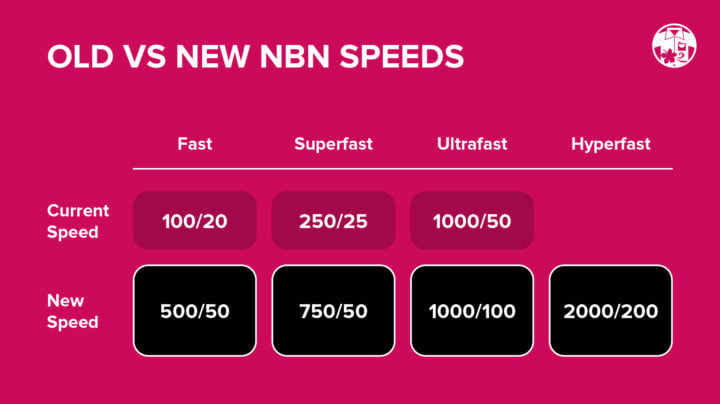
After the big NBN speed upgrade, it’s now easier than ever to enjoy fast internet at decent prices. Some older NBN plans got five times faster for the same price. Not a bad deal for those eligible.

A graphic comparing Old vs new NBN speeds: "Home Fast 100/20 Mbps 500/50 Mbps Home Superfast 250/25 Mbps 750/50 Mbps Home Ultrafast 1,000/50 Mbps 1,000/100 Mbps Home Hyperfast 2,000/200 Mbps"
Image: Jay Marshall.

But there’s not much point in paying for speeds you don’t need. Make sure you regularly assess whether your current internet plan serves your needs, as recommended by the Australian Competition and Consumer Commission (ACCC).

With that in mind, here are the current cheapest NBN plans in Australia from a wide range of telcos. We also have some affordable tips and tricks on how to maximise your current internet speeds. Looking for a new phone plan, too? Compare the cheapest SIM plans to save even more money.

Cheapest overall NBN plans

Right now, SpinTel sells the cheapest NBN plan; its 25Mbps plan costs $41 per month for the first six months. After discounts, $69.95 per month is the ongoing price. Dodo and Moose NBN also sell some of the cheapest plans, offering discounted rates of $45 or less per month.

Take a look at the widget below for more of the cheapest NBN plans. We update this article monthly, but the widget updates automatically, giving you up-to-date and accurate information.

Many of the retailers display promotional prices aimed at new and returning customers. These offers generally involve paying a discounted rate for six months before reverting to a standard price. To view the details of promotional offers, click on the green text labelled ‘deal’, which will also show the standard price.

Each plan featured here includes unlimited data. Some providers let you save a few dollars every month by choosing a plan with a data cap. If you know you don’t need much data, use this search tool to find plans with monthly data allowances.

NBN 25 plans

Suited for streaming videos in HD and basic online tasks, an NBN 25 plan gives you a bit more flexibility and much more value for money.

As above, SpinTel’s NBN 25 plan is the cheapest, costing $41 per month for the first six months. Once the discounted period ends, the plan costs $69.95 per month ongoing. Other cheap NBN 25 plans come from Dodo ($43.99) and Moose NBN ($44.80). Once their six-month discounts end, Dodo charges $73.99 per month, while Moose costs a reasonably priced $64.80 per month.

Without discounts, most of the cheapest NBN 25 plans cost between $65 and $70 per month, so it’s a relatively cost-effective speed tier.

NBN 50 plans

Once Australia’s most popular internet plan, NBN 50 balances value with performance. These plans support 4K video streaming and can sustain multiple simultaneous users.

At the moment, Belong sells the cheapest NBN 50 plan, priced at $55 per month for the first six months, and then $91 per month thereafter. Dodo and Moose NBN also sell NBN 50 plans below $60 at the time of writing, at $57.99 and $59.90 per month for the first six months, respectively. After discounts, they’re a bit cheaper than Belong, with Dodo’s ($87.99) and Moose NBN’s ($83.80) full pricing sitting below $90.

Most full-priced NBN 50 plans start at around $85 per month, so it’s worth shopping around.

NBN 100 and NBN 500 plans

This is where the NBN speed upgrade starts to kick in. For customers with Fibre to the Premises (FTTP) or Hybrid Fibre Coaxial (HFC) connections, the NBN 100 tier becomes NBN 500 plans at no extra cost.

Both sets of speeds are ideal for streaming multiple 4K videos and downloading files quickly. If you get 500Mbps speeds, those downloads will be five times quicker. Only slightly more expensive than the 50Mbps tier, NBN 100 plans are still good value for most people; NBN 500 is even better value, given the small gap in pricing.

To start with, let’s look at the cheapest NBN 100 plans — these speeds apply to those with Fibre to the Node (FTTN), Fibre to the Building (FTTB), and Fibre to the Curb (FTTC) connections:

You can currently choose from four discounted NBN 100 plans priced at $65 or less per month, including Belong ($59), Origin ($59), Dodo ($62.99), and Moose NBN ($63.80). Each telco’s discount lasts six months before the full price kicks in. Origin is the most expensive of the lot, at $114 per month, while Dodo costs $92.99 at full price, and Moose $86.80.

There are a few sub-$90 NBN 100 plans going around, but the majority start at $90 per month without discounts.

If you have a direct fibre connection, here are the cheapest NBN 500 plans:

As you can see, the prices are more or less the same as NBN 100, which makes it pretty good value for those who can get NBN 500 plans.

As long as you have the technology to support faster speeds, the prices for NBN 500 plans are no more expensive than the slower NBN 100 tier.

NBN 750 plans

500Mbps download speeds aren’t fast enough for you? For even faster speeds, you could try NBN 750, which was NBN 250 before last year’s wholesale speed upgrade. This is the tier you consider when you want to download the latest video game or save a whole bunch of media for offline viewing.

SpinTel and Dodo currently sell the cheapest NBN 750 plans at discounted monthly rates of $69 and $69.99 apiece. Afterwards, SpinTel’s ongoing cost is $94.95, while Dodo costs $99.99.

Without factoring in discounts, expect to pay between $100 and $110 per month for most NBN 750 plans.

NBN 1000 plans

NBN 1000 plans also come with 100Mbps upload speeds, giving you fast downloads and a strong upload rate. Consider these plans if you regularly work with large files, like content creators, and don’t want to waste time waiting for downloads or uploads to finish.

You’ll notice that not every telco promises 1,000Mbps download speeds during peak times. That’s because the NBN speed upgrade is still relatively new, so the industry is still collecting real-world performance data. Rest assured, though, that these plans are fast.

Of all the NBN 1000 plans, Amaysim is currently the cheapest, with its plan at $70 per month for the first six months as part of an early Black Friday deal. After the discount, Amaysim’s plan costs $100 per month.

Belong’s NBN 1000 plan costs $75 per month, while SpinTel is only a dollar extra at $76, with each plan costing $110 and $104.95 per month, respectively, after discounts. Another option is Dodo’s $79.99 monthly plan for the first six months, which costs $109.99 afterwards.

Elsewhere, most NBN 1000 plans cost upwards of $110 per month.

NBN 2000 plans

One of the new additions following the speed upgrade, NBN 2000 plans, also known as ‘Hyperfast’, is for absolute power users. Capable of handling multiple 8K video streams and downloading large files in the blink of an eye, it’s much faster than anything previously available to the wider Australian public.

Because it’s new and a bit on the pricier side, not many ISPs sell NBN 2000 plans just yet. Still, there are some discounts available, with prices already varying between telcos.

Mate currently has the cheapest and fastest NBN 2000 plan, selling it for $141 per month for the first six months, and $166 thereafter. Superloop is close behind, with a $148 monthly NBN 2000 plan. That price lasts for six months before increasing to $168 per month.

With not as much competition as other speed tiers, some NBN 2000 plans are as expensive as $194 per month.

What you need to know

If you want broadband internet in Australia, your main and most reliable choice is via the National Broadband Network (NBN). Although the NBN provides the internet backbone, it does not sell plans directly to the public. Instead, telecommunication vendors package up retail and business plans, which include different features and levels of customer support.

NBN availability

The NBN is available to all Australians, but the way you access the NBN may be different. This might include a fixed cable into your home, wireless access via an antenna on your roof or a satellite dish.

To see what technology is available to you, start by visiting the NBN getting connected page. After entering your address, you will be shown the technology available at your address. You will also see which providers or NBN retailers sell access in your area. In Sydney alone, we were presented with 123 different retailers.

Speed and reliability

It is important to understand that the speed and reliability of your NBN plan can differ by retailer. Each buys internet capacity from the NBN. This capacity is then shared with a certain number of the retailer’s customers. This means that a retailer may have faster speeds in one suburb versus another based on how many customers are accessing the overall capacity. It’s always good to ask your neighbours who they are with and their experience with a particular NBN retailer.

It’s also worth checking the ACCC website regularly. They publish quarterly broadband performance results, measuring how well telcos deliver on advertised internet speeds. You want to be certain that you’ll get the speeds you pay for, so this is a good starting point.

For those customers looking for an NBN alternative, we suggest the following GadgetGuy guides: How does 5G fixed-wireless stack up as an NBN alternative and Caravanner’s guide to connecting to the internet anywhere.

Having good internet speed is more than just a fast broadband connection. For more, be sure to check out GadgetGuy’s guide to improving your internet for more information.

Which NBN plan?

When evaluating an NBN plan, consider the following criteria:

  • Data Limits – Is there a monthly download limit of data, or is the plan unlimited?
  • Download Speed – Best measured at its busiest in megabits per second (Mbps) typical evening speed. Is it enough to watch Netflix? (Netflix requires 10-25Mbps depending on resolution quality.) Larger households with members using the internet simultaneously will require higher download speeds.
  • Cost – How much do you pay each month, and is there a connection fee?
  • Contract – Are you locking yourself to a retailer for a period, or is it month-to-month?
  • Telephone – Is a fixed-line telephone service bundled into the plan?
  • Customer service – What hours are supported, and is it an Australian-located call centre?
  • Upload speed – Important for people who save large files online, like photos and videos.

Changing providers

If you wish to change internet providers, the process involves signing up with the new retailer in-store or online. You may receive a new Wi-Fi router, and you may have to return your old router to your previous retailer. The retailer-provided router is generally low quality but provides a fixed-line telephone connection if selected.

Your retailer might offer you an email address. Still, we recommend using a non-telco-specific email address, such as Gmail or Hotmail, allowing you to easily change NBN retailers.

The NBN changeover process can take less than an hour, but depending on the location and NBN technology, it could take a few days. To take advantage of introductory offers, you could swap your provider every six months.

Suppose you do not wish to leave your existing provider. In that case, you may be able to negotiate a better rate by comparing it to cheaper offerings.

GadgetGuy occasionally uses affiliate links and may receive a small commission from purchased products.

The post Cheapest NBN plans: Compare Australia’s fastest internet prices appeared first on GadgetGuy.


Cheapest SIM plans: Telstra, Optus, and Vodafone compared

Cheapest SIM plans: Telstra, Optus, and Vodafone compared

Are you looking to save on your phone bill? We’ve rounded up the cheapest SIM plans from a range of different carriers to help you find the best price. If you’re unsure about whether a SIM-only mobile plan is what you need, our quick guide to SIM-only mobile plans will get you up to speed.

Generally speaking, if you don’t want a new phone or a lock-in contract, a SIM plan is the way to go. It’s easy to get what you need without paying for excess features. Unlimited phone calls and text messages usually come standard, with data and international roaming the main points of difference. If you do want a phone, however, check out the current deals on phone plans, including discounted handsets.

We update this article monthly, so bookmark this page to keep up to date with the cheapest SIM plans. Prices update in real-time, meaning you get the latest deals available in Australia right now. You can also use a custom search to choose a plan that suits your exact needs.

All of the plans featured in this article include an expiry period of at least 28 days. You can purchase a SIM plan with a shorter recharge window, ideal for travellers who only need a bit of data while visiting Australia.

Want to save on your internet bill, too? Check out the cheapest NBN plans to save even more money. You can also compare the best Telstra SIM-only plans, Vodafone SIM-only plans, and Optus SIM-only plans.

Cheapest SIM plans

Postpaid

At the time of writing, Pivotel sells the cheapest postpaid SIM plan, priced at $11.45 per month for the first six months. That’s half its usual monthly price of $22.90, which you’ll pay once the discounted period ends. It comes with 25GB of data via Vodafone’s 4G network.

At its discounted $12 monthly price (down from $23), SpinTel’s 25GB plan costs only an extra 55 cents per month. This SIM plan from SpinTel connects to Optus’ 5G network, so the choice comes down to your network preference.

Moose Mobile (Vodafone 4G) and Swoop (Vodafone 5G) aren’t far behind, selling discounted postpaid SIM plans at $14 per month for the first six months. Afterwards, an ongoing plan with Moose costs $23 per month, while Swoop costs a couple of dollars more at $25 per month.

If you’re keen on a postpaid SIM plan on the Telstra network, Tangerine currently sells the cheapest option. It costs $30 each month, with 15GB of data included. Keep in mind that this Tangerine plan only uses parts of Telstra’s 5G and 4G networks, so check the coverage map before locking anything in.

Prepaid

At the time of writing, OnePass Mobile is the cheapest prepaid SIM plan with a discounted $12.50 rate for the first six recharges. Normally $25 every 28 days, OnePass Mobile’s 22GB plan connects to the Optus 5G network, while bundling in a OnePass membership at no extra cost.

MVNOs on the Vodafone network round out the next cheapest prepaid SIM plans. Starting with Lyca Mobile, its 50GB plan costs $15 per recharge for the first six recharges (on a 28-day cycle. Once the discount ends, the price reverts to $30 per recharge. Also $15 are the 30GB plans from iiNet and TPG (Vodafone 5G), but both are billed monthly, netting you an extra few days.

On the Telstra network, the cheapest current prepaid SIM plan is $28 from Aldi on a 30-day renewal. It uses Telstra’s wholesale 5G and 4G networks, including 12GB of data per recharge.

Cheapest 5G SIM plans

5G coverage reaches more of Australia than ever, bringing with it faster download speeds. Phones compatible with 5G are also increasingly affordable, making it easier to access high-speed networks.

In some cases, 5G plans can cost more, but as you’ll see below, they can also be among the cheapest.

Postpaid

SpinTel’s discounted $12 plan mentioned earlier is currently the cheapest postpaid 5G SIM plan, followed by Swoop’s $14 monthly plan.

Outside of discounts, postpaid 5G plans start from $23 per month, so it’s a reasonably affordable tier.

Prepaid

Topping both the cheapest overall and 5G prepaid plans, OnePass Mobile features again with its 22GB plan, which costs $12.50 for the first six 28-day recharges. Lyca Mobile, on the Vodafone 5G network, is similarly cheap, priced at $15 per 28 days for the first six recharges, including a large 50GB allocation. Afterwards, it costs $30 every 28 days.

In a slight shakeup to the Telstra side of the market, both Aldi Mobile and Boost Mobile are the cheapest Telstra-based prepaid SIM plans with 5G access. Both cost a flat rate of $28; Aldi’s plan recharges every 30 days, while Boost has a 28-day recharge cycle. 12GB comes with each Aldi recharge, and Boost includes 8GB. However, Boost Mobile’s advantage is being the only MVNO with access to the full Telstra 5G network, reaching further than Aldi’s wholesale network access.

Depending on your data needs, you can generally pick up a 5G prepaid plan for $25 per recharge.

Cheapest 365-day SIM plans

If you know what you need over a longer period and want to save money in the process, a 365-day SIM plan might do the trick. Simply pay once per year, and get a bank of data to use with unlimited calls and texts. It’s a cost-effective way of paying your phone bill for basic internet users who aren’t big downloaders.

Not much separates the cheapest long-expiry SIM plans; Kogan’s $200 plan (on the Vodafone 4G network) currently costs $159, with a total bonus data allocation of 300GB for the first recharge. Future recharges come with 200GB, which is still more than most around the same price.

At $169 for the first recharge, OnePass Mobile is currently the cheapest 365-day plan on the Optus 5G network. It also comes with a hefty 400GB data allocation, which then drops back to 280GB after the first recharge.

Looking at long-expiry SIM plans on the Telstra network, it’s a toss-up between Aldi Mobile and Boost Mobile for the lowest price. Aldi’s 365-day plan starts at $289 for 300GB, connecting you to Telstra’s wholesale 4G and 5G networks. For access to the full Telstra network, Boost Mobile is your best bet, normally priced at $300. This plan includes 290GB for the first recharge, and 240GB for subsequent recharges.

What you need to know about SIM-only plans

It’s fairly easy to change your SIM plan provider. Even more so with the rise of embedded SIM (eSIM) technology, letting you change plans almost instantly with a compatible device. Instead of requiring a physical card, eSIM stores network information directly in your phone.

Irrespective of which service provider you go with, the actual network used will be either Optus, Telstra or Vodafone. Many of the cheapest SIM plan providers are mobile virtual network operators (MVNOs). This refers to carriers that use the network infrastructure of another company.

Boost Mobile is a popular MVNO that has full access to Telstra’s network, reaching 99.5% of Australians. Not every MVNO includes a network’s full coverage, so it’s worth checking a company’s website to ensure your area is serviced.

In terms of how much data you should choose, data from the Australian Competition and Consumer Commission (ACCC) found that Australians generally pay for more than what they need. On average, Aussies use 10.2GB of phone data per month, so it’s likely you could get away with a smaller allowance that costs less.

It also depends on how much you stream and download content using your phone. If you mainly use home or office Wi-Fi and don’t stream much, stick with a cheaper plan.

Postpaid versus prepaid

There are a couple of slightly different SIM plan options to choose from. Postpaid refers to plans that operate on a monthly billing cycle, where you pay at the end of each cycle. Postpaid SIM plans generally don’t involve a lock-in contract, so you can freely swap if your needs change or a better deal comes along. If you hit your data cap for a month, your telco might limit speeds until the next cycle or charge extra costs, so check the fine print beforehand.

Prepaid, on the other hand, sees you pay at the start of each cycle for a fixed number of days. Most prepaid SIM plans have a 28-day expiry cycle instead of a full month. Shorter expiries are also available if you need a SIM while travelling, making it a flexible option. The upside is that if you go over your data limit, you won’t incur extra costs. A lot of prepaid plans don’t automatically recharge by default but you can set up auto-recharge manually, with some telcos offering discounts or bonuses if you do so.

Phone number portability

The SIM changeover process takes about 10 minutes of your time or even less if you choose an eSIM. You will receive instructions to visit a website, provide your details, prove your identity (online) and then insert your new SIM.

Note that you will have a choice to migrate your existing mobile number or choose a new one. About 15 minutes later, you should be up and running. However, the documentation will indicate it may take up to 24 hours and may be affected by working hours.

Best network coverage

Network coverage is one of the most important factors to consider when buying any phone plan. Low prices and all the data in the world don’t mean much if you can’t get a signal.

Telstra decided to no longer express its network as a percentage of the Australian population, after the rules governing how telcos present network coverage changed midway through 2026. As such, a percentage-versus-percentage comparison is a bit trickier, but Telstra still claims the biggest phone network coverage in Australia by way of square kilometres.

NetworkNetwork size
Telstra2.14 million square kilometres
Telstra wholesale1.4 million square kilometres
Optus1.2 million square kilometres
Vodafone1.2 million square kilometres

More important than percentages and square kilometres is whether your location has coverage. The best way to check is via a telco’s network map:

If you’re not sure which telco to choose, try a plan for a month. Lock-in contracts are largely a thing of the past, so it’s easier than ever to try one provider and swap if it doesn’t work out.

GadgetGuy occasionally uses affiliate links and may receive a small commission from purchased products.

The post Cheapest SIM plans: Telstra, Optus, and Vodafone compared appeared first on GadgetGuy.