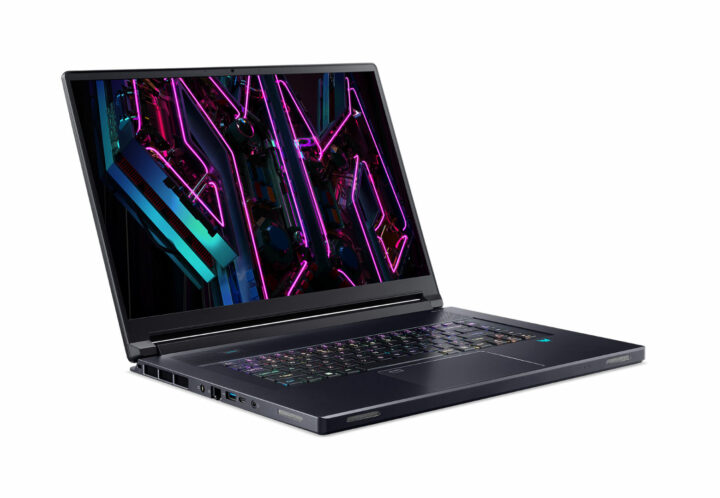
This is default featured slide 1 title

Go to Blogger edit html and find these sentences.Now replace these sentences with your own descriptions.

This is default featured slide 2 title

Go to Blogger edit html and find these sentences.Now replace these sentences with your own descriptions.

This is default featured slide 3 title

Go to Blogger edit html and find these sentences.Now replace these sentences with your own descriptions.

This is default featured slide 4 title

Go to Blogger edit html and find these sentences.Now replace these sentences with your own descriptions.

This is default featured slide 5 title

Go to Blogger edit html and find these sentences.Now replace these sentences with your own descriptions.

Sunday, 23 April 2023

Asus Zenbook Pro 16X OLED review: creative muscle

With plenty of grunt and a professional-grade display, the Asus Zenbook Pro 16X OLED is aimed at high-end content creators happy to lug around a powerhouse.

While many laptops aspire to be ever thinner and lighter, you’ll still find those high-end workhorses which focus more on power than portability. Terms like “desktop replacement” and “portable workstation” seem to have gone out of fashion in the age of working from anywhere, but the concept is the same – letting you work away from your desk with minimal compromises on performance.

So it is with the Zenbook Pro range, which is often touted as a Windows-based competitor to Apple’s powerful MacBook Pro. The Asus Zenbook Pro 16X OLED combines a ton of grunt with a professional-grade display and a few other handy features to help high-end content creators get things done wherever they are.

Review: Asus Zenbook Pro 16X OLED

Australian website Asus
Price from $4299 RRP
Warranty 2 years
Other   More computer reviews on GadgetGuy

First impressions

Even for a 16-inch laptop, there’s no denying that the Asus Zenbook Pro 16X OLED is big and heavy, something you might want to avoid if you’ll spend more time carrying it than working on it.

The aluminium alloy unibody gives it a solid, premium feel, but in return, it tips the scales at a hefty 2.4 kg. That’s before you allow for the power brick with a footprint that matches a large smartphone. The brick and AC cable add about 600 grams to your carry bag.

The laptop’s wedge-shaped design is more than 20mm wide at the back once you allow for the feet, meaning you might end up investing in a new bag for lugging it around.

Place the laptop on the table and you’re presented with an elegant slab of black, only featuring Asus’ understated A-shaped Zenbook logo, which has a bit of a Star Trek vibe. Lift up the lid and the first thing you’ll notice is that the keyboard rises up at an angle, similar to the mechanism in the Asus Zenbook Pro 14 Duo OLED which elevates the secondary screen.

The backlit chiclet keys are well-spaced and offer impressive travel which should satisfy wordsmiths, even though this laptop is absolutely overkill for people who spend most of their day simply typing. The choice of half-height arrow keys will frustrate some people, although it’s not an uncommon compromise.

Along with tilting the keyboard up and forward to mimic a desktop keyboard, this design also helps with airflow and cooling, which Asus dubs Active Aerodynamic System Ultra (AAS Ultra). The airflow gap looks like a bit of a trap for dirt and other foreign objects.

Below the keyboard sits a generous trackpad with haptic feedback. It’s capable of performing a few impressive tricks such as converting into a large number pad although, once again, the Zenbook Pro’s strengths are perhaps wasted on people who are primarily focused on data entry.

To the left of the trackpad lies something that does take advantage of the Zenbook Pro’s strengths; a touch-sensitive Asus Dial designed to work with creative applications from the likes of Adobe.

By default, the dial lets you switch between controlling the system volume and screen brightness but you can customise it using Asus’ ProArt Creator Hub software. In creative apps its advantages include easily switching between tools like brush size, enhancing saturation, adjusting layer opacity or quickly undoing actions.

Asus Zenbook Pro 16X OLED specifications

Display size 16-inch, 16:10 aspect ratio
Display resolution 3840×2400 (Core i7)
3200×2000 (Core i9)
Display technology OLED 0.2ms response time, 550 nits HDR peak brightness
60 Hz refresh rate (Core i70)
120 Hz refresh rate (Core i9)
Display colour  DCI-P3 100%, 1.07 billion colours, PANTONE Validated
Audio Built-in 4-way stereo speakers, Built-in array microphoneharman/kardon (Premium), with Cortana voice-recognition support
CPU Intel Core i7-12700H Processor 2.3 GHz (24M Cache, up to 4.7 GHz, 6P+8E cores)
or
Intel Core i9-13900H Processor 2.6 GHz (24MB Cache, up to 5.4 GHz, 14 cores, 20 Threads)
GPU NVIDIA GeForce RTX 3060 Laptop GPU 6GB GDDR6 (Core i7)
NVIDIA GeForce RTX 4070 Laptop GPU 8GB GDDR6 (Core i9)
RAM Max 16GB LPDDR5 (Core i7)
Max 64GB LPDDR5 (Core i9)
Onboard storage 512GB M.2 NVMe PCIe 4.0 Performance SSD (Core i7)
1TB M.2 NVMe PCIe 4.0 Performance SSD (Core i9)
Expansion slot 1x M.2 2280 PCIe 4.0×4
Front camera FHD camera with IR function to support Windows Hello, with privacy shutter
Ports 1x USB 3.2 Gen 2 Type-A, 2x Thunderbolt 4 supports display / power delivery, 1x HDMI 2.1 FRL, 1x 3.5 mm Combo Audio Jack, SD Express 7.0 card reader
Battery 96WHrs, 3S2P, 6-cell Li-ion
Wi-Fi Wi-Fi 6E(802.11ax) (Dual band) 2*2
Bluetooth Bluetooth 5
Operating system Windows 11 Pro
Security Fingerprint reader
Windows Hello facial recognition
BIOS Booting User Password Protection
Trusted Platform Module (Firmware TPM)
Dimensions 35.50 x 25.10 x 1.69 ~ 1.78 cm
Weight 2.4 kg

Features

Under the bonnet, the Asus Zenbook Pro 16X OLED packs the choice of a Core i7-12700H 2.3 GHz or Core i9-13900H 2.6 GHz powerplant to ensure it can meet the demands of high-end content creation apps (ASUS tells me only the Core i7 model is available in Australia).

The 16-inch screen offers a 3840×2400 pixel resolution and 16:10 aspect ratio, with the 120Hz OLED HDR display offering an exquisite picture surrounded by a thin bezel. It will suit those with a need for colour accuracy, supporting 100% of the DCI-P3 colour space (PANTONE Validated). It’s also VESA DisplayHDR True Black 500 certified.

Digital artists will also appreciate that it’s a touchscreen with support for the optional Asus Pen 2.0 supporting 4,096 pressure levels, four interchangeable pen tips and fast USB-C charging.

As for audio, it features built-in 4-way stereo speakers for delivering full-bodied sound.

It’s worth noting that opting for the Core i9 requires stepping down slightly to 3200×2000 resolution, but in return, it steps up to a 120 Hz refresh rate. In other areas, you’re forced to step up to the Core i9 for improved features such as storage, RAM and GPU, which might be frustrating if the Core i9 is otherwise overkill for your needs.

Laptops that focus on portability tend to compromise on connectivity, but you’re in good hands here. A single USB 3.2 Gen 2 Type-A port doesn’t seem very generous, but if you’ve mostly made the move to USB-C then you’ll appreciate the two Thunderbolt 4 ports which support external displays and power delivery. Add to that an HDMI 2.1 FRL port, SD Express 7.0 card reader and 3.5 mm combo audio jack.

Quality

The Asus Zenbook Pro 16X OLED doesn’t disappoint when it comes to grunt, with the Core i7 packing 16 GB of RAM delivering respectable GeekBench 6 CPU scores of 1,956 single-core and 8,037 multi-core when running on batteries. Plug it into the wall and that jumps to 2,269 and 11,867.

Meanwhile, the NVIDIA GeForce RTX 3060 sees it score 77,233 on GPU OpenCL testing. Again, plug it into the wall and that jumps to 82,480.

You’re likely to pay for all that grunt when it comes to battery life. You’ll get around five hours of average usage, which means you probably can’t leave that chunky power brick at home. Keep in mind that you’ll get less than five hours if you’re actually making the most of all that power under the bonnet. 

When it comes to multimedia, the OLED screen is stunning, but the speakers don’t quite do it justice. The sound is impressive for a laptop, crisp and clear with minimal distortion even when you crank it. Unfortunately, it’s still found a little wanting in the low end compared to what you’ll get from a 16-inch MacBook Pro.

GadgetGuy’s take

The Asus Zenbook Pro 16X OLED is an impressive piece of engineering, the display is exquisite and it’s powerful enough to handle whatever you throw at it. Yet it’s certainly not for everyone. To justify the expense, you’d need to be making the most of its impressive display and hefty grunt while out on the road.

Unless you’re regularly working with demanding high-end content creation applications, you’d be better off looking for a portable productivity tool that costs less, weighs less and offers a longer battery life so you don’t need to lug around the power brick. If this notebook would stay chained to your desk, then you’d get more bang for your buck from a desktop PC.

But if you can’t afford to compromise on grunt and multimedia performance when you’re on the go, the Asus Zenbook Pro 16X OLED might deserve a place in your travel bag.

Would I buy Asus Zenbook Pro 16X OLED?

Not unless I was a high-end creative always on the move.

GadgetGuy occasionally uses affiliate links and may receive a small commission from purchased products.

The post Asus Zenbook Pro 16X OLED review: creative muscle appeared first on GadgetGuy.


5 tech companies walking the talk on sustainability

Sustainability is a significant part of any company’s business strategy in 2023. More than just an empty buzzword, more and more consumers want to support businesses that care as much about people and the planet as they do about making good products.

Mind you, some do it better than others. This is why, following Earth Day, we want to highlight five tech companies making genuine strides towards sustainability. These brands do more than merely buy some carbon credits and call it a day. They display leadership worthy of commendation for implementing eco-friendly production standards, becoming more energy efficient, and actively considering the environmental impact of their actions.

Each company has a different approach, too. Some are using more recycled materials in their products, while others have found ways to drastically reduce power consumption. Every bit counts when investing in sustainability initiatives so people can enjoy the planet for generations to come.

Belkin pushing the recycled barrier

Like many companies at CES 2023, Belkin committed to increased sustainability efforts. What makes the Californian tech accessory company stand out in our eyes is how far it’s pushing expectations of what can be done in a short space of time. Belkin recently launched refreshed models of popular devices made from upwards of 72% post-consumer recycled (PCR) plastics. More devices from the brand will also feature a high percentage of PCR materials throughout the year.

When interviewed about the changes, Belkin CEO Steve Malony stressed the importance of aiming high with the company’s sustainability targets. A 50% PCR blend was quickly abandoned in favour of a loftier ambition. Many other companies are also using PCR materials in various devices, but usually in lower proportions.

Belkin also invests heavily in recycling programs, having saved more than 36,000 tons of electronics and packaging from going to waste. As part of its carbon reduction portfolio, the company invests in wind farm renewable energy as well, targeting full carbon neutrality by 2030.

HMD Global (Nokia) making phones last longer

HMD Global is the company responsible for the swathe of Nokia phones currently on the market. Like Belkin, HMD Global is going further than most with sustainably-designed devices. Take the Nokia X30 5G, for example. Launched last year, the handset uses a 100% recycled aluminium frame and a 65% recycled plastic back casing, which is just about unheard of for a phone.

Another recent development from HMD Global we hope catches on is easily repairable phones. Earlier this year, it launched the Nokia G22 in collaboration with the global repair community iFixit. The result is a phone that you can repair yourself with the use of affordable tools, plus it also features a 100% recycled plastic back casing. Making repairs more affordable and approachable helps keep phones active for longer and reduces unnecessary e-waste. Great work all around.

Microsoft & Epic Games optimise playtime

For the purposes of this article, we’ll hone in on Microsoft’s sustainability efforts with its Xbox gaming brand, which has seen a rather unique initiative take place in recent months.

Across Xbox Series X and S consoles, Microsoft rolled out a “carbon aware” update designed to decrease the carbon footprint of running a games console. The idea is that the consoles will prioritise automatic updates and software downloads during times when renewable energy is more likely to be the predominant power sourced by the grid.

Following the announcement, Microsoft copped a fair whack from CNET’s Jackson Ryan over double standards, given that some of the company’s promotional campaigns were at odds with its environmental stance. Fortunately, the Xbox software updates have made a significant impact.

At the 2023 Game Developers Conference (GDC), Microsoft and Fortnite developer Epic Games revealed that shared efforts to reduce energy use saved roughly 80 MWh of energy per day. Both companies demonstrated that by optimising games to run at lower resolutions and frame rates where possible, you can reduce excess power consumption. Fingers crossed more game companies follow in their footsteps.

Microsoft also recently launched the Remix Special Edition Xbox controller, a gamepad made from recycled CDs, water bottles, and old controller parts. A third of the controller is made from recycled materials, yielding a more sustainable end product.

Acer brings sustainability to laptops

For the past couple of years, Acer has ramped up the percentage of recycled materials it uses across its devices. Last year, it went big with the Vero laptop and peripherals, which has continued into this year. Only days before Earth Day, the company announced the latest Aspire Vero 15 laptop, with a chassis comprising 40% PCR plastics in addition to recycled materials used across the device’s adapter and keycaps.

Again, plenty of companies use PRC materials, which is great, but those that go further than the rest really impress us.


This only scratches the surface of what the biggest tech companies do for sustainability. It’s great to see continued innovations in how devices are made and tech becoming better for the environment.

Read more of the latest tech news on GadgetGuy

The post 5 tech companies walking the talk on sustainability appeared first on GadgetGuy.


Friday, 21 April 2023

Grab a great deal on one of the slimmest and best 5G phones

If you want an affordable phone that gives you access to the fast 5G network, look no further. JB Hi-Fi currently has a fantastic price on the Motorola Edge 30 which is hard to beat.

At $349, it’s less than half the price of its original $699 RRP from last year. We reviewed the phone last year and walked away impressed by its strong value proposition. Adam Turner, who reviewed the handset, praised its “slender design packed with premium features” with kudos given for being “heavy on value”.

If, at $699, the Motorola Edge 30 represented good value, the $349 sale price is a ridiculously good deal.

What to know about the Motorola Edge 30

Aside from supporting 5G connectivity, the base Edge 30 model has a generous 6.5-inch AMOLED display with a smooth 144Hz refresh rate. It’s also a fairly speedy device, with 8GB of RAM supporting the Snapdragon 778G+ 5G chip.

The model currently on sale at JB Hi-Fi is the 128GB version, with the only drawback being that it doesn’t have a microSD card slot for expanded storage. Its 4020 mAh battery is also a bit smaller than the 5000 mAh variety included with competing phones, but the Motorola Edge 30’s performance makes up for its shortcomings.

On the back, a triple camera array gives you plenty of photography options. Here, you’ll find a 50MP wide lens, a 50MP ultrawide lens, and a 2MP macro lens. Rounding out the cameras is a 32MP selfie camera. For less than $400, it’s hard to find a phone with better photo-taking credentials than this.

We’re not sure how long the sale lasts, so have a look soon if you’re interested in the Edge 30: Amazon price-beat JB’s offer and sold out quickly at the time of writing!

Read more phone news on GadgetGuy

The post Grab a great deal on one of the slimmest and best 5G phones appeared first on GadgetGuy.


Thursday, 20 April 2023

These new Acer gaming computers will fry your brain

Acer overnight revealed its latest Predator range of gaming gear bolstered by ultra-powerful processors and graphics cards. Led by the Predator Triton 17 X laptop, you’ll well and truly be able to play the latest and greatest games with the new devices. If your budget stretches that far, you can even equip the laptop with an Nvidia RTX 4090.

Also featured as part of the Acer announcements was the Predator Orion X desktop PC, promising up to a whopping 6GHz processing speeds. 3D technology made a resurgence, too, with the Predator Helios 3D 15 laptop producing glasses-free 3D visuals.

It’s not all eye-popping spec sheets and prices, however. Several models tone the power down a notch so you can get your gaming fix on a lower budget.

Acer Predator Triton 17 X is power personified

Billed as the company’s most powerful gaming laptop, the Predator Triton 17 X is thin and minimalist, aside from the RGB keyboard lighting. On the inside, however, it’s absolutely a maximalist device. It includes up to a 13th Gen Intel Core i9-13900HX processor with 24 cores and a max 5.4GHz clock speed. Alongside the RTX 4090 laptop GPU, you can also get up to 64GB of DDR5 5600Hz RAM and 4TB SSD storage.

With a 17-inch 2560×1600 display, it’s not the highest resolution screen, but for a good reason. Not only does the Predator Triton 17 X support a mega-smooth 250Hz refresh rate, but it also uses Mini-LED backlights. This means precise light control and a high level of brightness (over 1,000 nits, in this case) which is great for HDR content.

Other nice-to-have features include a glass touchpad, fingerprint reader, and a six-speaker DTS:X Ultra surround sound system for audio oomph. For connectivity, you get an E3100G+ Ethernet port plus Wi-Fi 6E, with Thunderbolt 4 ports included to transfer data, charge the laptop, and connect to external displays.

If you’ve read this far, you’re no doubt expecting a big price sticker for such specs. And at a minimum spend of $7,999 come June 2023, you’d be right. If you like the Predator Triton form factor but can’t stomach the price, a more affordable option is also coming. Out in May 2023, the Triton 14 starts at $3,599, with graphics options ranging between either an RTX 4050 or 4070 laptop GPU.

Go to space with the Predator Orion X desktop PC

Acer opted for an interstellar theme with the Predator Orion X desktop computer. After reading some of the specs, it’s easy to see why, considering it’s an out-of-this-world machine. So much so that it uses a custom liquid cooling case to keep everything running smoothly.

On the inside of its space capsule-inspired case is a 13th Gen Intel i9-13900KS CPU, a 24-core and 32-thread processor capable of reaching ridiculously high 6GHz clock speeds. Paired with it is an RTX 4090 GPU, up to 32GB DDR5-5600 RAM, two M.2 2400 SSDs, and an NVMe M.2 SSD drive bay.

Not expected to reach Australia until Q4 this year, there’s no official price tag yet. It’s fair to say that it’ll be a lot.

That cost will only increase if you go for one of Acer’s fancy new gaming monitors as well. Up first is Nitro XZ452CU V, an ultra-wide 44.5-inch 1500R curved display with a 165Hz refresh rate. Its 32:9 aspect ratio and 5120×1440 resolution depict it as a multitasker’s dream, who will need to pay $1,999 towards the end of the year for the privilege. Colour isn’t its strong suit, however, only supporting 90% of the DCI-P3 colour gamut, compared to the next monitor’s 99%.

The other gaming display revealed overnight is the Predator X34 V, a 34-inch OLED monitor with a 175Hz refresh rate. With a 3440×1440 resolution and a 21:9 aspect ratio, it also has a 1800R curvature. The X34 V has the same $1,999 cost as the new Nitro monitor, so the decision comes down to your preference for better colours and an OLED display versus size.

3D’s back, baby

Available in June, the $7,599 Predator Helios 3D 15 SpatialLabs Edition laptop uses eye-tracking technology as part of its stereoscopic 3D display. Although glasses-free consumer technology isn’t new (the Nintendo 3DS says hello), it hasn’t been touted as a mainstream feature for some time. Wielding a 15.6-inch display, a 13th Gen Intel Core i9-13900HX CPU, and an RTX 4080 GPU, the Helios 3D promises high-powered 3D entertainment. Whether the technology catches on, we’ll have to wait and see.

At a more palatable price for the masses, the 3D-less Predator Helios Neo 16 starts at $2,999. This laptop uses the Intel 13th Gen Intel Core HX processors, with up to an RTX 4070 laptop GPU as a companion and multiple display options.

That’s a lot of powerful new gaming gear to sift through. More information on each device is available on Acer’s Australian website.

Read more gaming news on GadgetGuy

The post These new Acer gaming computers will fry your brain appeared first on GadgetGuy.


Kobo Elipsa 2E review: the best note-taking eReader available

It’s been a while since I last saw an eReader with wow factor. By and large, most eReaders are the same: an e-ink screen with a small amount of storage in various screen sizes. Once e-ink became easier to read and backlighting became more standard, there really wasn’t much more to add. And yet, the Kobo Elipsa 2E is an eReader worth being excited about. Though, at this price, it does almost make more sense to just buy an iPad.

Details: Kobo Elipsa 2E

Australian website Kobo Australia
Price (RRP) $629.95
Warranty One-year Standard Limited Warranty
Other Read more tablet reviews on GadgetGuy

First Impressions: Kobo Elipsa 2E

Kobo is not trying to reinvent anything here with the design of the Kobo Elipsa 2E; it’s a black rectangle. It’s a nice, angular black rectangle. But it’s just a black rectangle. There’s some texture on there, though, so it’s not as slippery as other eReaders, and the fact that it’s marginally thicker than some competitors means it’s a bit more comfortable to hold.

The ‘E’ in the 2E seems to stand from environment, because there’s some recycled plastic included in the build, which is a nice gesture.

Kobo Elipsa 2E pen
Its included pen is a nice touch. Source: Alice Clarke

It’s also nice that the fancy pen comes in the box. Other competitors include a basic pen and then get you to pay extra for any fancy features, but I love this pen. Different pressures will give you slightly different kinds of brush strokes, and the eraser on the top is both adorable and practical. Having the button on the side to highlight is also a really nice touch. This is a pen designed with keen knowledge of how people want to use it, which is again not standard across the note-taking eReader world.

Screen

The 10.3” e-ink screen is gorgeous. Its refresh is quick enough, the backlighting goes bright enough to be read in a variety of lighting conditions. The slight texture on the screen pulls quadruple duty in making it a bit more comfortable to read, more interesting to hold, less reflective (for reading outdoors) and more pleasant to write on.

Compared directly to my Kindle Scribe, the Elipsa 2E screen is much nicer. The Scribe’s screen looks oddly sunken and a bit cheap, while the Elipsa 2E appears to be a bit more premium.

Libraries

One thing that I love about Kobo eReaders over Amazon Kindles is that Kobo eReaders are designed for reading, whereas Kindles are designed to sell you books. Kindles will display ads unless you pay for premium subscriptions, and you’re severely limited in the file types you can upload, markup, and which kinds of books you can access easily. This is a concern, given the issues with how Amazon pays authors.

Kobo Elipsa 2E Black Bundle
  • Write directly on eBooks and PDF’s and easily find all your notes
  • Search to find keywords or specific notes in your personal notebooks quickly
  • Organise your notebooks in folders and choose from a wide selection of templates
  • Covert your handwriting to typed text and share with colleagues or classmates
  • Exterior made with over 85% recycled plastic, including 10% ocean-bound plastic

Kobos aren’t perfect, there is now also a premium subscription service, and this move to subscriptions is tiresome. But, in addition to the Kobo store and a wide variety of file types you can upload through a variety of methods, you can also access library apps like Overdrive. Crucially, the range in the Overdrive app on Kobo is a bit smaller, because it appears you only have access to books that are both available in the library’s database and the Kobo store. But that’s still access to thousands of books for free through your eReader as long as you’re a member of your local library (and you should be, libraries are wonderful and free).

Note-taking

Note-taking is really easy with the fancy Kobo Stylus 2. There are four things to the stylus: a USB-C port (because the stylus will need charging infrequently), a nib (for the traditional writing part), an eraser head (for erasing) and a button (used to highlight stuff).

One thing that annoyed me about the Kindle Scribe is that I was very limited in the kinds of books I could make notes in. So far, on the Elipsa 2E, I haven’t found any such restrictions. Perhaps some DRM-protected PDFs? But I could take notes in books from the library, the Kobo store, my own PDFs, and random .epub files from Archive Of Our Own. It’s also really easy to export notebook pages in PDF or JPEG, so any notes you make during class or an interview can be exported to wherever you need them.

Kobo Elipsa 2E notebook
Source: Alice Clarke

The stylus isn’t precise enough for drawing or detail work. Every now and then the screen would miss a line I made, or a letter would come out more squished than it would have otherwise. This is fine for most simple note-taking, but important to keep in mind if you want it for more than that.

Would I buy it?

Absolutely. This is what I wanted the Kindle Scribe to be. If my budget could stretch that far, and I needed an eReader I could take notes on, this would be the one I would buy.

Now, that said, there are a couple of caveats:

Firstly, most people do not actually need to be able to take notes on their eReader. This is great for students, academics, writers, journalists, and nerds in general. But if you just need an eReader, this is way overkill. A different Kobo would be a better pick.

Kobo Elipsa 2E closed
Source: Alice Clarke

Secondly, this is almost $100 more than an entry-level iPad. You can also read books on an iPad, and take notes using an Apple Pencil (which would bring the whole package up to $708). An iPad can do more things than just let you read books and take notes on them. At pure dollar-for-dollar value, the iPad is a much, much better buy.

However, an iPad is a whole other device. Sometimes you want a focused device that you can’t get distracted on, but don’t want the heft of a bunch of paper books. I currently use an iPad, a Kindle Scribe and a laptop in my day-to-day. These devices have a lot of crossover, but are for different purposes. It just depends on what your budget is and what you need.

But, in short, yes. The Kobo Elipsa 2E is a truly excellent eReader and I want one.

GadgetGuy occasionally uses affiliate links and may receive a small commission from purchased products.

The post Kobo Elipsa 2E review: the best note-taking eReader available appeared first on GadgetGuy.


Tuesday, 18 April 2023

TP-Link Deco PX50 review: a mesh Wi-Fi solution for network woes

Mesh Wi-Fi has been a game changer for people who had to deal with spotty connections. For those who need a bit more oomph, though, TP-Link has just introduced the Deco PX50 mesh system that uses the belt and braces approach, with each unit having a built-in powerline adapter to get your in-wall power cabling to help spread the internet more evenly.

But, is it overkill or just enough kill? And who actually needs it?

Details: TP-Link Deco PX50

Australian website TP-Link Australia
Price (RRP) $699
Warranty 3-year limited warranty
Other Read more computer and peripheral reviews on GadgetGuy

TP-Link Deco PX50 first impressions

I’ve reviewed a lot of Wi-Fi devices in my time, and I have to admit that I expected something chunkier from a mesh unit with a powerline adapter. But, aside from the units being a bit taller, they look like attractive, standard TP-Link Deco units; which is to say boring and unobtrusive. The power brick is inside the unit, so it’s quite clean. It looks nice on a shelf.

TP-Link Deco PX50 on shelf
A clean-looking device, the Deco PX50 pairs nicely with your shelf decor. Source: Alice Clarke

Set up is really easy through the Deco app. Very much a “plug in the devices and then follow the onscreen instructions” situation, which is always nice. Also nice is the ability to make a guest network so you don’t have to give visitors your full Wi-Fi password (additionally, this is a good way to section off smart home devices from your main network).

Having Wi-Fi 6 built in means you’ll be able to get theoretically higher speeds if you’re lucky enough to live in a place with 1Gbps+ speeds (and can I please move in with you?). But mostly Wi-Fi 6 means that you can put more devices on the one network without as many hiccups as there were on Wi-Fi 5 (aka 802.11ac). I usually have 50+ devices connected to my network at any one time (I have a smart home, and it’s an occupational hazard), and noticed that the connection was a bit more consistent compared to my three-year-old Deco system.

Why powerline?

Most of the features in the Deco PX50 are ones that you’d expect from any mesh system: more consistent coverage because of the mesh network (as opposed to the outdated system of technically making a bunch of mini-networks with network extenders and shifting between them), an app with parental controls, and general Wi-Fi stuff. The powerline adapter aspect is what makes the PX50 special.

Powerline adapters aren’t a new thing, but they used to be a separate thing. You used to plug in one powerline adapter plugged into your modem or primary mesh node, and then plug in the other end down the part of the house with the dodgy connection and connect that ethernet cable to another node or directly to the device you want to have internet. The powerline adapter will then send internet signals around the power wires of your home as though they were ethernet cables and effectively give you a wired connection, admittedly somewhat degraded by the length and complexity of the wiring in your house.

Having powerline adapter capabilities built into the Deco PX50 makes them well-suited for big houses, houses with very thick walls, or apartments. Apartment buildings have a lot of competing wireless signals, particularly in the inner city where I live. My apartment complex has more residents than the small town I grew up in, so there are, understandably, a lot of Wi-Fi networks and even more wireless devices competing for bandwidth. This meant that while my apartment is pretty small, the Wi-Fi speed would drop 90% between my home office (where the modem is) and the living room (where the game consoles are).

TP-Link Deco PX 50 cables
Source: Alice Clarke

Now, in my home office, I can get almost my full 530/530Mbps speeds on Wi-Fi, and in the living room on Wi-Fi, it only goes down to 268/189. Having the three ethernet ports on the back of the unit means that I can then run ethernet cables to the Xbox Series X, PS5 and the TV itself to get roughly 300/250 with a ping of 4ms. This is still a massive drop-off, but much better than the 10-40Mbps I’d get without the powerline adapter functionality.

Your mileage may vary depending on how much cabling you have in your walls, how efficient it is, and whether there’s anything weird going on. But, generally speaking, if you have a room that seems to act like a Faraday cage, then a unit like the PX50 (or just connecting your existing nodes to separate powerline adapters) should mitigate a lot of your issues.

While it’s difficult to do comparative tests on powerline adapters, the PX50 unit seemed to get similar results to my other TP-Link separate powerline adapter, just without taking up so much extra room. So that’s nice.

Protective features

One of my favourite things about my previous Deco units was that they would automatically block malicious websites, give access to a bunch of robust parental controls, and traffic statistics. That used to be included for free. It costs money now, and I hate that. Everything is a bloody subscription service now, and it does seem a bit greedy to charge an extra $9.99 a month for something that used to be free on top of the $700 you’re paying for the system up front.

TP-Link Deco PX50 top view
The top of the Deco looks a bit like a vortex, like how subscription models keep sucking money from our bank accounts. Source: Alice Clarke

I used to enjoy having that extra layer of protection and those monthly reports. I’m probably going to subscribe for a few months until I find a better option. But unless you really want Wi-Fi level parental controls and can’t find a router still willing to give you them for free, I’m not sure Homeshield Pro is worth the extra chunk of change after shelling out so much for a premium product.

I also don’t like how pushy, judgey and guilt-trippy the language around getting users to subscribe to Homeshield Pro is.

Outside Homeshield Pro, I do like that you get a notification whenever a new device joins the network, because it gives you a bit more control and means you’ll know if a neighbour cracks your password.

Would I buy it?

Yes. 100%. In fact, as well as the one that I’m going to keep using at my place, I’m planning on buying one for my dad’s place (a semi-underground apocalypse bunker where Wi-Fi signals go to die). If you live in a normal house without any Wi-Fi impediments, I’d recommend just getting a regular Deco unit to save some money. But if you have been battling with poor Wi-Fi reception, or suffering huge speed drop-offs around your place, then the Deco PX50 is an absolute game changer, and I can’t recommend it enough.

TP-Link Deco PX50
The mesh Wi-Fi system you get when you need to throw the kitchen sink at connection problems.
Features
8.5
Value for money
7.5
Performance
9.5
Ease of use
9
Design
8.5
Positives
Powerline technology makes it more adaptable to difficult Wi-Fi environments
Wi-Fi 6
Three ethernet ports on the back of each node
Negatives
HomeShield Pro is an expensive subscription service now (used to be free)
Because of the powerline features, it can’t be plugged into a power board
Can’t make separate 2.4GHz and 5GHz networks in addition to the guest network
8.6

The post TP-Link Deco PX50 review: a mesh Wi-Fi solution for network woes appeared first on GadgetGuy.