
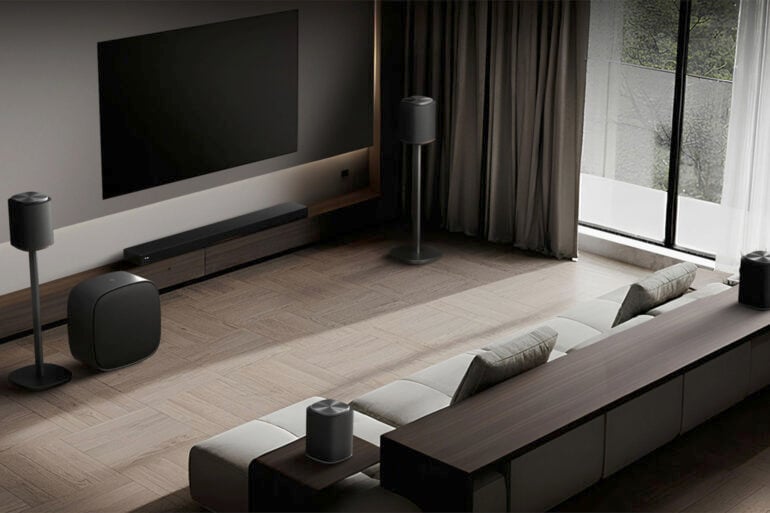
Dolby Atmos FlexConnect has been around for a little while now, but it made a big step towards living rooms during CES 2026, after LG announced the first soundbar to use the technology.
Confirmed as part of the LG Sound Suite, an audio system engineered to let you add additional speakers more easily, the H7 soundbar includes FlexConnect as a core feature. It’s aimed at streamlining home audio setups, reducing wires and hyper-specific configurations.
According to Dolby, the audio technology should make it easier for people to configure a good speaker setup, “no technical expertise required.”
What is Dolby Atmos FlexConnect?
At the heart of Dolby Atmos FlexConnect is the claim that you can place compatible speakers wherever you want, and they will adapt to the space, not the other way around. It requires a central FlexConnect-compatible device that acts as a hub for wireless speakers to connect to.
Up to this point, TVs were that central device. TCL TVs from as early as 2024 were among the first to support Dolby Atmos FlexConnect. Compatibility is expanding, though, starting with the LG H7 soundbar and various LG TVs.
You can then connect wireless speakers to the central device, without worrying about optimal placement. As Dolby and LG put it, you should be able to place speakers wherever fits your existing living room layout, furniture and all.
Once the speakers have been connected, FlexConnect then works to automatically adapt the Dolby Atmos sound based on your viewing setup. All the underlying technology spreads the sound between each speaker to optimise the audio output based on where everything is positioned.
How does LG Sound Suite work?
Now that soundbars are getting in on the Dolby Atmos FlexConnect action, LG plans to promote living room flexibility. Its H7 soundbar can enable FlexConnect on any TV, so an entirely new screen is no longer a requirement.
Interestingly, FlexConnect seems to require a high level of computing power; the H7 soundbar uses the same Alpha 11 AI Processor Gen 3 chip found in LG’s OLED TVs. That’s likely because LG Sound Suite adds some of its own processing on top of Dolby Atmos FlexConnect.
In addition to the wireless speaker pairing and optimising, Sound Suite supports its own layer of room calibration and AI processing to tweak audio. Part of that is creating a “listening sweet spot” based on your location. LG does this via a combination of ultra-wideband technology and its ThinQ app, which it uses to home in on your viewing position.
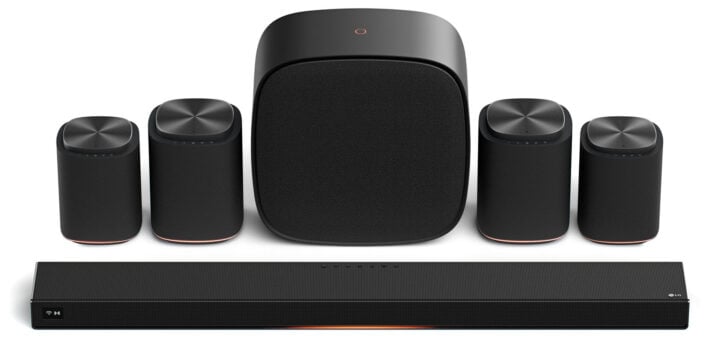
LG Sound Suite also refers to a specific set of speakers, so it’s not just another label for Dolby’s technology. Alongside the 5.1.3-channel H7 soundbar, the range consists of the M7 and M5 speakers, and the W7 subwoofer. Each one uses components from Peerless, a Danish audio brand known for its high-quality speaker technology.
LG hasn’t confirmed Australian prices or release dates for the LG Sound Suite yet. Overseas, the H7 soundbar costs US$999, so it will likely be one of the brand’s priciest models when it launches locally.
For home cinema enjoyers, perhaps this emerging technology could make wireless surround sound systems far less tricky than their wired counterparts.
The post LG’s new soundbar marks a first for wireless connectivity appeared first on GadgetGuy.


0 comments:
Post a Comment