This is default featured slide 1 title

Go to Blogger edit html and find these sentences.Now replace these sentences with your own descriptions.

This is default featured slide 2 title

Go to Blogger edit html and find these sentences.Now replace these sentences with your own descriptions.

This is default featured slide 3 title

Go to Blogger edit html and find these sentences.Now replace these sentences with your own descriptions.

This is default featured slide 4 title

Go to Blogger edit html and find these sentences.Now replace these sentences with your own descriptions.

This is default featured slide 5 title

Go to Blogger edit html and find these sentences.Now replace these sentences with your own descriptions.

Thursday, 24 August 2023

BlueAnt X3i Bluetooth speaker review: bang for your buck

9

Big enough to rock a small space, but small enough to slip in your carry bag, the BlueAnt X3i Bluetooth speaker ensures you’ll have music wherever you go.

As a general rule, the value of a portable Bluetooth speaker is more about convenience than performance – especially in the $200 to $300 price range. It’s never going to match the sound quality of a dedicated high-end speaker sitting in the corner of your lounge room. Nor is it going to match the power of a giant yet supposedly “portable” party box that requires a sherpa to lug it around.

But just like cameras, the best speaker is the one you have with you. Whether you’re chilling in the backyard, kicking back in the park or partying at the beach – a portable Bluetooth speaker that you can throw in your bag ensures that you’re the life of the party. Bonus points if – like the BlueAnt X3i Bluetooth speaker – the unit can survive an unexpected dunking and keep on partying.

BlueAnt X3i Bluetooth speaker first impressions

Out of the box, the BlueAnt X3i Bluetooth speaker is a bit heftier than you might expect, considering the price tag. Many portable speakers in this category are roughly the bulk of a 600ml soft drink bottle, whereas the X3i comes in closer to a 1-litre bottle of milk and tips the scales at 1.1 kg.

That bulk is certainly promising when it comes to sound quality, but the initial trade-off is that it’s going to weigh you down a bit more when you’re on the move. It’s a shame that BlueAnt didn’t build in a handle or mounting loop. Even a soft carry case would be a welcome addition, also helping protect the speaker as it bounces around in your bag. The weight isn’t really a major issue if you’re loading everything into your car or even schlepping it on the bus, but you won’t want to carry it for hours.

When it’s time to put down the speaker and crank up the music, the BlueAnt X3i’s qualities start to shine through. Place it on the table and it certainly looks the part. The elegant and understated style says quality, avoiding the garish designs sometimes used to hype up cheap and nasty portable speakers.

Unlike some portable Bluetooth speakers, the BlueAnt X3i is only designed to sit on its side. Rather than pump out audio in all directions, it mostly throws sound to the front and sides – thanks to those generous passive radiators.

That means it’s best placed off to the side of the party rather than smack in the middle of the space. The squat, solid design and rubber feet reduce the chances of someone accidentally knocking it off the table.

On the top, large but subtle play/pause and volume controls are easy to access, along with dedicated power and bass boost buttons. At the back, you can pop out a waterproof plug to expose USB-A, USB-C and auxiliary inputs.

BlueAnt X3i Bluetooth speaker specifications

Speakers 2 x 57 mm drivers, 2 x passive radiators
Frequency response 150 Hz to 20 kHz
Power output 15W*2 (RMS) @10% THD
Bluetooth 5.0
Bluetooth profiles A2DP, HSP, HFP
Inputs USB-A, USB-C, 3.5mm aux jack
Battery 3.7V 9600 mAh
Power DC 5V 3A via USB-C, supplied AC adaptor
Power supplied DC 5V 1A via USB-A
Colours Slate Black, Ocean Blue & Crimson Red
Ruggedness IP67
Dimensions 95mm diameter, 230 mm length
Weight 1.1 kg
Price $249 RRP
Warranty 1 year
Official website BlueAnt

Features

All those inputs on the back help make the BlueAnt X3i Bluetooth speaker a versatile device when you’re on the go. 

The speaker charges via USB-C, with a 9600 mAh onboard battery that’s good for about 15 hours. Along with this, it can also act as a power bank and charge a device attached via USB-A. At 5V 1A it’s not exactly fast-charging, but it’s enough to keep your phone alive so the music doesn’t fall silent.

It’s easy to stream music to the speaker from your smartphone, tablet or notebook via Bluetooth, with the built-in mic so you can make hands-free calls or summon the smart assistant on your phone. There’s also an old-school 3.5 mm audio line-in, just in case you want to plug it into a different audio source like an old MP3 or portable CD player. You can also pair two X3i speakers together for a wider sound, supporting a connection range of up to 30 metres.

What’s also impressive is the IP67 ruggedness, allowing the speaker to survive a dunking should it come to grief poolside or at the beach.

Audiophiles might be disappointed that the BlueAnt X3i only supports Bluetooth 5.0 with the A2DP profile only handling the basic SBC codec. That means you’re falling short on sound quality compared to Bluetooth speakers which handle higher quality formats like AAC and aptX (assuming your player and music source also supports them).

While they’re high-end formats, you do find them in some portable Bluetooth speakers around this price range. To be fair, you’re more likely to notice the improvement from these formats when wearing high-end headphones, or listening carefully to your favourite music via great Hi-Fi speakers.

Realistically, the improvement of something like AAC is probably lost when listening to a portable speaker thump out your favourite tunes in the background.

Quality

Crank up the BlueAnt X3i Bluetooth speaker and it’s loud enough to rock a small room or outside space such as a patio. It really pumps out sound and can easily fill bigger spaces if you’re looking for atmosphere rather than a dance party.

The box promises “booming audio with deep bass,” but so do they all. The X3i comes with an optional “bass boost” button but that’s a bit misleading. I’d say engaging it is mandatory if you want decent sound at high volumes, otherwise it sounds a little tinny.

Even with bass boost enabled, you can hit at least 90% volume without distortion. It’s a warm full-bodied sound and fat bass, with plenty of power although not truly thumping. The audio is a fraction flat and murky when you dig down into the detail, perhaps only a sore point for audiophiles who would rather spend more money elsewhere. For everyone else, it’s not enough to complain about, considering it’s aimed at backyard parties rather than listening parties.

Who is the BlueAnt X3i Bluetooth speaker for?

The BlueAnt X3i Bluetooth speaker delivers impressive sound considering the size and price tag. Of course, like most portable Bluetooth speakers in this price range, it’s not intended for nuanced listening – it’s more for bashing out Barnsey than Beethoven.

It’s not the most portable of portable speakers, but in return you get plenty of bang for your buck and a battery life that will party all night.

BlueAnt X3i Bluetooth Speaker
More Barnsey than Beethoven, the BlueAnt X3i Bluetooth speaker is nonetheless an impressive audio device for its size and price.
Features
8.5
Value for money
9
Performance
8.5
Ease of use
10
Design
9
Positives
Loud and full-bodied with little distortion
Long battery life, doubles as battery pack
3.5mm aux input
Negatives
Bulky with no handle
No high-end Bluetooth codecs
9

The post BlueAnt X3i Bluetooth speaker review: bang for your buck appeared first on GadgetGuy.


Monday, 21 August 2023

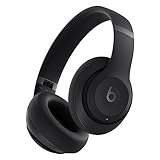
Beats Studio Pro review: great for the aesthetic, not the sound

There was once a time when Beats headphones were inescapable. Every vaguely cool person in the entertainment industry was spotted wearing a pair at some point. Even for me, a pair of Beats Studios was the first expensive pair of headphones I bought.

But while Beats By Dre had the look down, they didn’t sound great. The bass was overwhelming and the mid-tones just barely existed. They were headphones you wore to look cool, rather than experience the details of songs the way the artists intended (despite the advertising). Then, Apple bought Beats and the company released some genuinely good headphones. The Beats Solo Pro are still the best on-ear headphones I’ve heard under $600, and definitely the best on-ear noise cancelling.

So, going in, I had really high hopes for these new Beats Studio Pros. Alas, despite their promise, they under-deliver in key ways. In many ways, they’re a devolution from the highs of the Solo Pros. However, they do still look pretty good.

Beats Studio Pro first impressions

I really liked the packing for the Beats Studio Pro. They have that “industrial-yet-eco-friendly” look that’s so in style now. It was nice and easy to open, revealing the Studio Pro headphones in a nice, simple, fabric black case.

Setting up with my iPhone 14 Pro Max was easy – I turned them on and then held them close to each other and the phone picked them up, kind of like AirPods. However, oddly, some of the Studio features are reserved for Android only (we’ll get to that in a minute).

Beats Studio Pro headphones

Picking up the headphones themselves, I was surprised by how cheap they felt. For $529.95, I would expect them to feel and look premium, but they feel more like $350 headphones. Lots of plastic with little metal accents. They also look more boring and understated like the Beats of old. I miss the little red logo on the black background. Comparing them to other headphones in the same price range from Sony and Sennheiser, the Studio Pro just feels like a step down.

Specifications

Dimensions Height: 18.1 cm / 7.125 in.
Length: 17.8 cm / 7 in.
Width: 7.8 cm / 3.1 in.
Weight: 260 g / 9.17 oz.
Form factor Over-ear
Connectivity Class 1 Wireless Bluetooth 5.3
USB-C audio
3.5mm analogue input for wired audio sources
Battery Beats Studio Pro (single charge): up to 40 hours of listening time
Fast Fuel: a 10-minute charge provides up to 4 hours of playback
Price (RRP) $529.95
Warranty One year
Official website Beats Australia

The most interesting thing about the Beats Studio Pro is that if you plug them into an Android phone, you can unlock new customisations and get higher definition audio. This is an Apple product designed to be friendlier with Android, and yet Apple Music doesn’t offer lossless on Android. It’s fascinating.

There are also a lot of really good features in there. I love the physical controls – they’re easy to use, easy to remember, and don’t interfere with the way you listen like some others do. This is the model for how all controls on headphones should be done.

The fast charging feature of 10 minutes charge to get 4 hours of listening has saved me a couple of times when I’ve accidentally left them on in my bag and run down the battery. The 40 hours of battery life with ANC off is also extremely good. On paper, these headphones are fantastic.

Performance

There are really two things that matter most for performance on headphones like this: audio quality and noise cancelling.

Audio quality

These aren’t headphones that will excite any audio snob. But they’re also not headphones that will disappoint anyone who likes Beats headphones. Long-time Beats Studio fans will see them as a step up, but Beats Solo Pro users will be unimpressed.

Going through my usual headphone testing songs, “Paralyzed” by Conquer Divide sounds distorted. A song with thus much bass should be easy pickings for Beat Studio Pro, but the mid-tones are missing so much that the bass sounds unsupported, and so the song sounds empty.

“Simmer” by Hayley Williams really benefits from the Spatial Audio features. It sounds like the drums are travelling around my head. But the details I normally look for are gone. I have to strain to hear the qualities of the snare, and the cymbals sound generic. The little details in the background of the verses that give it that magic just aren’t there.

“Full Heart Fancy” by Lucky Chops almost sounds like it was made with a drum machine, whereas there are other headphones where I could guess which kinds of sticks he’s using to play and on which size cymbals. The trumpets soar, and the saxophone sounds great, but there’s a flatness to it. Like a square with the corners filed off.

Beats Studio Pro side on

“That’s Where I Am” by Maggie Rogers sounds a bit better, possibly because I don’t know it as well (I’ve only heard it around 20 or so times), so I’m not as aware of what could be missing. But the shift from the verse to the pre-chorus sounds fantastic, like the world falls away.

Other songs where I’m not so critical in looking for the little details that make them special on other headphones also sound good. “One That Got Away” by MUNA sounds like it was made for the Beats Studio Pro. It sounds impactful, her voice cuts through clearly, and the electronic drums sound good, even if they’re missing a bit of punch on the chorus.

If I didn’t spend most of my time listening to better headphones in the same price range, I’d probably be pretty happy with the audio quality here but, unfortunately, I do, and I really can’t wait to be able to stop listening to the Beats Studio Pro all the time and go back to the better ones. I still like the Beats Studio Pro because they fold up small, they have great controls, and plugging them into my Samsung Z Fold sounds much better. They’re not the worst I’ve heard. They’re just kinda “fine”. If they were $300 or maybe even $350, their sins would be more forgivable. But at $529.95, there are just too many other better options.

Noise cancelling

Apple and Beats have a great track record for noise cancelling. As a company, they have plenty of people who know what they’re doing with noise cancelling. I don’t know why none of them worked on the Beats Studio Pro.

On a plane, I could hear the conversations around me. The Studio Pro cut out a lot of the noise, but not as much as a pair of Sony XM5s or Apple AirPod Pros.

It’s not the worst noise-cancelling around, but it’s also not the best. It’s just “fine”.

Who is Beats Studio Pro for?

Beats Studio Pros are for people who like the Beats aesthetic. These are a fashion accessory more than they are a pair of $530 headphones. I have a jumper they go with very nicely and will likely wear them together when I want to look nice. I probably won’t want to listen to any albums by my favourite bands for the first time on them. They’re also not my first pick for long-haul flights.

Beats Studio Pro – Wireless Bluetooth Noise Cancelling Headphones – Personalised Spatial Audio, USB-C Lossless Audio, Apple & Android Compatibility, Up to 40 Hours Battery Life – Black
  • Beats’ custom acoustic platform delivers rich, immersive sound whether you’re listening to music or taking calls.
  • Lossless Audio via USB-C plus three distinct built-in sound profiles to enhance your listening experience
  • Hear What You Want with two distinct listening modes: fully-adaptive Active Noise Cancelling (ANC) and Transparency mode
  • Enhanced compatibility with one-touch pairing and a robust set of native Apple and Android features
  • Personalised spatial audio with dynamic head tracking place you at the centre of an immersive 360-degree listening experience

I am a strong believer in a pair of headphones for every occasion and purpose, and while I don’t recommend these as anyone’s main pair of listening headphones, they are great for nostalgia and they don’t sound terrible.

GadgetGuy occasionally uses affiliate links and may receive a small commission from purchased products.

Beats Studio Pro
Features
8
Value for money
5
Performance
6
Ease of use
9
Design
7
Positives
Long battery life
Best on ear controls I’ve seen in a long time
Lots of customisation options on Android
Negatives
A lot of the features are locked to Android
They sound merely “fine”
The noise cancelling is merely “fine”
7

The post Beats Studio Pro review: great for the aesthetic, not the sound appeared first on GadgetGuy.


Sunday, 20 August 2023

Here are the must-have devices you need for a cozy spring

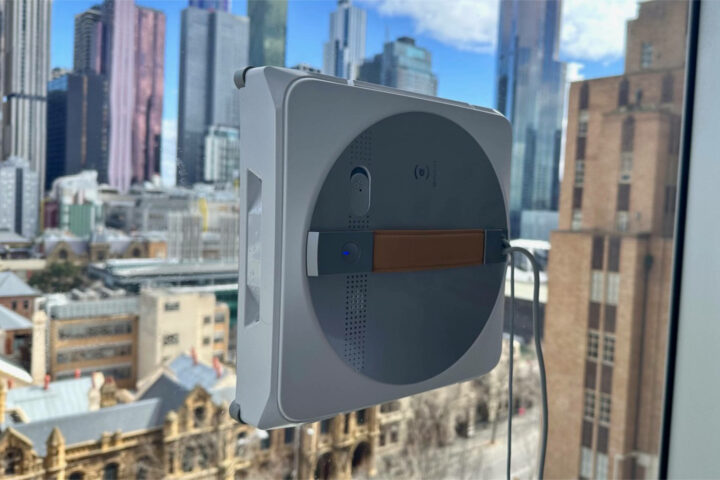
Can you believe that spring is almost upon us? We are mere weeks away from being unable to breathe through all the hay fever, while the weather yo-yos between “utterly freezing” and “quite nice”. I unironically cannot wait. There are plenty of devices that’ll help you get the most out of your spring, ranging from a Dyson air purifier that helps allergy sufferers to an Ecovacs Winbot that does the dreaded window-cleaning chores for you.

Whether you want to do a spot of spring cleaning, entertain at home or eat healthily during the new season, here is some of the must-have tech to get through the time of change.

Entertainment

Samsung The Freestyle Portable Projector – $995

The Freestyle is really great in any weather: perfect for a blanket fort, backyard barbeque footy watch party, or romantic date with your own moonlight cinema. The Freestyle is small enough to be portable, not too much bigger than a drink can, but it has a great 100-inch Full HD picture. It has all the smart features you’d expect of a portable projector in 2023, so you can just hotspot your phone to watch Netflix or Optus Sport.

Samsung Freestyle projector
Source: Samsung

The sound from the built-in speaker is… tolerable. I’d recommend pairing it with a portable speaker (like a Sonos Move).

You can currently pick one of these projectors up for $995 at Harvey Norman.

Temperature and Air Purification

Dyson Purifier Hot+Cool Formaldehyde – $1,048

Dyson Hot+Cool air purifier
Source: Alice Clarke

These Dyson fans are so very, very expensive. But, if it’s in your budget, I highly recommend springing for them for a few reasons:

One, they’re really good heaters. They don’t use quite as much energy as my old blow heater (but don’t get me wrong, they still use a lot of electricity), and they heat the room quickly, because of the way it oscillates. On hot days, it also works as a handy fan to cool you down a bit. Not as well as an air conditioner, of course, but if you don’t have an air conditioner on hand, it’ll work in a pinch.

Plus, it’s a really good air purifier. Air purifiers are important at all times, and I will never not recommend getting one, because they make such a huge difference for allergy sufferers and asthmatics, not to mention people who enjoy breathing clean air. This air purifier has a fully sealed HEPA filter, so air won’t just bypass the filter. Plus, because it’s designed to throw heat/cool air around the room, it moves air effectively to clean more of the space, unlike some other purifiers which just seem to purify one cubic metre of air.

It’s also smart, so you can trigger it with voice prompts (if you set that up with your smart assistant) and control it with your phone, so if you’re cold in bed you can just activate it from your phone instead of making yourself colder by leaving the safety of the blankets.

I’ve relied on Dyson heaters in my (non-air-conditioned) apartment for years, and can’t imagine living without them at this point. The Dyson Purifier Hot+Cool Formaldehyde comes highly recommended.

Dyson Australia stocks the heater on its official store, or you can find it at major home appliance retailers.

Cleaning

Ecovacs Winbot W1 Pro – $679

Ecvoacs Winbot W1 Pro robot window cleaner
Source: Alice Clarke

Spring is a great time to clean out your home after the hibernation of winter. However, cleaning is hard and who has the time or energy to do it all manually? This Ecovacs Winbot W1 Pro won’t do as good a job as you would with the proper equipment and some elbow grease. But also, let’s be real, you’re probably not going to get around to using the proper equipment or elbow grease (I know I’m certainly not), and this new robot window washer does a much better job than the original model.

The proprietary cleaning solution is a bit pricy, and the robot uses a lot of it. However, you can switch to water and just deep clean the window twice to get a similar effect. Or (and Ecovaccs doesn’t endorse this idea), just lightly spritz the window with Windex and have the Winbot filled with water clean the window from there, but make sure you don’t make the window too wet or the Winbot will fall and everyone will be sad.

Sale
ECOVACS Winbot W1 PRO Window Cleaner Robot, 2800 Pa Suction with Cross Auto-Spray & Win SLAM 3.0 Path Planning Technology, Anti-Flare Edge Detection,App control
  • Effortless cleaning: the window cleaning robot with its optimised suction power of 2,800 Pa, which thanks to its sophisticated intake, the window vacuum robot adheres well to the window at all times
  • WIN SLAM 3.0: The WINBOT W1 PRO robot cleans the window completely and thoroughly with a forward-reverse motion in 3 adaptive modes: quick cleaning, deep cleaning and stain removal
  • Highest safety for the robot windscreen cleaner – a drive system with non-slip function that ensures even movement and protection against power failure – it is hardly safer
  • Edge detection: the high precision coupling sensor detects edges and fits the cleaning path within 0.02 seconds. so that the Winbot W1 Pro window cleaner can easily clean frameless windows

But again, I cannot stress enough how much this is a device that means you don’t have to clean your own windows. This is the dream.

At the moment, the Winbot W1 Pro is $697 on the official Ecovacs Australia store, alongside several other retailers.

Bissell PowerFresh Lift-Off Steam Mop – $299

This steam mop is one of the best cleaning devices I have. Mopping normally requires a lot of effort, and usually the reason why I need to mop is because I just cooked, and that was already enough effort. Having a steam mop means that the floor gets clean with less effort because the steam loosens the ickiness of the floor.

This one has some really finicky controls that are downright new-user unfriendly. But once you work out its idiosyncrasies, you can just kinda drag it around the floor to make it clean, rip off the mop pad, and chuck it in the washing machine. As easy as mopping can get without a robot.

It’s $299 from Godfreys and other stores that sell cleaning appliances.

Cooking

Panasonic SR- HL151KST IH Rice Cooker – $499

Panasonic rice cooker
Source: Panasonic

Yes, the absorption rice cooking method is great because it’s cheap and easy. However, it also requires a medium amount of effort and some supervision. A rice cooker means you just put the water and rice in there, and then the rice cooker will cook it and keep it warm until you’re ready to eat. You can make rice for lunch and still have it warm and nice for dinner.

What does this have to do with spring? Maybe you’re distracted from enjoying the outdoors, or you’re cold, and just want food to happen with the least amount of effort possible? Who knows. The important thing is that a good rice cooker is an essential any time of year, and this is a really good one. Spring is also a good time for healthy eating, if you need a tenuous seasonal link to make a purchase. Anyway, rice cookers are great and you need one.

Panasonic 1.5L Induction Heat Rice Cooker with Multi Cooking features for Healthy Low Starch Rice (SR-HL151KST),Black
  • HEALTHY LOW STARCH RICE. Separates Starch Water from Rice. The soluble starch is dripped down and kept separated from the rice to reduce the starch content
  • PRECISE TEMPERATURE CONTROL FOR TASTY and FLUFFY RICE. Intelligent sensors and the built-in inverter ensure rice is cooked at the right temperature
  • NON-STICK and DURABLE INNER POT. Better Heating with Binchotan Charcoal coated inner pot which has excellent thermal conductivity and heat retention to transfer heat quickly and effectively during cooking
  • MULTIPLE COOKING FUNCTIONS. 11 EASY ACCESSIBLE MENUS – Healthy Low Sugar Rice, Enhanced Taste, White rice, Quick/Quinoa, Long-grain Rice, Brown Rice, Multigrain, Congee/Soup, Cake, Reheat and Steam. 15 Minutes Reheat & Keep Warm for up to 5 hours. TIMER – 24 hour preset timer
  • Australian Plug and Australian Manufacturer’s Warranty Provided

It’s $499 direct from Panasonic, with plenty of bargains to be found if you shop around.

Read more appliance tech news on GadgetGuy

GadgetGuy occasionally uses affiliate links and may receive a small commission from purchased products.

The post Here are the must-have devices you need for a cozy spring appeared first on GadgetGuy.


Thursday, 17 August 2023

Grab one of the most affordable 5G phones for more than $40 off

Motorola earns a decent amount of its bread by making good-quality affordable phones. At $329 from retailers, the Motorola G53 5G is a decent handset, without going over the top on features and performance. Below $300, however, it becomes an entirely different value proposition.

From now until 14 September 2023, Motorola has dropped the Motorola G53 to a tempting $299 at various retailers, making it a decent budget consideration. More importantly, with shops keen to compete for your wallet, you can grab the affordable 5G phone for as little as $288, saving you more than $40.

Announced and launched earlier this year, the G53 is one of the cheapest ways to get a 5G phone and benefit from the faster network technology. Our review found that the G53’s 5000mAh battery lasted well into multiple days, and the slim chassis redesign made for comfortable use. However, in making the phone more affordable than the now-superseded G51, the G53 does have a lower-resolution display. Which, at this price point – especially on sale for under $290 – is a pretty easy pill to swallow. You still get a smooth 120Hz refresh rate, after all.

Motorola G53 5G sale: get the phone for $288

At the time of writing, several retailers have Motorola’s affordable 5G phone for $288, likely in an effort to avoid price matching. It’s a win-win for you, though, considering the phone typically retails for $329.

Here are some of the shops offering the best deals:

Sale
Motorola moto g53 5G - Ink Blue
Motorola moto g53 5G – Ink Blue
  • Advanced 50MP camera system
  • Superfast 5G performance2
  • Fluid 120Hz display with an expansive view
  • Dolby Atmos and stereo speakers3
  • Outstanding battery life

Thanks to its big screen and long-lasting battery, the Motorola G53 would be well-suited as a teenager’s first phone, for people who don’t need a high-powered handset, or for anyone shopping on a budget. Alternatively, you can grab the G53 for $269 as part of a Telstra pre-paid promo.

Whenever buying an outright phone, make sure you check the cheapest SIM plans to ensure you’re not paying too much on your phone bill.

Find more deals on GadgetGuy

GadgetGuy occasionally uses affiliate links and may receive a small commission from purchased products.

The post Grab one of the most affordable 5G phones for more than $40 off appeared first on GadgetGuy.


DJI Osmo Action 4 review: ultimate adventure vlogging camera

DJI makes more than just drones and gimbals. The Shenzhen-based electronics company has actually been in the action camera game since 2018, starting with the Pocket 1, and then the first Osmo Action a year later. We’re now at the Action’s fourth iteration, and the camera still bears a striking resemblance to a GoPro, this time the Hero 11. Similarities between the two are no bad thing, however, as the DJI Osmo Action 4 aims to improve on the formula with some standout capabilities.

What’s new in the Osmo Action 4?

The Action 4 is also similar to the Action 3. They look the same, and share features like the 1.4 and 2.25-inch colour touch screens. However, one of the most significant improvements is with the image sensor, which grows from 1/1.7 inches to 1/1.3 inches. This brings a wider dynamic range and better low-light performance, but more on this later. 

Otherwise, Action 4’s case has a revamped lens cover design, and it can now be submerged to 18 meters. While recording modes, including the maximum 4K at 120 frames per second (fps), remains unchanged, you can now adjust the level of image sharpening and noise reduction, allowing a cleaner file to add your own effects during editing.

Another welcome addition is that GPS data can be overlayed on your footage, which is a cool way to share your location. You’ll need to buy the GPS Bluetooth Remote controller for this, however. FPV drone pilots will love the ability to export gyro data into post-production tools like Gyroflow, which can be used to smooth out videos even more than the onboard stabilisation and the new D-Log M mode offers a flat 10-bit colour profile that’s perfect for grading footage.

DJI Osmo Action 4 specifications

Camera 1/1.3-inch CMOS
FOV: 155°
Aperture: f/2.8
Focus Range: 0.4 m to ∞
3648×2736 max photo resolution & 4K video
More information
Dimensions 70.5×44.2×32.8 mm
145 g
Displays Front screen: 1.4-inch 323 ppi 320×320
Rear screen: 2.25-inch 326 ppi 360×640
Both touch enabled
Storage No in-built storage, support for microSD cards up to 512GB
Durability 18 m depth without the Waterproof Case, 60 m with the Waterproof Case
Battery 1770 mAh
Tested to 160 minutes
Connectivity Wi-Fi (802.11 a/b/g/n/ac)
Bluetooth 5.0
Price (RRP) $629 (Standard Combo)
$819 (Adventure Combo)
Warranty 1 year
Official website DJI Australia

Capabilities: DJI Osmo Action 4 vs GoPro Hero 11 Black

The DJI Osmo Action 4 Standard Combo costs $629, which is $110 more than the Action 3 ($519). The GoPro Hero 11 Black is $649.99, and therefore its most logical competition. The key difference between the two really comes down to recording capabilities and modes. The Hero 11 Black can record videos and capture photos at higher resolutions, whereas the Action 4’s larger sensor provides better low-light performance and higher dynamic range. This is due to the different sensors used between the products; The GoPro Hero 11 Black has a 1/1.9-inch sensor versus the Action 4’s larger 1/1.3-inch variant.

The GoPro Hero 11 Black’s video recording supports a maximum 5.3K video capture at 60fps, 4K at 120fps, and 240fps at 2.7K resolution. As mentioned earlier, the Action 4 tops out at 4K/120 fps, and can manage HD resolution (1080p) in 240fps. The sensor shape is also different, with the Hero 11 Black using an 8:7 shape, and the Action 4 has a 4:3 aspect ratio. The Hero 11’s 8:7 mode will capture a higher resolution in vertical shooting mode, which is a plus for capturing social videos, however, the Action 4 is also decent here, just with a bit less detail.

On the photo front, the Hero 11 Black can shoot 27.13 megapixels photos, compared to the Action 4’s 10-megapixel capability.

Another thing that sets the two apart is the Action 4’s touch-sensitive front display. While the GoPro also has a colour front screen, you can’t interact with it to adjust settings or review footage. Either way, a front display is very useful for previewing your recordings and very handy if you’re recording videos or taking photos on your own.

Design

The Action 4 comes in a standard action camera shape, with a rectangular body and camera lens on the top right-hand side. While it’s fairly rugged on its own, you also get a protective metal frame in the box, adding extra reassurance. 

Another standout feature of the Action 4 is the magnetic quick-release mount system. This includes a sturdy magnetic baseplate with attachment points on both the bottom and side of the camera. This means you can easily switch between horizontal and vertical shooting, and you don’t need to unscrew the base, like GoPro’s mounting system. And as the mounts are guided by magnets, you can easily swap attachments while wearing gloves or in the dark.

You can buy more than one magnetic base too, and these can still be used with standard screw-based GoPro accessories, so if you have both in your kit bag, they can be shared.

The only downside is that you’ll need to avoid misplacing your magnetic baseplates when not in use as they are not affixed to the case like a GoPro Hero.

Resisting the elements

The USB-C connection port, battery, and memory card cover are behind watertight hatches, and I found these much easier to open than the Hero 11 Black.

And with 18 metres of water resistance, you can increase this to 60 meters by adding a waterproof case. The Hero 11 Black can only manage 10 meters, but it too can descend to 60 meters by adding the GoPro waterproof case accessory.

There’s a deep freeze capability too, which essentially means that your battery won’t be tapped in very cold weather. DJI says you can get up to 150 minutes in temperatures as low as 20 degrees centigrade, though I didn’t test this for myself.

Camera capabilities

The Action 4 has a comprehensive selection of shooting features including horizontal and vertical capture, image stabilisation modes, 2 x digital zoom, timelapse and hyperlapse modes, horizon lock, wide and linear lens effects, high dynamic range, 10-bit colour and slow-motion. It also does a decent job of erasing the extension rod/selfie stick from your final footage.

Then there’s voice-activated recording, a customisable QuickSwitch button and a DJI control app. You can also use the Action 4 for live streaming when connected to a phone or computer.

The menu controls are straightforward enough. You can save camera configurations to custom modes, and these can be assigned to the QuickSwitch menu. Tapping the power button can cycle between them.

Swiping up on either display gives you access to settings, and there are on-screen icons for previewing footage, zoom and the like. The menu is fairly consistent between the front and rear screens, though it’s a little cramped on the 1.4-inch front unit. Still, it’s great that this is a touchscreen, as the Hero 11 Black’s front display is not.

The DJI MIMO app is where you can access your footage album, use editing tools, remotely control the camera, update firmware and access tutorials. However, one annoying thing is that you can’t set up the camera without the app or your smartphone.

Battery life

A benefit of the Action 4’s lower resolution sensor is that there are fewer pixels to manage. This translates to less processing and less heat generated when recording. The Hero 11 Black, for example, will have reduced battery life and less recording time in its highest 5.3K mode before it needs to take a break to cool down.

As such, the Action 4 didn’t appear to have any heating issues when recording in 4K/60 for about 35 minutes on a cool day, and its battery lasted around 95 minutes including numerous recording sessions at maximum 4K/60 resolution. And, as I had the extra two batteries and charging case, there was never a worry about running out of juice. If you do, the battery supports rapid charging and can hit 80% in 18 minutes.

What’s the image quality like?

Overall, I was really impressed with the Action 4’s footage. Its larger sensor size really does produce a dynamic picture, so it’s the king of low-light recording compared to the Hero 11 Black.

It’s surprising how much detail is captured once the sun goes down, and this really should be your go-to camera if you plan on shooting in darker settings. It can’t see in the dark, and there will still be noise in very low light, but it’s quite impressive given the sensor size.

There isn’t much white-clipping in harsh sunlight either, and objects like clouds remained detailed when shooting towards the sky.

Colours are also vibrant and bright, and the image stabilization is very good. I fixed both cameras to a rig and certainly shook the daylights out of them, and I really couldn’t tell the difference in terms of anti-shake.

This is the same with audio recording – as both seemed to be about the same in terms of clarity and background noise reduction. You can also add an external mic should you wish to improve your recordings with a DJI wireless mic attachment.

While the GoPro Hero 11 black can capture in higher resolutions, the action force 4K still looks quite sharp and detailed so you’re not going to be missing out on much. I suppose a drawback is that the smaller resolution means that your picture will be cropped more when stabilized.

I integrated some Action 4 footage into a professional 16:9 production (shot with a Canon EOS C70), and it held its own in terms of clarity, colour and noise, and we didn’t need to do much to it.

It was also really easy to switch to vertical recording using the magnetic mount. All I needed to do was disconnect the plate and then reconnect it to the short edge of the camera and off I went. Both photos and videos captured vertically were fairly easy to manipulate for my social posts, however, the Hero 11 Black’s 8:7 aspect sensor does get you closer to a 9:16 crop.

What does the Osmo Action 4 cost?

In the Standard Combo package ($629), you’ll get the Action 4 camera, the protective frame, magnetic baseplate and a curved adhesive mount, which looks like it’s for sticking on a bike or motorcycle helmet. The model I reviewed was the Osmo Action 4 Adventure Combo, for $819, and this includes two additional batteries, a handy multifunctional battery charging case and a sturdy 1.5-meter extension rod.

Who is the Osmo Action 4 for?

This is a fantastic action camera for outdoor/adventure vloggers and solo content creators that want a rugged, easy-to-use system. The Action 4 is the go-to choice for low-light shooting as well as hot climates because the camera won’t overheat as quickly in high-resolution modes. It has plenty of post-recording features too such as D-Log/10-bit colour grading, gyro stabilisation and GPS details that can be added to your videos.

Still, if you need the highest resolution possible at the highest frame rates, then the GoPro Hero 11 Black is your best choice. There’s also a wider selection of accessories in the GoPro camp. Otherwise, if you want to save $110 and don’t need the higher visual performance that the Action 4’s large sensor brings, you’ll probably be happy with the Action 3, which still has plenty going for it.

GadgetGuy occasionally uses affiliate links and may receive a small commission from purchased products.

DJI Osmo Action 4
It's a close contest between the DJI Osmo Action 4 and the GoPro Hero 11 Black, but a larger sensor gives DJI the edge in low-light.
Performance
9
Features
8.5
Ease of use
8.5
Design
8.5
Value for money
8.3
Positives
Larger sensor means impressive low light performance and dynamic range
Full colour front display is a touchscreen, making it easier to shoot and configure the camera while in front of the lens
Quick and easy magnetic base plate system with horizontal and vertical positions
Robust design with metal cage included, -20 degrees C cold resistant and rated for 18 meters underwater
10-bit D-Log mode for colour grading
Negatives
Can't reach the 5.3K maximum resolution or 240fps at 2.7K of the GoPro Hero 11 Black
You must use the DJI app to set it up
8.6

The post DJI Osmo Action 4 review: ultimate adventure vlogging camera appeared first on GadgetGuy.