
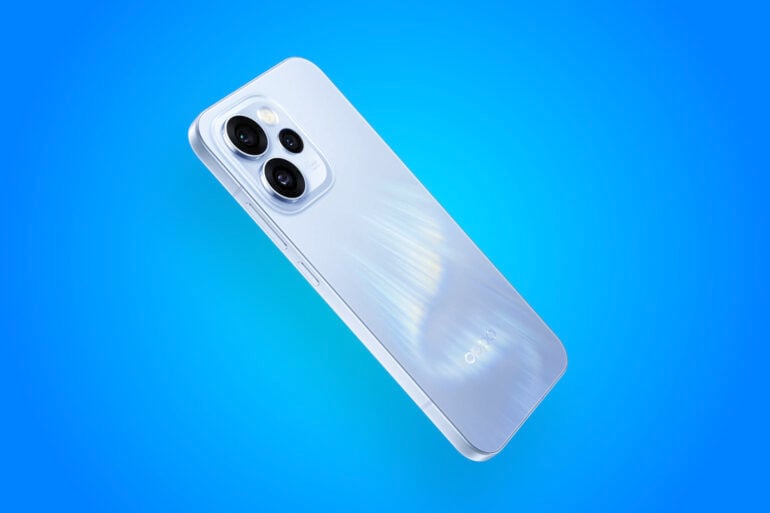
Shrinking the screen while overhauling the cameras, the Oppo Reno 15 Pro dukes it out with the mid-sized heavyweights.
There was a time when 6-inch smartphones were considered giants, but these days people expect a lot more screen real estate from top-shelf handsets.
Today, you can expect closer to 7-inch displays from flagship models, like the 6.7-inch Oppo Find X9 Pro, 6.8-inch Google Pixel 10 Pro XL, 6.9-inch Samsung Galaxy S25 Ultra and 6.9-inch Apple iPhone 17 Pro Max.
As such, it’s interesting to see Oppo dial things back with its new mid-to-high-end Reno contender, aimed at Android lovers who believe that size isn’t everything.
Table of contents
Oppo Reno 15 Pro first impressions
The Reno Pro range kept getting larger, peaking at a hefty 6.83 inches, but Oppo has decided to rein things in and scale back the new Oppo Reno 15 Pro to a more manageable 6.32 inches.
It’s worth mentioning that Oppo’s Reno 15 Pro has actually shrunk to make way for the new 6.78-inch Pro Max, bringing Oppo’s spread of handsets closer to that of its rivals. Unfortunately, the hefty Reno 15 Pro Max isn’t coming to Australia, nor is the standard Reno 15, as we only get the Reno 15 Pro and Reno 15 F.
It’s also important to note that the entire Reno 14 range completely bypassed Australia, so the 15 Pro is actually the local successor to the 13 Pro.
By sacrificing a little screen real estate compared to the 6.83-inch Reno 13 Pro, the 15 Pro is less unwieldy than its super-tall predecessors. The 19.5:9 aspect ratio ensures that the handset is not too wide and cumbersome.
The Reno 15 Pro’s aluminium frame sticks with Oppo’s move to abandon slightly curved edges in favour of an aluminium frame with dead straight lines that could easily be mistaken for an Apple iPhone.
It comes in a choice of two colours, an understated matte Dusk Black (pictured) and a more striking Aurora Blue with a rear etched texture which shimmers like the northern lights. In return, the Aurora Blue model is a fraction thicker and heavier.
The Reno 15 Pro sticks with the tried-and-true form factor of a power button on the right, close to the centre, and the volume buttons above. Surprisingly, it hasn’t inherited the Apple-esque touch-sensitive Quick Button from Oppo’s flagship Find X range, for easily launching the camera app, or the customisable Action button.
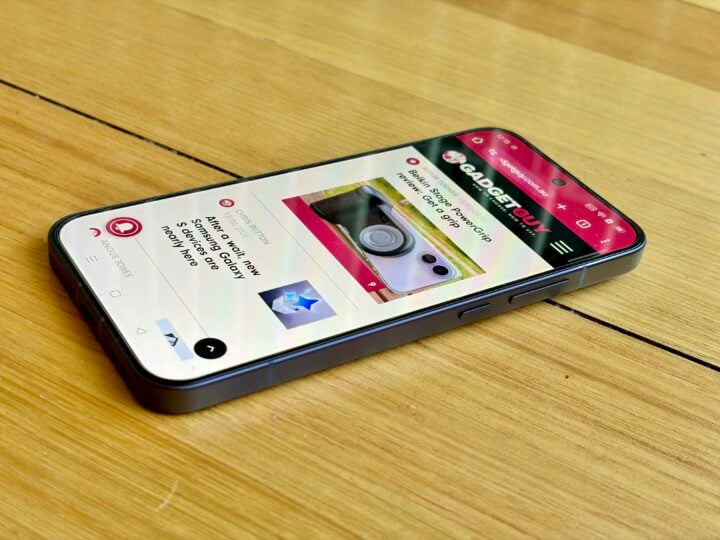
When the handset isn’t as tall, it’s not as much of a stretch to reach down to the onscreen fingerprint reader with your thumb, but personally, I’d rather see it built into the power button.
Fire up the phone, and you’re faced with a bright and vivid 2640 × 1216 pixel AMOLED display. The trade-off for the reduced screen size is a boost in sharpness, up to an impressive 460 pixels per inch.
The screen offers 10-bit colour with a 100% DCI-P3 colour gamut, along with up to 120 Hz refresh rate for smooth scrolling. It supports a peak brightness of 600 nits indoors and an improved 1,800 nits outdoors.
As a result of that extra brightness, you can watch Netflix with the benefit of HDR 10+, but not Dolby Vision, for extra detail in the brightest highlights and deepest shadows. The Reno 15 Pro can also shoot video in HDR.
At the bottom of the handset, you’ve got a USB-C port, alongside a dual nano-SIM port and the benefit of eSIM, but no microSD card support. There’s also no old-school headphone jack.
Oppo Reno 15 Pro specifications and price
| Display size | 6.32-inch |
| Display resolution | 2640×1216 pixel, 460 ppi |
| Display technology | AMOLED Corning Gorilla Glass 7i 120 Hz max refresh rate 240 Hz max touch sampling rate 10-bit colour, 100% DCI-P3 600 nits brightness, 1800 nits high brightness mode |
| Bands | 2G GSM 3G WCDMA 4G LTE FDD/TDD 5G Sub-6 |
| Chipset | 8-core MediaTek Dimensity 8450 |
| GPU | ARM G720 MC7@1300MHz |
| Rear cameras | Wide angle: 200MP; f/1.8; FOV 84°; 6P lens; AF supported; Supports 2-axis OIS |
| Ultra-wide angle: 50MP; f/2.0; FOV 116°; 6P lens; AF supported | |
| Telephoto: 50MP; f/2.8; FOV 30°; 4P lens; AF supported; Supports 2-axis OIS | |
| Front camera | 50MP; f/2.0; FOV 100°; 5P lens; AF supported |
| RAM | 12 GB LPDDR5X |
| Onboard storage | 512 GB UFS 3.1 |
| microSD slot | N/A |
| SIM | Dual nano-SIM and eSIM |
| Charging | USB-C Supports (Max): 80W SUPERVOOC Compatible with: 67W and below SUPERVOOC, 55W PPS, 13.5W PD |
| Battery | 6200 mAh / 24.31 Wh |
| Wi-Fi | Wi-Fi 6 (802.11ax) 160 MHz Wi-Fi channels over 5 GHz 2×2 MIMO |
| Bluetooth | Bluetooth 5.4, Low Energy, BLE Audio SBC, AAC, aptX, aptX-HD, LDAC, LHDC5.0 codecs |
| Operating system | ColorOS 16 (built on Android 16) |
| Security | Fingerprint reader, Facial recognition |
| Ruggedness | IP69 rating for water and dust resistance |
| Dimensions | 151.21 x 72.42 x 7.99 mm (Dusk Black) 151.21 x 72.42 x 8.13 mm (Aurora Blue) |
| Weight | 187 gm (Dusk Black) 188 gm (Aurora Blue) |
| Colours | Dusk Black, Aurora Blue |
| Price | $1,399 RRP |
| Warranty | 2 years |
| Official website | Oppo Australia |
Features
The Oppo Reno 15 Pro runs Android 16, customised as usual with Oppo’s own ColorOS UI, which has always felt a lot like Apple’s iOS. You have to deal with a little preloaded social media and online shopping bloatware.
One of the key updates with ColorOS 16 is smoother motion to support the OS’ dynamic effects, such as translucent visuals. You also get a decent dollop of AI-powered features, primarily around multimedia editing and the smart assistant.
Oppo has also put a lot of work into playing nicely with Apple devices, including AirDrop-like functionality, which kicks in when you place it alongside an iPhone.
Oppo says the handset will receive five major Android OS updates and six years of security patches, which is pretty good these days for a high-end handset, but doesn’t quite match the seven-year deals for Samsung and Google flagships.
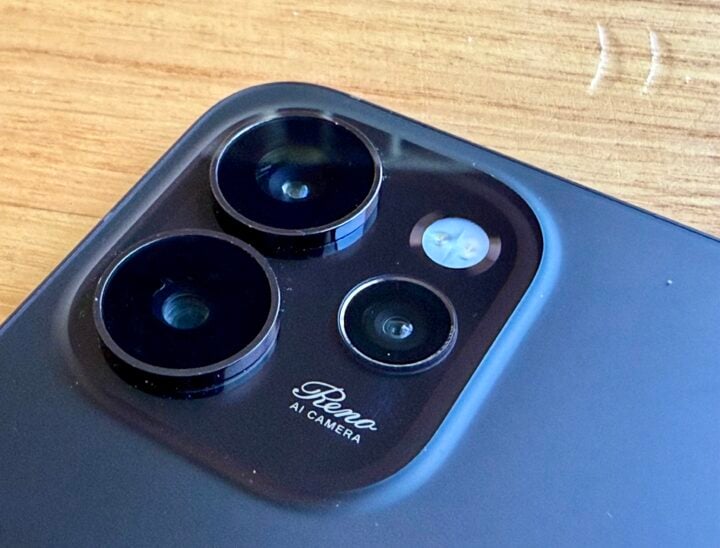
As you’d expect with the Pro moniker, one of the Reno 15 Pro’s big selling points is a triple-lens rear camera array. Flip the handset over, and you’ll find a 200 MP six-piece lens primary shooter with the benefit of optical image stabilisation.
Alongside is a 50 MP ultrawide and a 50 MP telephoto with 3.5x optical and 18x digital zoom. A 3.5x telephoto lens is better than what you’ll typically find at this price point. People’s priorities differ, but some will find that a telephoto lens is more useful than a macro lens.
Around the front, you’ve got a 50 MP ultrawide selfie camera, opting for a punch-hole design rather than relying on a notch.
You’ve also got the benefit of AI Flash Photography 2.0, with dual rear flashes delivering softer, more natural lighting, while the new front screen flash helps with selfies.
Under the bonnet, the handset packs the energy-efficient yet powerful octa-core MediaTek Dimensity 8450 chipset. It’s accompanied by a generous 512 GB of storage and 12 GB of RAM.
When it comes to connectivity, it’s a sub-6 5G handset with the benefit of dual nano-SIM and eSIM. You can take advantage of Bluetooth 5.4 with a good spread of audio codecs, but it hasn’t joined the Wi-Fi 7 club and leaves you relying on Wi-Fi 6.
The phone packs a hefty 6200 mAh battery which, combined with the smaller screen, ensures that it should get you through a long day. When you do need to top up, the handset can take advantage of 80-watt SUPERVOOC wired charging, using the supplied bulky AC charger. You miss out on wireless charging, which is disapppointing at this price point.
Quality
Geekbench 6 results tell a slightly underwhelming story for a mid-to-high-end handset, scoring 1,555 single-core, 6,330 multi-core and 11,828 OpenCL. It’s outgunned by the standard-issue Apple iPhone 17, Samsung Galaxy S25 and Google Pixel 10, which each sell for roughly the same price. That said, it’s still more than enough power to cope with day-to-day tasks, especially with 12 GB of RAM at hand.
| Phone | CPU single-core | CPU multi-core | GPU |
| Apple iPhone 17 Pro Max | 3,768 | 9,443 | 45,451 |
| Apple iPhone 17 | 3,520 | 9,057 | 37,161 |
| Oppo Find X9 Pro | 3,165 | 9,418 | 20,447 |
| Samsung Galaxy S25 Ultra | 2,360 | 8,911 | 14,671 |
| Apple iPhone 16e | 2,679 | 6,144 | 23,732 |
| Google Pixel 10 Pro | 2,317 | 6,455 | 3,233 |
| Oppo Reno 15 Pro | 1,555 | 6,330 | 11,828 |
| Xiaomi Poco F6 | 1,899 | 4,734 | 8,762 |
| Motorola Edge 60 Pro | 1,432 | 4,695 | 9,107 |
| Google Pixel 9a | 1,716 | 3,895 | 8,011 |
| Samsung Galaxy A56 | 1,364 | 3,898 | 6,539 |
| Motorola Edge 60 Fusion | 1,050 | 3,014 | 2,581 |
When it comes to photography, that 200 MP primary shooter sounds impressive, but we all know by now that pixels aren’t everything. Thankfully, it produces sharp and vivid images that don’t look too overblown and do a good job with tricky lighting conditions and low-light environments.
It’s worth mentioning that the Reno 15 Pro’s photos below look a lot more vivid when viewed on my MacBook Pro, which can make the most of the Reno 15 Pro’s Extended Dynamic Range photography. Here, they don’t look much better than the shots taken on the Reno 15 F.


The 120x super zoom also does an impressive job, even though Oppo doesn’t draw as much attention to it as with the Find X9 Pro.

Around the front, the 2x optical zoom comes in handy for portraits, producing impressive results with good bokeh. The quality is assisted by the fact that the default retouching isn’t too over-the-top.


Who is the Oppo Reno 15 Pro for?
The Oppo Reno 15 Pro has a lot going for it if you’re looking for great cameras, particularly a telephoto lens, in a relatively compact handset with a decent battery life. Just keep in mind that you’re sacrificing some grunt compared to what you can get for roughly the same price elsewhere.
The post Oppo Reno 15 Pro review: Less is more appeared first on GadgetGuy.


0 comments:
Post a Comment