
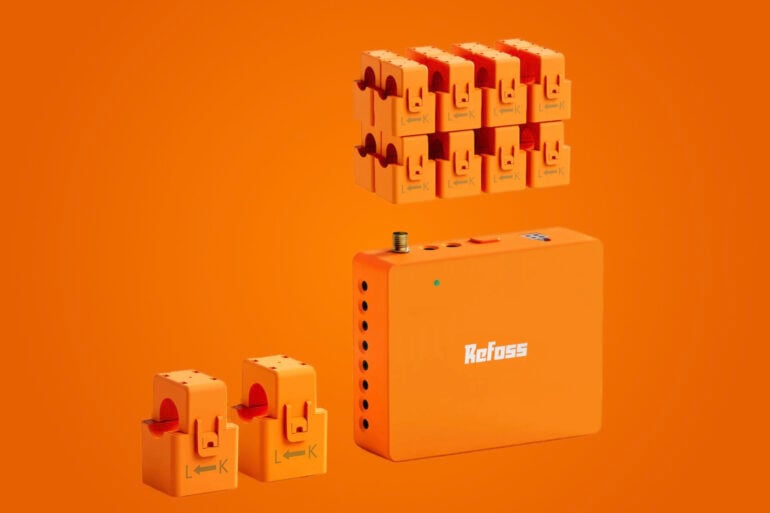
I am currently on a journey of making my house smart. If you believe what the various brands say about their offering, it is easy. In my case, I want to see what I can automate, how much I can automate, and whether I can retrofit existing infrastructure or if I need new gadgets. One piece of that equation is my electricity usage and the desire to maximise my solar usage to minimise my power bill. To do this, I need to measure my real-time energy usage, and one product that can help is the Refoss Smart Energy Monitor EM16P.
Until a few years ago, the only way I measured my power usage was from the quarterly power bill. This changed when I got a smart electricity meter provided by the energy authority. This meant my usage was transmitted back to my energy retailer, so they did not have to read my meter anymore, and I could go to my retailer’s website to see my usage. This information was still delayed by around 24 hours.
What I want to do is see when my solar panels are generating more power than I am using, and, when in excess, activate power usage to take advantage of it. If I had the latest solar setup or battery solution, this would all be possible, but I don’t. What I have is old, thus the search for a solution.
How does the Refoss Smart Energy Monitor work?
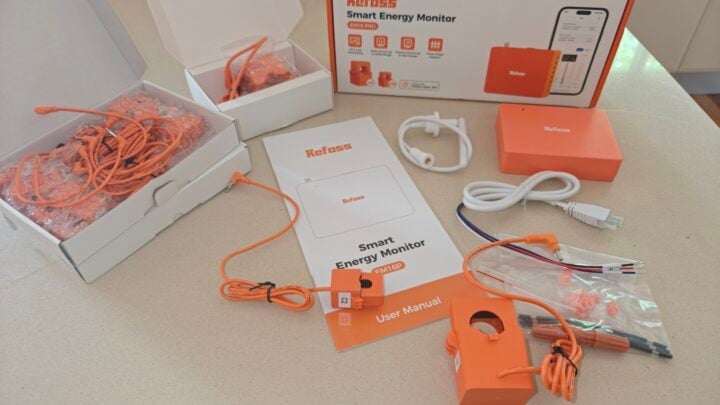
Refoss have been making smart energy monitors for a while, and I have been testing its latest EM16P model, which costs US$199.99 online. The product is a smart meter combined with 2 x 200A clamp sensors and 16 x 60A clamp sensors. A clamp sensor is a measurement device that detects the magnetic field generated by electric current flowing through a cable. The wire does not need to be connected; simply, the sensor is clamped around the wire. This sensor can measure how much power is being consumed in a circuit and the voltage at which it occurs.
The EM16P will work on single- or three-phase house circuits and requires a connection to power and access to the wires in your fuse box. A licensed electrician must be used for its installation in Australia.
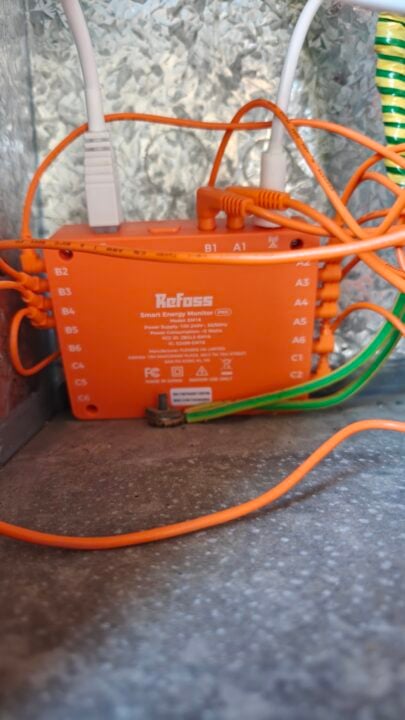
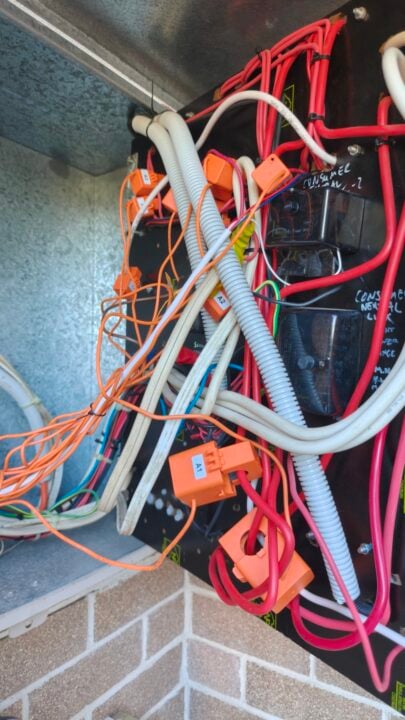
In my house, including solar, there are 10 circuits or fuses that power various parts of my house, including lights, power points, air conditioners, hot water, and the kitchen oven and stove.
Beyond my initial desire for real-time measurement of my solar output, which could enable importing or exporting power to the grid, I can now measure each circuit to understand how much power it consumes. In our case, we do not have a pool or use our air conditioning much, so most power is consumed by everything plugged into our power points, followed by our hot water.
Now, it may be that I have geeked out too much here, wanting to measure my energy usage better, but with power prices the way they are, it is interesting that this space has few solutions. Those who have invested in the latest solar and battery solutions definitely have an app to measure this. Refoss provides an app that lets the smart monitor connect to Wi-Fi either via the cloud or locally, if you don’t want your data to leave the house. The app will allow you to measure real-time voltage and wattage, as well as watt-hours (Wh) used over time. Your electricity retailer charges you per kWh (kilowatt-hour). If you do use the cloud, your data will be stored for up to five years.
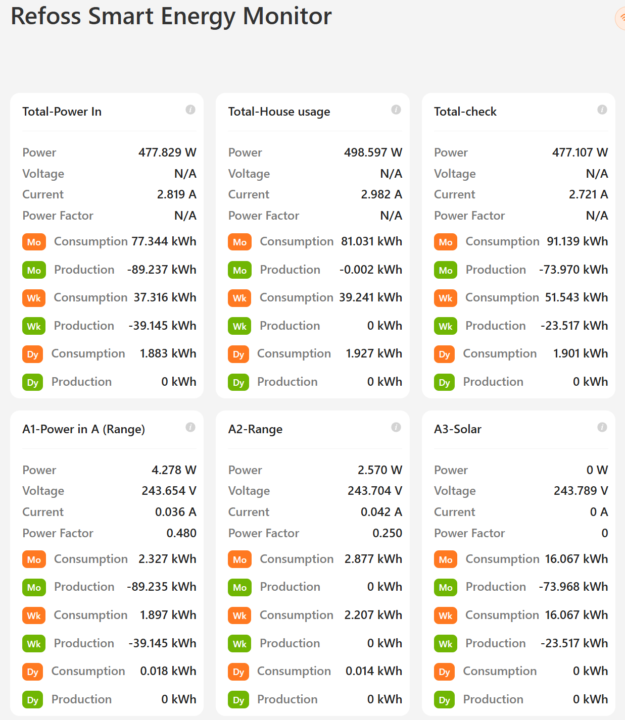
Whilst the data is accurate, there is not much you can do with it in terms of graphs via the app or a web browser connection. You can graph an individual circuit, but no fancy graphs of whole-home usage or comparisons of what is using the power. Refoss does indicate that they continue to improve their product through software updates, and they also support an open-source home automation system called Home Assistant. I have started playing with Home Assistant, and it is amazing, bringing all your smart home ecosystems into one place. Expect more on Home Assistant in a future article.
The Refoss Smart Energy Monitor EM16P has solved my real-time solar monitoring issue, but has opened up a whole new realm of possibilities for my ever-evolving smart home. Some other usage cases for an energy monitor include measuring the power usage of a rented granny flat or identifying an old, power-hungry appliance.
The post The Refoss Smart Energy Monitor simplifies tracking energy use appeared first on GadgetGuy.


0 comments:
Post a Comment