
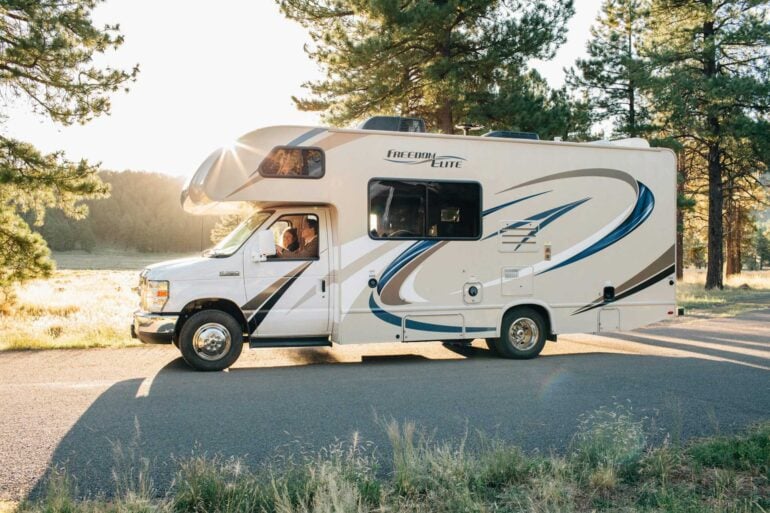
Most caravans, bigger boats and touring four-wheel drives have what is called a house battery. This isn’t a battery to start a motor, but one designed to run a host of electrical gadgets, from lights to fridges to coffee machines.
It’s worth paying attention to the type of battery used by your home-on-wheels (or sea). I recently upgraded my caravan’s battery, and there are a few reasons why. Let’s get into the details.
Why upgrade your caravan or boat battery?
Aside from the obvious — replacing a dead battery — there are a number of reasons to upgrade to the latest lithium batteries.
One is power: a lithium battery provides more power for the same battery amperage compared to an older lead-acid battery. Lithium batteries can deliver 100% (though only recommended in an emergency) of their available power, whereas a lead-acid battery generally only delivers up to 50%. If you upgraded from a 100Ah lead-acid to a 100Ah lithium, you would potentially double your usable power.
Weight is another good reason to upgrade. We all want to put more stuff in our caravan or vehicle, which inevitably pushes us over the max allowable weight. Lithium batteries are far lighter than lead-acid. Similarly, the latest lithium batteries are much smaller for the same amperage.
Contrary to the horror stories you hear about scooter battery fires, lithium iron phosphate batteries used for house batteries are much safer and have built-in safety mechanisms to shut the battery down if pushed beyond its limits.
Plus, lithium batteries last many more cycles than lead-acid batteries. With the price of lithium batteries much more affordable these days, you also get more value in the long run. As an added bonus, many modern batteries also support smart features, like Bluetooth connectivity with a phone, letting you check capacity remotely.
Squeezing more power into a smaller unit
Those are some very good reasons to upgrade, something I recently did myself. I recently upgraded my caravan’s $3,000 (at the time of the build) lead-acid battery with a $1,689 lithium battery. Why? The new battery weighs 1.6 kg less and is 30% smaller, but its capacity is 1.6 times bigger. I wanted more POWER!
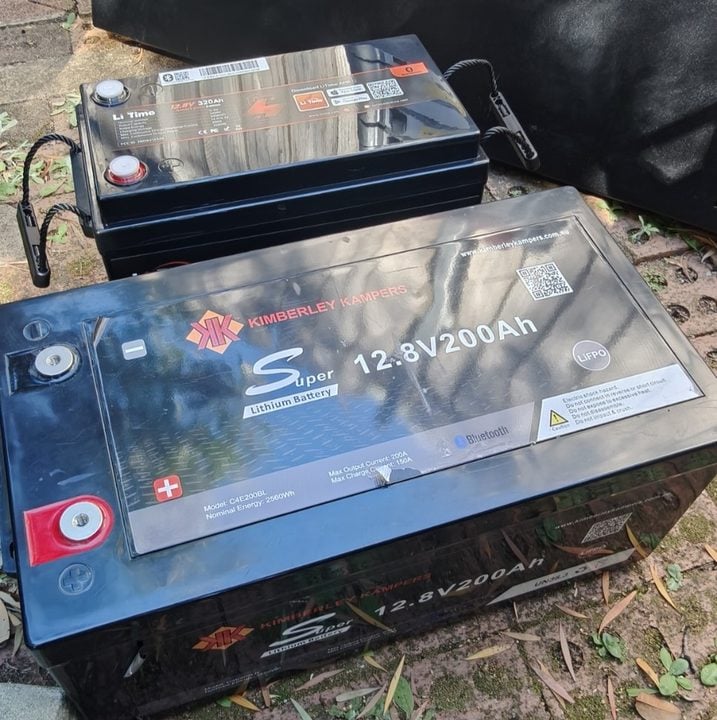
The new battery is a LiTime 12V 320Ah Mini Bluetooth Lithium Battery that will deliver 120Ah more power than my caravan’s previous battery. This extra power would keep my fridge running for an extra two days. 320Ah is the equivalent of 4,096 Wh, which is enough to run an air conditioner (800W) for five hours. For reference, this battery measures 38.4 × 19.4 × 24.8 cm and weighs 25.93 kg.
When the mentioned air conditioner starts its motor, it will draw around 1,500W for a few seconds. LiTime’s battery can deliver 200A (2,560W) continuous output and up to 1,000A for a short period. If you need more power, you can connect up to four of the same batteries together in either parallel or series to increase capacity or voltage, respectively.
The battery is IP65, which means it is sealed and will not be affected by dust or splashes. It’s best to keep water away from the terminals, but the battery management system (BMS) will shut the battery down to protect you and itself if it is too cold, too hot, overcharged, overdrawn, etc. LiTime advertises the battery as lasting 4,000 cycles, which means if you charged it every day, it would last 11 years.
Doing the upgrade myself
Installation of the battery was very straightforward. You don’t need to be an electrician to work on 12-volt systems. If in doubt, though, contact an auto electrician for help. I unbolted the existing battery terminals, removed the old battery, and replaced it with a new battery.
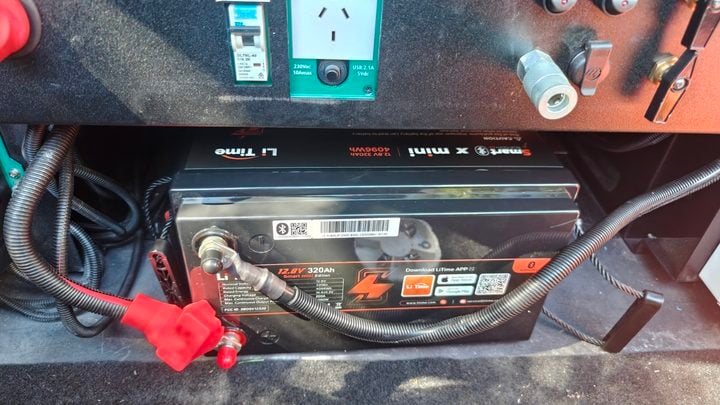
I installed the battery on its side. LiTime confirmed the following:
- The battery can be safely installed and used on its side in an RV over the long term.
- Depending on the available installation space, the terminal side may face upward, to the left, or to the right. These orientations will not affect the battery’s structure or normal operation. However, the terminal side must never face downward.
- The Battery Management System (BMS) is located beneath the terminal side. Installing the battery with the terminals facing upward, left, or right will not cause any ventilation or internal structural issues.
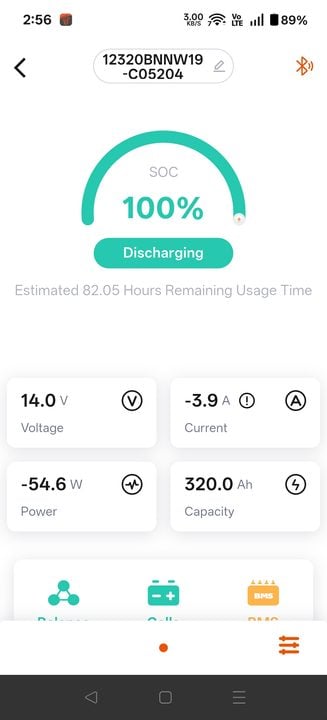
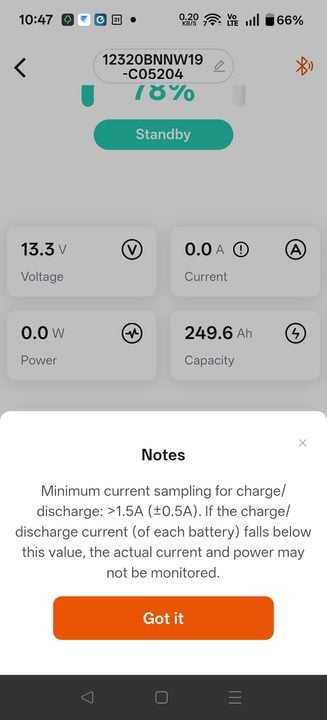
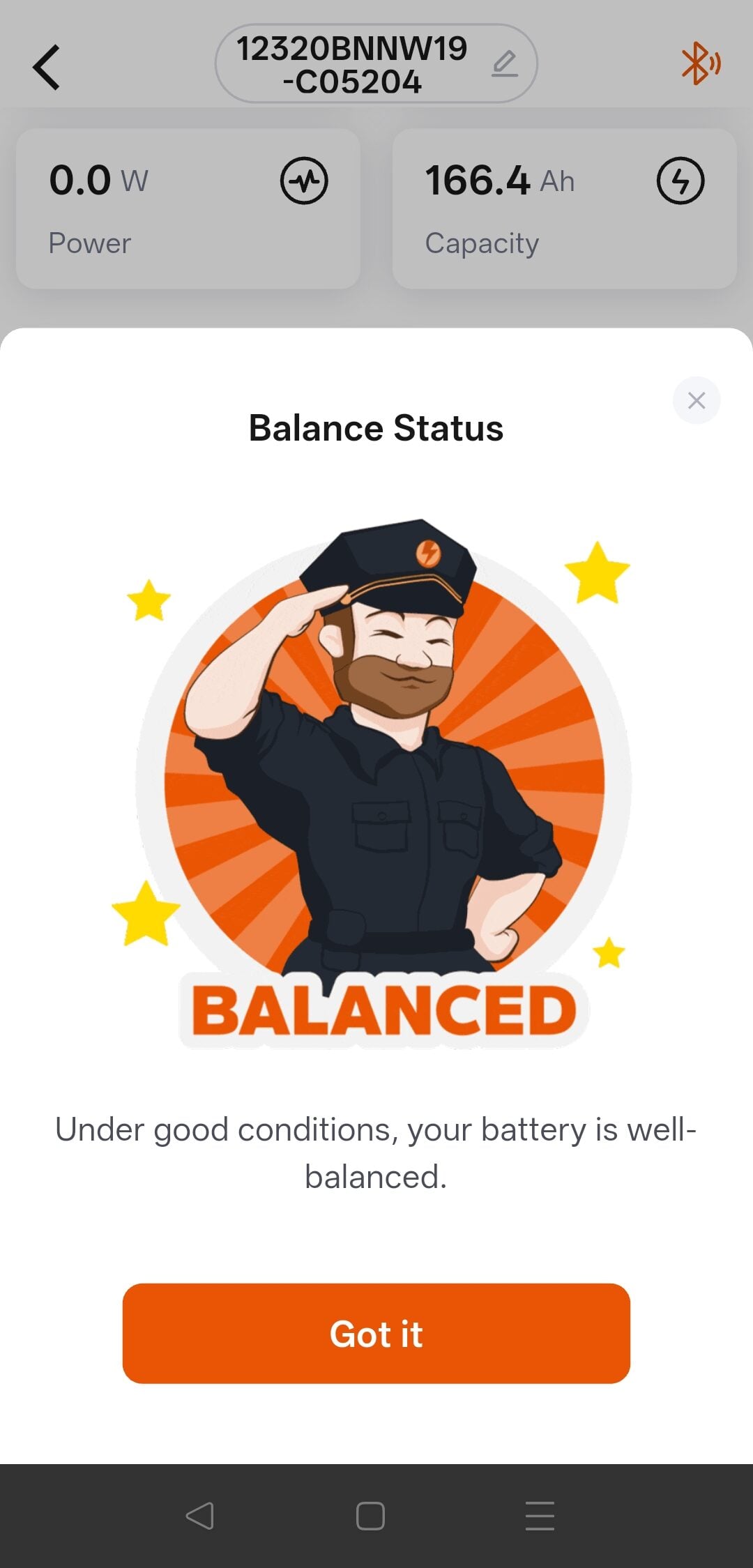
Once my caravan was operational again, I opened the LiTime app and found voltage, capacity, and power draw/charge information. If you press the BMS, balancing or cell buttons, you simply get a binary good or issue screen. I am used to more detailed information, but really this is all you need. One feature I don’t like is that if the current draw is less than 1.5 amps or 19 watts, the discharge shows as zero.
A settings menu is available, but the controls are limited. They let you either stop power output while keeping the battery controllable in the app, or turn the battery off completely. You wake it by recharging it.
Putting the battery to the test
So far, my testing has been great; the voltages and capacity have met spec. Only time will prove its reliability, but so far I am pleased about the peace of mind this 1.6 times capacity will bring to my caravan travels.
So, how much capacity do you need? Well, that depends on what you want to run off-grid and ultimately your ability to recharge your batteries. I have 700W of solar panels, which means on a good sunny day in summer with no shade, I have a good chance of fully charging this battery. If I had more capacity and used it, I would have one extra day of power with a second battery, but I couldn’t recharge the second battery unless I could charge it from my car or a power point.
For the record, I rarely use my air conditioner, which would be a big power draw. If your inverter is big enough and mine is, my wife can run her hair dryer via this battery, and although it will consume a lot of power, the consumption will only be for a short time.
The post Why it’s worth upgrading your caravan or boat battery appeared first on GadgetGuy.


0 comments:
Post a Comment