This is default featured slide 1 title

Go to Blogger edit html and find these sentences.Now replace these sentences with your own descriptions.

This is default featured slide 2 title

Go to Blogger edit html and find these sentences.Now replace these sentences with your own descriptions.

This is default featured slide 3 title

Go to Blogger edit html and find these sentences.Now replace these sentences with your own descriptions.

This is default featured slide 4 title

Go to Blogger edit html and find these sentences.Now replace these sentences with your own descriptions.

This is default featured slide 5 title

Go to Blogger edit html and find these sentences.Now replace these sentences with your own descriptions.

Friday, 4 December 2020

Sennheiser HD 660S stereo headphones

Sennheiser HD 660S stereo headphones
4.9Overall Score
Name: Sennheiser HD 660S stereo headphones
Price (RRP): $799.95
Manufacturer: Sennheiser

The Sennheiser HD 560S headphones which I reviewed – and raved about – a few weeks back are said by Sennheiser to be “basically a little brother” to the Sennheiser HD 660S headphones. So let’s luxuriate a little with the “big brother”.

Review: Sennheiser HD 660S stereo headphones

  • Australian Website here.
  • Manual here (6.5MB download – check your downloads folder for a PDF).
  • Price: A$799.95 – seen online (guaranteed Australian stock) for $639.
  • From: Legitimate retailers and direct.
  • Warranty: Two years
  • Country of Manufacture: Romania
  • About: Sennheiser is a German company. Although established three quarters of a century ago, employing thousands and with revenues of more than $1 billion, it remains privately held. Its first product was a voltmeter, but it soon began making microphones, and then headphones.
Sennheiser HD 660S0

About the Sennheiser HD 660S headphones

Sennheiser has three model ranges of serious wired headphones. We looked at one of the HD 8XX series here. They are for the well-heeled audiophile who is prepared to splash several thousand dollars on head gear. The HD 5XX series are for serious listeners who can go to a few hundred dollars, but no more. The HD 600 was introduced in 1997 as an audiophile range when Sennheiser (as the company told me) “made a massive jump in tonal accuracy and lowest possible distortion thanks to [its] laminate technology and computer-aided membrane design.” The HD 660S is the latest in this series.

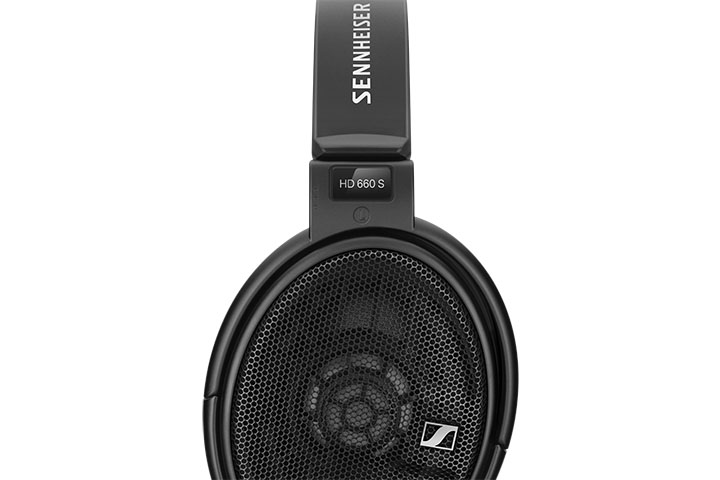
The headphones weigh 260 grams. They have a metal headband, with your head protected by a soft pad. The velour-like earpads are nicely padded. The grip on the head was a little tighter than the HD 560S, but they remained very comfortable.

The headphones use generously sized earcups, each sporting a 38mm driver with light aluminium voice coils. The drivers are “carefully selected and paired by hand to ensure consistently narrow (±1dB) tolerances,” says Sennheiser. They are fairly high impedance models, rated at 150 ohms. That makes them relatively immune to one of the great problems of wired headphones: the unpredictable output impedance of headphone sockets on lots of audio gear. It also means that you’re less likely to run into clipping with low-powered source devices. On the other hand, it also means less actual power delivered by most sources.

Other ratings

That made me interested in the sensitivity rating. Sennheiser gives a “Sound pressure level” rating of 104dB, but states no criteria. Using the same criteria as it provided for the HD 560S headphones, that would work out to a sensitivity of around 96dB for 1mW input, significantly lower than for the HD 560S. Could that mean inadequate volume levels?

No, as it turns out. Jumping between both sets of headphones, it seemed to me that the Sennheiser HD 660S headphones are actually a little more sensitive than the HD 560S model.

Sennheiser rates the frequency response of the headphones at 9 to 41,500 hertz. Again, there are no criteria for that, but the other headphones use -10dB to mark its endpoints, so it’s probably safe to assume the same. THD is rated at 0.04%. Again, no criteria. Again, adopting those from the other headphones suggests the rating is for a 1kHz at 90dB SPL.
Connections

The HD 560D comes with one three-metre cable which plugs into the left earcup with a 2.5mm TRRS plug. The Sennheiser HD 660S headphones come with two three-metre cables. Both split so that the left and right channels can plug directly into their respective earcups. Their plugs are proprietary Sennheiser two-pin affairs of the same kind used on my old Sennheiser HD 535 headphones, which I purchased well over twenty years ago.

At the other end one of the cables is terminated in a standard 6.35mm – quarter-inch – stereo jack. A 6.35mm to 3.5mm tail is included for use with that kind of output.

The other cable? This has a Pentaconn 4.4mm TRRS plug on the far end. It’s wired for balanced operation.

What’s all that about? Well, almost all headphones use three conductors. Think of them as left and right active wires and a common return wire. There may be crosstalk advantages in keeping the signal separate both ways. (This is highly simplified. With AC there is no one “way” since the signal is going to and fro to roughly equal extents.) More importantly, that limits headphone amplifier designs. With balanced cables, amplifier makers can employ push-pull designs.

Balanced headphone connections have been around for a while, but a final connection standard has been elusive. The two most common were 2.5mm TRRS plug – but that’s an inherently low-contact-area solution – and a 4-pin XLR – which is too bulky for portable gear. Apparently Sony has recently put its rather hefty shoulder behind the 4.4mm Pentaconn plug. I’m hoping that will end up being the standard. I’ve lately been using an iFi Zen Can headphone amplifier with a socket for just this plug, so that’s what I used for most of my listening.

Sennheiser HD 660S0

Everything’s replaceable

Well, not quite everything. But you can replace the headband padding ($14.00), earcups ($58.50 for a pair), the 6.35mm to 3.5mm adaptor ($8.84), the unbalanced three-metre cable ($14.99) and the three-metre balanced cable ($279.95).

The price of one of those things may well stand out to you. Believe me, it’s not at all outlandish. I’ve been looking for quite a while for a balanced headphone cable suitable for use with my other main headphones, but have been deterred by the fact that $280 would have been a bargain.

That said, as the 4.4mm Pentaconn becomes more widely accepted as the standard I expect prices on that will fall.

And remember, with Sennheiser’s premium headphones, you can expect the various replacement parts to remain available for a very long time.

Listening with the Sennheiser HD 660S headphones

I used the Sennheiser HD 660S mostly with the balanced outputs of an iFi Zen Can headphone amplifier, but also somewhat with its unbalanced output. I’ve measured this unit’s unbalanced output. It can deliver over 180mW into 300-ohm headphones, and slightly over a full watt into 16-ohm loads. Both of those are massive amounts of power. iFi says it can provide even more to balanced headphones. So there were no performance limitations at the source.

And, in short, the Sennheiser HD 660S headphones proved to truly be audiophile headphone. But not somewhat strange ones like the Sennheiser HD 820 headphones, which regular people probably find too bright. No, these are simultaneously accurate, detailed, revealing and … comfortable. By “comfortable”, I’m talking about the sound, not the feel on the head (although that was comfortable as well). I found that they showed every aspect of the music, yet kept it musical and enjoyable. On Billie Eilish, the bass was enormously powerful and deeply extended. The 96kHz Steven Wilson remix of Jethro Tull’s Thick as Brick, streamed from TIDAL in MQA format, was simply exciting. When the band kicked into high gear at three minutes in, the output levels seemed limitless, while every detail remained intact.

Something gentler

Something a little different? Maria Wiegenled from the album Cantate Domino is performed by a soprano accompanied only by a pipe organ. The pedal on the organ was delivered with excellent authority. There was some reverberant ringing of the singer’s bigger notes, but I got the sense that this was a resonance within the venue. That was held in check, and the result was simple beauty.

So, how do the Sennheiser HD 660S headphones go with lesser quality audio sources. Particularly those of limited output levels. I used the unbalanced cable and the 3.5mm adaptor tail to listen to music being fed by the analogue conversion dongle plugged into an iPhone 8. Listening to Who’s Next, there was plenty of volume available for a satisfying performance. That was a pretty well recorded album for the day – early 1971 – but the headphones did reveal some limitations in the form of a faint sheen or smearing of the sound. I’d previously been quite unaware of this.

I switched over to listening to the same (kind of) album using the headphone amplifier, and suddenly the music was sharp and revealed transparently. Both were sourced from TIDAL. But the iPhone doesn’t support the MQA high resolution encoding of the MASTER version. So between that and the fact that the headphones were being powered by a $13.00 dongle, I guess it’s not surprising that there’d be a different sound.

Gadgetguy’s Take – the Sennheiser HD 660S headphones provide real high-end audio at a very reasonable price

And they provide a path into high-end balanced headphone audio. Seriously, find your way to a Sennheiser retailer with a stack of your favourite CDs (or your TIDAL or Spotify playlist cued up on a device) and have a listen. Chances are, you also will fall in love.

Sennheiser HD 660S stereo headphones
Name: Sennheiser HD 660S stereo headphones Price (RRP): $799.95 Manufacturer: Sennheiser
Truly great soundSupport out of the box for balanced connectionsJust a very enjoyable listen - no caveats whatsoever
Features
Value for money
Performance
Ease of use
Design
4.9Overall Score

The post Sennheiser HD 660S stereo headphones appeared first on Gadget Guy Australia.


Thursday, 3 December 2020

Bose boosts buds – volume control added to the Bose QuietComfort Earbuds

One of the cool things about modern gadgets is that, oftentimes, they continue to improve even after you’ve owned them for a while. That’s thanks to firmware updates, and such is the case for the Bose QuietComfort Earbuds, which have had significant new functionality added. We originally reviewed them here.

I had push notifications set to on for the Bose Music app, with which you manage the earphones. One popped up this morning.

New feature: Volume control on your earbuds

You can now enable volume control directly on your QuietComfort® Earbuds. Tap to learn more.

I hadn’t actually been using these earphones lately, but I pulled them out to see how it worked. Charged them up to be on the safe side and connected them to my phone. In the app it turns out that you have an “Inbox”. Who knew? It had a dot next to it, indicating a new message. This was a repeat of the new feature notification. A quick tap and the full message was revealed. It turns out that you have to switch on volume control in the app, and once you’ve done that you can swipe up on the right bud to increase the volume, and swipe down to reduce it. You will recall that the Bose QuietComfort Earbuds feature touch sensitive surfaces.

Enabling this on the Bose QuietComfort Earbuds

It turned out to be a little more complicated than that for me. You see, that switch for the volume control wasn’t in the app. I thought that perhaps the firmware on the buds needed updating. But the app told me that the firmware was up to date.

So I disconnected from my Android phone and connected them instead to an iPhone. I installed the Bose Music app and found the volume switch there. It worked perfectly well. Well done Bose!

But that did leave the puzzle of the why the switch wasn’t showing on the Android phone. It turned out that for some reason the auto-update feature on my Android phone hadn’t been auto-updating apps lately. So I forced it to update the Bose Music app, and that introduced the switch.

There are two ways that Bluetooth volume controls work. One is they just control their built-in amplifier. With those, the listening level becomes a function of both that setting and the source device volume settings. The Bose QuietComfort Earbuds adopt the other way. They tell the phone to adjust its level.

Either way, this is a useful additional feature for the Bose QuietComfort Earbuds. Bose’ home page for the buds is here.

The post Bose boosts buds – volume control added to the Bose QuietComfort Earbuds appeared first on Gadget Guy Australia.


Tuesday, 1 December 2020

BlueAnt X5 portable Bluetooth speaker

BlueAnt X5 portable Bluetooth speaker
4.7Overall Score
Name: BlueAnt X5 portable Bluetooth speaker
Price (RRP): $399.95
Manufacturer: BlueAnt

We’ve previously been impressed by the little BlueAnt X1 Bluetooth speaker. And likewise impressed with the somewhat larger BlueAnt X2. And we’ll soon be reviewing the somewhat-larger-than-that BlueAnt X3. But here we’re getting into the enormously larger BlueAnt X5 portable Bluetooth speaker.

Review: BlueAnt X5 portable Bluetooth speaker

  • Australian Website here.
  • Manual or Support pages here.
  • Price: A$399.95 – presently at JB Hi-fi for $299.
  • From: Legitimate retailers and direct.
  • Warranty: 12 months.
  • Country of Manufacture: China.
  • About: BlueAnt is an Australian company based in Melbourne. The “Blue” part of the name makes it clear that it specialises in Bluetooth audio products.
BlueAnt X5

About the BlueAnt X5

Well, the theme is common enough: Bluetooth plus built-in battery plus amplifier plus speaker, and you have a portable Bluetooth speaker. But this is a biggie as these things go. It stands 360mm tall, 260mm wide and 270mm deep, more or less. And it weighs a respectable 4.2 kilograms.

The Bluetooth is version 5.0. The battery is rated at up to 20 hours playtime at half volume. But it can run continuously on the included 9-volt, 18-watt power supply. BlueAnt says that it is a “60-Watt Bluetooth Party Speaker”, but the power output of the Class D amplifier is specified as 2 x 10 watts (“RMS”) at 10% total harmonic distortion. It comes with two drivers: a 59mm (2.25-inch) tweeter and a 156mm (6.5-inch) woofer.

The case is a sturdy ABS. Don’t be fooled by the firmly fitting silicone stoppers over the connections on the top: the BlueAnt X5 speaker is not water resistant or weather rated. For one thing there’s a bass reflex port on the back which leads directly into the interior. (BlueAnt calls this a “bass vent inverter tube”. I bristled at this non-standard terminology for a moment, and then realised that the term is far more descriptive than the usual name. A good bass reflex design enhances the bass by employing the rear energy of the driver, inverting its phase as it emerges from the port.)

Bright and cheerful

The woofer is surround by multi-coloured LED lighting – it really is a party speaker! These respond to the music, pulsating and spinning the colours around in various patterns. You have a choice of five modes, plus off. There are also two bright white LEDs, one above and one below the woofer, which flash in a strobe-like way, although they aren’t powerful enough to produce a real strobe effect.

On the top are the controls, including track skipping, play/pause, input selection, bass boost, and a button for cycling through the light modes. Oh, and level and control buttons for the two microphone inputs. There’s also an echo control for those. Four small LEDs show the state of the battery charge, while a display shows the input selected, and also gives feedback on levels when they’re being adjusted.

Under a silicone stopper to the left is a small USB service port and a regular Type-A USB port. You can use that to play back MP3 music from a memory stick (it doesn’t support iPhone playback) or charge up your device from the speaker’s built-in battery. To the right of the display are three inputs: two 6.35mm mono sockets for microphones and one 3.5mm socket as an auxiliary input. The input selector buttons choose between Bluetooth, auxiliary in and USB in. The microphones run in parallel so they can go at the same time as a music source. Karaoke, you know.

BlueAnt X5

A slot across the width of the unit is suitable for hold upright or sideways a tablet or phone.

Specs

Weirdly, BlueAnt rates the frequency response of th X5 at 150 to 20,000 hertz. I say “weirdly” because it was clear from the first bars of music that it extends well below 150 hertz. Indeed, the tiny BlueAnt X1 has its peak output at just 110 hertz and the X2 has its peak at around 60 to 70 hertz. We’ll find out the real bass performance shortly.

The company also says that the can speaker produce an output level of more than 110dB. Ohhhkay, I guess.

A little extra with the BlueAnt X5

There were two cardboard accessories boxes included in the packaging. I pulled one open and was surprised to find a substantial-feeling microphone within. Cool, Karaoke or PA at no extra cost. I figured the other would hold the charger/power supply, which it did. And also another microphone. That’s pretty good value. The microphone cables are terminated with 6.35mm jacks, of course, to match the inputs on the BlueAnt X5. At the other end of the cables are XLR sockets, so you can switch to another dynamic microphone should you wish.

I think the microphone bodies are plastic, although I couldn’t be certain without scratching the surface. I assumed that the grilles were also a hard shiny plastic, until I noticed that they were attracted by a magnet. So they were some kind of steel. The grilles unscrew, revealing a substantial microphone capsules within.

Initially there was a lot of buzz and noise when I plugged in a microphone and turned up its volume. It turns out that the microphones were picking this up from the power supply, which was plugged in at the time. Running the speaker from battery, there’s almost no noise until the volume was maxed out, and even then it was modest.

The maximum gain available with the microphones wasn’t particularly high. So the speaker can’t really used as a P.A system for a timid person with a quiet voice. But when I screwed up my courage and tried blasting a few loud syllables of my own, the results were pretty satisfying.

Listening

The BlueAnt X5 doesn’t really sound like a portable Bluetooth speaker. That’s because it kind of sounds like a real speaker. The tonal balance is quite even, with nicely balanced mids, bass and treble. The bass extension is satisfying, covering most of the drum kit and most of a bass guitar.

Things like cymbals tick nicely, without excessive levels adding any harshness to the sound.

BlueAnt X5

Of course, the BlueAnt X5 is entirely mono and that tends to pinch in the sound a little. But the fact it, for its intended purpose of being a portable party speaker, it delivers much higher quality sound than you’d typically expect. Apparently the BlueAnt X5 will operate in “Duo mode”. Buy two and they can operate as left and right stereo channels. A couple of buttons on the top are provided to manage these links. Obviously I didn’t test this.

I’d suggest putting it up reasonably high. It tends to be a little muffled down towards the ground. Stick it on a table or similar, especially if there are a lot of human bodies getting in the way. That said, having it down on the ground does tend to enhance the bass a little.

Battery life?

It’s quite long. The speaker does not switch itself off after a certain time. To which I say: “Hooray!” Because that means you can leave it plugged in and connected to some device, and just start playing music whenever you like. If you’re running of battery, remember to press the power off button. I didn’t remember. I ran the speaker hard for about six hours, then I went to bed. When I came into the office the next morning, I saw that the colourful lights were still on and the battery indicator was showing two LEDs (out of four). Well, I might as well just leave it on. About six hours later the speaker switched off the colourful lights, started flashing the one remaining battery level LED and announced that the battery was nearly empty. I’d say it was about 22 hours all up.

Testing the BlueAnt X5 speaker

Frankly, I thought the “110+ SPL output of Dynamic HQ Audio” claim was pretty unbelievable. As in, I did not believe it. And, of course, I was right. That said, the BlueAnt X5 speaker does go ridiculously loud, and remains moderately clean while doing so. To test, I played Rage Against the Machine’s self-titled album through the speaker with the volume turned up to the maximum. Full blast, in other words.

Bass response, measured close to woofer with Bass Boost on

The standard range at which you measure loudspeakers is one metre, so I placed my SPL meter at that range. I set it to the C-weighting rather than the default A. C is more representative of music. At the loudest parts, the meter nudged 98dB. No, that’s not 110dB. But it is flat-out loud. Pushing the meter in to just short of touching front grille, the level topped out at 104.5dB.

As far as portable Bluetooth speakers go, this is knock-you-down loud!

As for the bass output. Remember BlueAnt claims a mere 150 hertz of bass extension? Of course, it did much, much better than that. I close measured at the front of the woofer and also at the bass reflex port at the back. I ended up leaving it in Bass Boost mode. The main effect of that was to add a few decibels down near 40 hertz where things were starting to fade away anyway.

Bass response, measured close to bass reflex port with Bass Boost on

So, with Bass Boost and measured at the front, the output was almost ruler flat from 100 hertz to 750 hertz (forget about any of the high frequencies you see on the graph – the microphone was nowhere near the tweeter so they’re not valid). From 110 hertz the output reduced to be about 6dB down at 61 hertz. At the port, the output was even from 46 hertz to 77 hertz, adding some useful bass extension.

Gadgetguy’s Take – It’s summer now and the BlueAnt X5 speaker is a fun way to enjoy your music outdoors

Just a reminder that BlueAnt, which is based in Melbourne, is no fly-by-night business. Looking back through our archives, it turns out that we’ve been reporting on some of its gear for almost fifteen years.

BlueAnt X5 portable Bluetooth speaker
Name: BlueAnt X5 portable Bluetooth speaker Price (RRP): $399.95 Manufacturer: BlueAnt
Quite respectable soundPlenty of volumeLong battery lifeMicrophones included
Not weatherproof
Features
Value for money
Performance
Ease of use
Design
4.7Overall Score

The post BlueAnt X5 portable Bluetooth speaker appeared first on Gadget Guy Australia.


New Qualcomm SD888 5G SoC powers 2021 flagships

The new Qualcomm SD888 5G SoC follows the success of the SD855 and 865 in opening up the premium 5G end of the market.

The new Qualcomm SD888 5G SOcsets the stage for the next era of flagships according to Cristiano Amon, president, Qualcomm Incorporated said

“Creating premium experiences takes a relentless focus on innovation. It takes long term commitment, even in the face of immense uncertainty. It takes an organization that’s focused on tomorrow, to continue to deliver the technologies that redefine premium experiences.”

So, what does the Qualcomm SD888 5G SoC do

Apart from leveraging the number 8 (considered lucky because it holds meaning in both Chinese traditional and modern cultures) it has

  • 3rd generation Qualcomm Snapdragon X60 5G Modem-RF System. For global compatibility by offering mmWave and sub-6 across all major bands worldwide. Also supports 5G carrier aggregation, global multi-SIM, stand-alone, non-standalone, and Dynamic Spectrum Sharing.
  • 6th generation Qualcomm AI Engine, with the completely re-engineered Qualcomm® Hexagon processor. It takes a pivotal leap forward in AI compared to improve performance, power efficiency. Speed – 26 tera operations per second (TOPS).
  • 2nd generation Qualcomm Sensing Hub, which incorporates lower-power always-on AI processing for intuitive, intelligent features.
  • 3rd generation Qualcomm Snapdragon Elite Gaming including Updateable GPU Drivers, Desktop Forward Rendering, and frame rates up to 144fps.
  • Improved computational photography to take smartphones into professional-quality cameras. Gigapixel speed Qualcomm Spectra ISP enables uses to capture photos and videos at 2.7 gigapixels per second. The equivalent of 120 photos at 12MP.
Qualcomm SD888 5G SoC

Qualcomm SD888 5G SoC phones coming soon

  • Asus
  • Black Shark
  • Lenovo
  • LG
  • Meizu
  • Motorola
  • Nubia
  • realme
  • OnePlus
  • OPPO
  • Sharp
  • Vivo
  • Xiaomi
  • ZTE

Note that Samsung will use the SD888 and its Exynos 2100 version in some markets.

Notably absent are Nokia and Google that will likely stick to the SD7XX-series for 2021.

Qualcomms announcement is here

GadgetGuy’s take – New Qualcomm SD888 5G SoC – faster, better but not cheaper

This chip moves much closer to ‘desktop’ specifications offering features that Intel may be hard-pressed to provide. A version will drive new Windows on Arm (WOA) that is gradually gaining market share as app compatibility expands. Not unlike the M1 ARM chip in some new Macs.

In any case, flagship smartphone prices won’t be coming down any time soon.

Let’s hope Qualcomm does not name the new 6-series 5G SDS666…

This video is a third-party overview

Qualcomm Snapdragon 888 – Specifications

SoC Snapdragon 888 (SM8350)
Process 5nm EUV (Samsung)
CPU 1 x Cortex-X1 @2.84GHz (16% increase) 3 x Cortex-A78 @2.4GHz 4 x Cortex-A55 @1.8GHz
GPU Adreno 660 (20% better)
AI/DSP Hexagon 700
AnTuTu v8 880,000+ Points (rumored)
Camera Spectra 580 ISP Dual Camera, ZSL, 30fps: Up to 48 MP Single Camera, MFNR, ZSL, 30fps: Up to 108 MP Single Camera: Up to 200 MP Camera Features: HEIF photo capture, 8K recording, 1080p slow-motion recording (960 fps), advanced AI camera filters
Video Capture 7680 × 4320 pixels
Memory Memory Type: LPDDR5 Max Memory Size: 32GB
Storage UFS 3.1
Features Snapdragon Elite Gaming, HDR10+, Qualcomm Sensing Hub 2nd Gen, aptX, advanced AI
Connectivity Network: 2G / 3G / 4G / 5G Multi-Mode Max DL (7.5 Gbps) Max UL (3 Gbps) Wi-Fi Antenna: 4-Stream (2×2 + 2×2) Wi-Fi: Wi-Fi 6 (a/b/g/n/ac/ax) Bluetooth Version: 5.2
Display Support 8K+
120Hz

You can read other Qualcomm news here

The post New Qualcomm SD888 5G SoC powers 2021 flagships appeared first on Gadget Guy Australia.


Elinz IP camera 1080p – Wi-Fi, waterproof and solar powered

Elinz IP camera 1080p – Wi-Fi, waterproof and solar powered
4.2Overall Score
Name: Elinz IP camera 1080p – Wi-Fi, waterproof and solar powered
Price (RRP): $169.99
Manufacturer: Elinz

The Elinz IP camera 1080p is Wi-Fi, waterproof, solar-powered security camera and part of the broader Elinz range.

We need to start with Elinz because you may not have heard about them.

An Australian company est. 2005 as an online electronics product store. It scours the world for interesting tech and then contracts with ODMs to supply to its specifications. Not wanting to compare, but it is similar to Jaycar without the retail bricks and mortar, and most items are ‘house brands’.

Elinz’s main categories are

  • Reversing camera monitors
  • Dashcams
  • Security cameras
  • Battery chargers and power inverters
  • Lightbars and LED work lights for cars And trucks
  • In-car, headrest, and roof mount DVD players
  • GPS Trackers
  • Drones
  • Action cameras
  • Flashlights

And to further add credibility it scores 4.6/5 from 387 reviews, so you are not buying from the NSW Department of Fair Trading naughty list for poor service (not mentioning names that rhyme with Bogan)

Elinz Wireless IP Camera 1080P Wi-Fi Security CCTV Wire-Free Battery Waterproof Solar Panel

  • Model: SKU: SKU: IPCAMBATTERYV2SOLAR-32GB
  • Website here
  • Price: RRP $169.99
  • Warranty: Not stated but a minimum of 12-months ACL
  • Country of manufacture: China

We agreed to review this more to get to know Elinz and its bona fides. As usual, we use FAIL, PASS and EXCEED against all tests.

A few tech specs for the Elinz Wireless IP Camera 1080P to start

2MP Megapixel 1080p – PASS

It has a typical 2MP, 1920x1080p/25fps CMOS sensor. Performance-wise it is no better or worse than any other 1080p camera – be it Arlo, D-Link, Uniden, Swann etc. And that is a good thing because you can now include Elinz on your shopping list.

We say 25fps because like all Wi-Fi cameras, resolution and quality depends solely on bandwidth and signal strength. The further away from the router, the lower the resolution and frames per second. This, like all others using similar sensors, will drop to 720p/25fps or even lower – from 8Mbps to 32kbps. Video is stored on a microSD card (32MB supplied for the review) to a maximum capacity of 128GB.

Wi-Fi – PASS

It is 2.4Ghz that allows up to 30 metres line-of-sight from a router. If the signal passes through walls, windows, floors etc. you can halve that. We found that at 20m the signal was quite strong but dropped off at 30m to almost unusable.

This is the key limitation of all Wi-Fi cameras except Arlo that can have a dedicated base station allowing for higher bitrates over longer distances. You can cure that by adding a Wi-Fi extender or three.

Field of View – PASS

It has a +/-63° horizontal field of view (total 126°) and a +/-30° (60°) in total. There is some fish-eye effect, but it is not an issue.

You can flip the image (mount upside down) but not rotate or reverse – which can make mounting a little harder.

Sound/mic – PASS

It has a single mic for half-duplex (walkie-talkie) communication and a small transducer (speaker). Like all similar cameras, it is not ‘real-time’, and you can’t have a two-way full-duplex conversation. It does not have a siren.

Maximum voice level at one metre was 72dB with a delay/lag of about five seconds.

Power – PASS

It has a micro-USB connector (USB-A to micro-USB cable supplied) but no charger. It requires a 5V/1A charger (or higher but it won’t fast charge).

The internal battery has a 6,400mAh capacity rated for five months at 20 triggers a day (3000 triggers). Naturally, we could not test that in a few weeks review, but we think it’s a fair assumption. Beware, if you place it facing an area where it gets hundreds of daily triggers battery life is shorter

Charge time is a little over an hour.

Solar Panel is large – EXCEED

The solar panel is 6V/1A, and that gives some overhead for loss of efficiency to micro-USB. Using our Power-Z meter, we found it was delivering a stead 5V/.75mA (depends on the sun intensity) which is more than enough to keep it topped up, even on overcast or rainy days.

It is a large unit at 268 x 178 x 17mm. It needs to placement where it gets sun most of the day. The panel has a mounting bracket and wall plug, or you can use a 360° mount.

The cable is fixed to the panel and ends with a plug. Then a plug to micro-USB cable goes to the unit. I am sure you can get extension cables.

Night vision

It has three IR LEDs for mono night vision. This is its weakest point as many others have five to eight LEDs. It will provide mono photos out to about three metres.

PIR – PASS

Motion detection claim is 10m. We found that it was reliable under 7m. But as it is a 1080p camera details are lost too far away.

Mounting and waterproofing – PASS

It is IP65, meaning a casual hose or rain strength water will not affect it. It is technically not waterproof (IP67) – and we recommend placement under eaves etc.

Mounting is via a magnetic ‘golf-ball’ mount on the rear or a ¼” tripod mount underneath. It can stand on the base as well.

Now, most photos show the camera mounted ‘up-high’. The fact is that to get the best detail, it should be mounted no more than at head height and in a direction to best capture a person’s face.

Elinz IP camera 1080p

The App – PASS

The CloudEdge mobile app is very simple and hosts a huge range of generic devices. You can read more here (care it is a PDF, so check downloads).

But Privacy may be an issue.

When you set up an account, it needs access to photo storage and location – fine.

The one privacy policy that I can find gives me no confidence.

Cloud storage is at an extra cost. Ali SmartCloud in China host the cloud run by Chuango Security Technology.

The CloudEdge account does not support multiple mobile phone logins to protect user information.

You can share your camera to friends or family if they install the CloudEdge app and use the CloudsEdge cloud.

So, a micro-SD is the best value and ensures Privacy.

Voice Assistants – none

Voice assistants are nice to have and can help link disparate camera brands together in the Google Home or Alexa app.

Image quality – PASS

Elinz IP camera 1080p
Afternoon light – fine
Elinz IP camera 1080p
Early morning overcast
Elinz IP camera 1080p
Rain
Elinz IP camera 1080p
IR

GadgetGuy’s take – I don’ think Elinz quite appreciates the depth of our reviews.

First, I do not doubt that Elinz is a reputable company and like Jaycar is now on my browser bookmarks for frequent reference. They even offer a 60-day money-back guarantee.

Elinz is a master email marketer, and you will get more than a fair share of emails – relegate these to junk if you are overwhelmed.

Second, this camera is typical of the thousands of generic 2MP cameras produced in China with the CloudEdge app to control them.

So, if this suits your needs, then you are better off buying from a reputable local company with ACL warranty than an unknown merchant on Amazon, eBay or Kogan (always on the NSW DFT naughty list).

And there is a stack more indoor and outdoor models using CloudEdge (so you can use the one app) at Elinz here.

Just tone down the marketing a little – guys!

Elinz IP camera 1080p – Wi-Fi, waterproof and solar powered
Name: Elinz IP camera 1080p – Wi-Fi, waterproof and solar powered Price (RRP): $169.99 Manufacturer: Elinz
Solar panel is the way to go
Security may be an issue with the CloudEdge
Features
Value for money
Performance
Ease of Use
Design
4.2Overall Score
Reader Rating 0 Votes

The post Elinz IP camera 1080p – Wi-Fi, waterproof and solar powered appeared first on Gadget Guy Australia.


D-Link DCS-8630LH Outdoor Wi-Fi spotlight camera

D-Link DCS-8630LH Outdoor Wi-Fi spotlight camera
4.5Overall Score
Name: D-Link DCS-8630LH Outdoor Wi-Fi spotlight camera
Price (RRP): $279.95
Manufacturer: D-Link

The D-Link DCS-8630LH Outdoor Wi-Fi spotlight camera is a little different to your run-of-the-mill FHD outdoor security camera – it has a built-in smart home hub connects to other mydlink smart devices.

At the moment, that means you can redeem either a D-Link smart door/window sensor (DCH-B112) or a smart motion sensor (DCH-B122) and link these to the camera hub and the mydlink app.

But that is not the main reason to buy. Although, there is a compelling reason to have the same app control cameras and other smart home security devices.

D-Link DCS-8630LH Outdoor Wi-Fi spotlight camera

  • Website here
  • Price: $279.95
  • From: D-Link website or many other stores here 
  • Warranty: One-year ACL or 2-years if the product is registered online
  • Country of Manufacture: China
  • D-Link, est. 1986 is a Taiwanese multinational networking company headquartered in Taipei, Taiwan. You can trust D-Link and your privacy.

Key features

  • Colour night vision (most only do IR mono)
  • IP65
  • Person detection and zones
  • Glass break detection
  • 1080p at 25fps (30fps is for countries with 60Hz electricity)
  • Zigbee hub
  • 100db Siren
  • 12V/1A – 3m power cable (indoor wall charger) and 4m extension cable outdoor cable
  • Half-duplex two-way conversation
  • microSD (up to 256GB) or cloud storage (at extra cost)
  • Google Assistant and Alexa support
  • Terrific D-Link support

Let’s start with the Zigbee Hub – Not the sole reason to buy

Zigbee is a smart home communication protocol. It is very low power and for transmit/receive of small packets of data rather than audio or video. It can transmit up to 100metres which is far beyond the Camera’s Wi-Fi capability of 30 metres line-of-site or about half that if the signal passes through walls, glass or floors.

Now the only catch 22 with this offer is that it only talks to D-Link devices supported by mydlink app – and that is currently only the two mentioned above.

Setup – PASS

  • Download the mydlink app for Android or iOS
  • Set up an account if you don’t have one (D-Link has a high degree of trust for personal information)
  • Power up the camera
  • Scan the barcode
  • Select the Wi-F 2.4Ghz SSID to use
  • And that is it

Simple and foolproof! And we repeat – privacy is not an issue.

Placement – PASS with caveats

This is mains powered. It has a seven-metre cable and an indoor 240V plug pack at one end. To be clear, the camera can go outside, but the wall charger cannot.

It has a 360°, non-removable, integrated mount (not a ¼” tripod mount) that requires you to screw it to a wall or post. A pair of cable ties is in the box for temporary fixing.

It is IP65 weather resistant meaning a casual hose or rain strength water will not affect it. It is technically not waterproof (IP67) – and we recommend placement under eaves etc. Having said that it is likely able to take most weather.

Voice Assistants – PASS

mydlink integrates with Google and Alexa. The command set is fairly limited

  • Turn on camera name (it should be on 24/7 anyway)
  • Display/cast to a TV or smart screen (this may require Chromecast)
  • Other commands added over time

The key issue here is that a voice assistant can use different brand devices and allow you to view them instead of in their respective apps.

Night Vision – EXCEED

It has a 400 lumen LED (115 nits) that is roughly equivalent to office lights. It is good out to about 5-metres. With these activated, you get a colour recording.

Otherwise, it has Infrared LEDs (number not specified but guessing 4-6) that enable mono night vision to about 3-metres.

Sound/mic/siren – PASS

While 100dB at the source sounds, it drops to 75dB at 1m and 65dB at 3m. The siren is more of an audio deterrent.

Sound is half-duplex – walkie talkie style and depending on signal strength can have up to five-seconds’ lag.

Like all external cameras, the mic is affected by wind, and you are best to turn it off.

Video quality – PASS+

It is a large 1/2.9”, 2MP, f/2.0 Sony CMOS sensor. We tracked down the specs, and it has

Auto Gain Control, Automatic White Balance, Back Light Compensation, Day/Night, Digital Noise Reduction, Flickerless, Mirror, Motion Detection Tracking, On-Screen Display Menu, Privacy Masking, Weather Resistant, Wide Dynamic Range.

In theory, it can record at up to 25 frames per second (the website says 30fps, but that is for 60Hz power). Like all Wi-Fi cameras, resolution and quality depends solely on bandwidth and signal strength. The further away from the router, the lower the resolution and frames per second. This, like all others using similar sensors, will drop to 720p/25fps or even lower.

In short, it is not a cheapie with a plastic lens.

mydlink cloud – PASS

Storage is H.264, and you can save to a 256GB microSD (not supplied) or the cloud at extra cost. It is fully editable.

The cloud price is reasonable although these are US dollars – divide by .7 and add 10% GST if applicable.

D-Link DCS-8630LH

Field of View – PASS

It is a 16:9 image – Horizontal is 123.8°, and vertical is 65.4°. There is minor fish-eye at the bottom edges.

Wi-Fi – PASS+

It is 2.4Ghz that allows up to 30 metres line-of-sight from a router. If the signal passes through walls, windows, floors etc. you can halve that. We found that at 20m the signal was quite strong but persisted to 30m.

This is the key limitation of all Wi-Fi cameras except Arlo that can have a dedicated base station allowing for higher bitrates over longer distances. You can cure that by adding a Wi-Fi extender or three.

PIR – PASS

Motion detection claim is 10m. We found that it was reliable under 7m. But as it is a 1080p camera, details are lost too far away.

Glass break detection works on the sound, so if you want this, leave the mic on.

Person detection works on a rough outline of a medium height person and is quite effective. You can also set zones to help prevent false detections from pets etc.

D-Link DCS-8630LH – image quality – PASS+

D-Link DCS-8630LH
Rainy morning taken from upper level apartment – quite good
D-Link DCS-8630LH
Dusk shot
D-Link DCS-8630LH
That is very heavy rain
Night vision is good to about 5 metres

GadgetGuy’s take – D-Link DCS-8630LH Outdoor Wi-Fi spotlight camera is a quality product fro a good company

We don’t usually bother with 1080p security cameras any more as they all tend to use the same innards and do the same thing.

This uses a premium sensor, does more things, and the smart home hub may be useful to some.

My only big gripe is that it should have a waterproof external 240V plug pack. That would have made it perfect for outdoor surveillance.

You can read other D-Link news and reviews here

D-Link DCS-8630LH Outdoor Wi-Fi spotlight camera
Name: D-Link DCS-8630LH Outdoor Wi-Fi spotlight camera Price (RRP): $279.95 Manufacturer: D-Link
D-Link quality and supportBetter Wi-Fi signal strength that mostQuality glass lens and large sensorNo need to worry about privacy
Plug pack is not waterproof
Features
Value for money
Performance
Ease of Use
Design
4.5Overall Score

The post D-Link DCS-8630LH Outdoor Wi-Fi spotlight camera appeared first on Gadget Guy Australia.


D-Link DCS-8526LH FHD Pan and Tilt Wi-Fi Camera

D-Link DCS-8526LH FHD Pan and Tilt Wi-Fi Camera
4.7Overall Score
Name: D-Link DCS-8526LH FHD Pan and Tilt Wi-Fi Camera
Price (RRP): $179.95
Manufacturer: D-Link

The D-Link DCS-8526LH FHD Pan and Tilt Wi-Fi Camera offers 360° views via a 340° pan and a 100° tilt.

The main reason to buy this is the ability to track movement around the room, ensuring you get a complete 360° 1080p picture. And the moving vista reveals far more than a static one.

Key features

  • Wired – not battery
  • Choice of Ethernet Lan or Wi-Fi 2.4Ghz
  • 360° versatility
  • Person detection and customisable zones
  • 1080p at 25fps (30fps is for countries with 60Hz electricity)
  • 5V/2A – micro-USB charger
  • Half-duplex two-way conversation
  • microSD (up to 256GB) or cloud storage (at extra cost)
  • Google Assistant and Alexa support
  • Terrific D-Link support

D-Link DCS-8526LH FHD Pan and Tilt W-Fi Camera

  • Website here
  • Price: $179.95 plus a bonus smart plug DSP-W118
  • From: D-Link website or many other stores here 
  • Warranty: One-year ACL or 2-years if the product is registered online
  • Country of Manufacture: China
  • D-Link, est. 1986 is a Taiwanese multinational networking company headquartered in Taipei, Taiwan. You can trust D-Link and your privacy.

Set-up – PASS

  • Download the mydlink app for Android or iOS
  • Set up an account if you don’t have one (D-Link has a high degree of trust for personal information)
  • Power up the camera
  • Scan the barcode
  • Select either Ethernet LAN or the Wi-F 2.4Ghz SSID to use
  • And that is it

Simple and foolproof! And we repeat – privacy is not an issue.

Placement – PASS

This is mains powered via a micro-USB charger, so you need a power point nearby.

It sits on its round base and is suitable for desktops to bookshelves. It cannot be wall-mounted. But it can be ceiling mounted and the image inverted. This view, however, tends to show people’s top-of-head instead of faces, so the ideal mount height is from 1-2metres,

Ethernet cable or Wi-Fi? Great to have a choice – PASS+

It gets a pretty strong Wi-Fi signal but with the usual caveats that the further from the router, the weaker the signal. Ethernet is more responsive in terms of pan/tilt movement speed and reduces voice lag from about 5 seconds to under 2 seconds.

It is 2.4Ghz that allows up to 30 metres line-of-sight from a router. If the signal passes through walls, windows, floors etc. you can halve that. We found that at 20m the signal was quite strong but persisted to 30m.

This is the key limitation of all Wi-Fi cameras except Arlo that can have a dedicated base station allowing for higher bitrates over longer distances. You can cure that by adding a Wi-Fi extender or three.

Voice Assistants – PASS

mydlink integrates with Google and Alexa. The command set is fairly limited

  • Turn on camera name (it should be on 24/7 anyway)
  • Display/cast to a TV or smart screen (this may require Chromecast)
  • Other commands added over time

The key issue here is that a voice assistant can use different brand cameras and allow you to view them, instead of in their respective apps.

Night Vision – PASS

It has Infrared LEDs (number not specified but guessing 4-6) that enable mono night vision to about 3-metres (claim 5m)

Sound/mic – PASS

Sound is half-duplex – walkie talkie style and depending on signal strength can have up to five-seconds’ lag.

Maximum volume at 1m from the unit is 75.8dB.

Video quality – PASS+

It is a large 1/2.9”, 2MP, f/2.0 Sony CMOS sensor. We tracked down the specs, and it has

Auto Gain Control, Automatic White Balance, Back Light Compensation, Day/Night, Digital Noise Reduction, Flickerless, Mirror, Motion Detection Tracking, On-Screen Display Menu, Privacy Masking, Weather Resistant, Wide Dynamic Range.

In theory, it can record at up to 25 frames per second (the website says 30fps, but that is for 60Hz power). Like all Wi-Fi cameras, resolution and quality depends solely on bandwidth and signal strength. The further away from the router, the lower the resolution and frames per second. This, like all others using similar sensors, will drop to 720p/25fps or even lower.

In short, it is not a cheapie with a plastic lens.

mydlink cloud – PASS+

Video compression to H.264. You can save to a 256GB microSD (not supplied) or the cloud at extra cost. It is fully editable.

The cloud price is reasonable although these are US dollars – divide by .7 and add 10% GST if applicable.

Field of View – PASS

It is a 16:9 image – Horizontal is 120°, and vertical is 62°. But the pan and tilt cover almost all of the room.

PIR – PASS

Motion detection claim is 10m. We found that it was reliable under 7m. But as it is a 1080p camera, details are lost too far away.

Person detection works on a rough outline of a medium height person and is quite effective. You can also set zones to help prevent false detections from pets etc.

Privacy mode – EXCEED

The app can engage privacy mode, and the entire camera head rotates to cover the lens.

D-Link DCS-8526LH image quality – EXCEED

The image quality is excellent due to a higher quality sensor.

D-Link DCS-8526LH
Overcast but brighter sunlight – no lights on
D-Link DCS-8526LH
Dusk – overcast and no lights on
D-Link DCS-8526LH
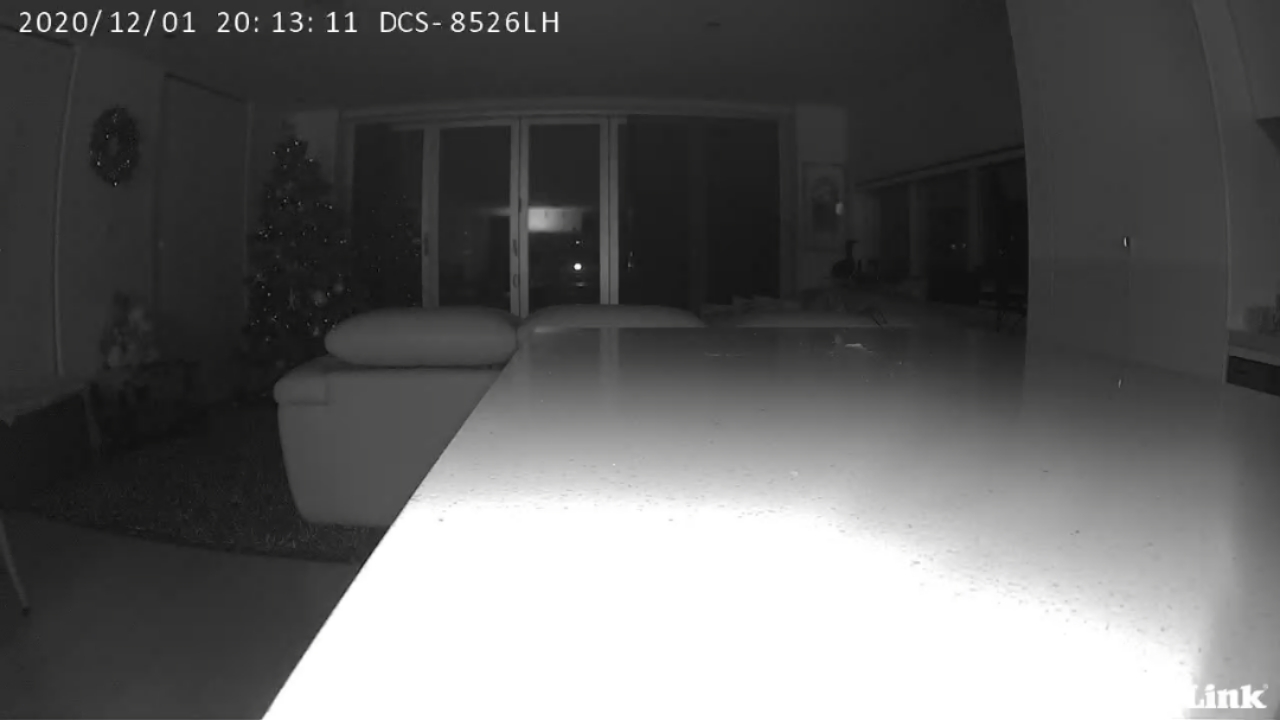
Night vision – the IR LED light spreads out about 2m but adds sufficient light to about 6m

GadgetGuy’s take – D-Link DCS-8526LH FHD Pan and Tilt W-Fi Camera – PTZ – is versatile and can cover more areas.

We don’t usually bother with 1080p security camera’s as they all tend to use the same innards and do the same thing.

This uses a premium  CMOS sensor and has the PTZ function.

You can read other D-Link news and reviews here

D-Link DCS-8526LH FHD Pan and Tilt Wi-Fi Camera
Name: D-Link DCS-8526LH FHD Pan and Tilt Wi-Fi Camera Price (RRP): $179.95 Manufacturer: D-Link
D-Link quality, support and privacyBetter Wi-Fi signal strength that mostQuality glass lens and large sensor
None really
Features
Value for money
Performance
Ease of Use
Design
4.7Overall Score

The post D-Link DCS-8526LH FHD Pan and Tilt Wi-Fi Camera appeared first on Gadget Guy Australia.