This is default featured slide 1 title

Go to Blogger edit html and find these sentences.Now replace these sentences with your own descriptions.

This is default featured slide 2 title

Go to Blogger edit html and find these sentences.Now replace these sentences with your own descriptions.

This is default featured slide 3 title

Go to Blogger edit html and find these sentences.Now replace these sentences with your own descriptions.

This is default featured slide 4 title

Go to Blogger edit html and find these sentences.Now replace these sentences with your own descriptions.

This is default featured slide 5 title

Go to Blogger edit html and find these sentences.Now replace these sentences with your own descriptions.

Wednesday, 5 April 2023

LG CS OLED 4K TV review: a movie and gaming powerhouse

OLED TVs are considered the gold standard when it comes to vibrant colours and bold contrast. For 10 years, LG has gone all-in on the self-lit pixel technology, and it’s clear to see why. When watching a movie or playing a video game with light and dark scenes on an OLED display, the picture absolutely pops. We’re currently in between TV generations, with major brands rolling out their latest and greatest as I type. The LG CS OLED TV sits in an interesting position: it is undoubtedly a brilliant TV, but its place on the pecking order is somewhat murky.

Positioned as LG’s version of an entry-level OLED display, you still get great performance from the CS. However, you can’t help but wonder if you should just spend a little bit more for the next model up. It is, after all, still several thousand dollars for a decent size. Launched late last year, the LG CS OLED TV sat alongside the now-discontinued C2 model for a few hundred dollars less. Equipped with the same α9 Gen 5 AI Processor as the C2, the main difference between the models is that the CS does not feature the brighter OLED Evo technology.

In other words, what you get with the LG CS OLED TV is fantastic, even if you wonder if the grass is greener – or brighter – on the other side. A mix of watching movies, playing games, and streaming sports prove this is a stellar unit, regardless of any comparisons.

First impressions

I tested the 55-inch model, so the setup was relatively straightforward. Mercifully, the construction of the stand looks and feels more robust than the wobbly one packed with the LG QNED91 TV. What struck me during the setting up process was how thin the CS’ bezel was. You have to be careful not to apply pressure on the screen as you put it together, as there isn’t much space to place your hands. Naturally, this makes for a better viewing experience, though, as you get to enjoy as much of the display as possible.

Another positive observation I quickly made was that the overall user experience feels quicker and snappier. As I mentioned in my review of the QNED91 – which uses the α7 Gen 5 AI Processor – that the WebOS platform felt a bit sluggish. I realise that the TV processors are mainly for image processing, but to my eyes, it seemed that the CS’ α9 processor also helped speed up OS navigation and switching inputs. Opening any of the apps from the vast library supported on WebOS – mainly Kayo, in our household – felt near-instantaneous, reducing any friction to enjoying content.

In fact, the only frown-inducing initial observation I had was that the panel was a bit too reflective for our living room. Particularly during the day, our entertainment area lets in a lot of natural light from the side. This casts plenty of reflections on the TV, which was highly noticeable no matter what I used the LG CS OLED TV for.

LG CS OLED reflections
Note that the photos amplify the reflections more than what the naked eye sees, although they’re still distracting.

This is where the debate about the best TV types pops up: OLEDs are unbeatable in controlled dark environments but don’t offer the same levels of high brightness as other types of technology, like Mini-LEDs. Cranking up the brightness helps compensate for when you don’t have full control over the lighting situation, so the QNED91 and similar TVs are more flexible in that regard. This being said, the gap between different types of TV tech is closing, and relates to my point earlier about choosing the CS over a slightly more expensive OLED model capable of generating more pixel brightness.

Before I tried one for myself, I always wondered what people meant by the “deep blacks” of an OLED display. Black is black, right? Not quite. Older LED technology lights up the whole screen, meaning that even scenes meant to be completely black appear, at best, a very dark grey. Meanwhile, OLED technology only lights up the pixels it needs to, so if something should be as dark as the night sky, it will be. Seeing this contrast in person is eye-popping.

LG CS OLED 4K TV specifications

Size reviewed 55-inch
Screen technology OLED
Processor α9 Gen 5 AI Processor
Resolution 3840 x 2160
Operating System WebOS 22
HDR format Dolby Vision IQ with precise detail, HDR10, HLG
Connections 4 HDMI 2.1 ports (4K @ 120Hz), 3 USB-A ports, 1 RF Antenna input, 1 LAN port, 1 Digital Optical Audio output, Wi-Fi (802.11ac)
RRP $2,699
Warranty 1 year
More details LG website

Performance

Movie night

While reviewing the LG CS OLED TV, I rewatched the John Wick movies ahead of the fourth film’s theatrical release. Flashy neo-noir action flicks with lots of high-contrast scenes, they’re a great series to test a TV out with. For full reference, I waited until night, switched the lights off, loaded up a 4K Blu-Ray into my PlayStation 5, and then set the TV to Filmmaker Mode.

Wow, what a spectacular viewing experience it was. Although not the most colourful of movies, the neon lights of the underworld in John Wick were brilliantly deep and vivid. I was most interested in the HDR performance, which was exceptional. You could easily view details of dimly lit scenes, to the point of practically counting the threads on Wick’s signature black suit. In the same scenes, lights and muzzle flashes also stood out without being overexposed. Most importantly, I couldn’t see any blooming or halo effects. And trust me, I was watching the letterboxed borders closely for the slightest bit of light bleeding from the film’s image.

This goes to show that the LG CS OLED TV lives up to its claims, delivering exactly what an OLED should. In theory, because the panel is lit on a per-pixel basis, the colours and lighting of an image should be precise. In practice, this was absolutely the case, making for a brilliant home cinema experience with all the lights off.

Number one Victory Royale

Rarely have I enabled HDR while playing video games. This comes down to two factors: many of the first games to implement HDR did so poorly, and I didn’t previously have a TV fully capable of producing the format. Brightness is an important aspect of HDR, so you need a display capable of brightening up the lightest parts of an image. However, depending on how a TV is lit, it may not be very good at brightening up specific parts of the screen and not others.

Although I don’t have an exact brightness specification for the LG CS OLED TV, it handles HDR content strongly with decent contrast. I’ve enjoyed going back through games, enabling HDR, and seeing what difference it makes. I’m currently playing the Resident Evil 4 remake, and the contrast between sources of light and spookily dark areas looks great.

Aside from making games look fantastic, the LG CS OLED TV also includes many game-specific features that are becoming the norm across televisions. Things like Variable Refresh Rate (VRR), a low-latency gaming picture mode, and 120Hz support for modern consoles are all welcome features. I play Fortnite regularly with a group of friends, and the game’s recent next-gen update runs wonderfully on my Xbox Series X. It looks smooth on the TV, which also does justice to Fortnite’s kaleidoscopic colour palette.

Also great for sport, the CS has a wide viewing angle, so you don’t have to sit front and centre to enjoy the contest. I don’t worry about using the sports picture mode, known as “Cricket” on this model, mainly because it oversaturates the picture like an over-the-top Instagram filter. That, and broadcast TV doesn’t film and transmit in the same high frame rate video games can reach.

TV sport
Watching sport looks great on the TV. It’s even better when your team wins.

There are only two main complaints I have about this TV. One is that reflections from natural light and indoor light fittings show up a fair bit. Nighttime viewing with the lights off is fantastic, but you’ll want to close the curtains for the best daytime performance. The other complaint is that I’m not a fan of the Magic Remote. As I mentioned in my QNED91 review, the main selection button is tricky to press due to its indented position. Also, its glossy underside finish is a fingerprint and smudge magnet, especially for sweaty guys like myself. Ultimately, the remote isn’t that big of a deal, and the reflection issue should be manageable for most households.

Would I buy the LG CS OLED 4K TV?

Yes, I would buy this TV in a heartbeat. My only hesitation comes from wondering what I’d miss out on by not spending a little extra cash on the C2, or the incoming C3 model. That extra brightness could make a difference in our natural light-filled living room during the daytime. However, I wouldn’t really know without a direct side-by-side comparison.

LG CS OLED cat Billie
My cat Billie enjoyed watching the display but refused to provide comment when asked why.

Conversely, if your budget doesn’t stretch any further than the CS, know that it is 100% worth the investment. Another factor is that several retailers have these TVs at prices far cheaper than RRP to make way for 2023 stock. If you see a discount on the CS, grab it with both hands.

The post LG CS OLED 4K TV review: a movie and gaming powerhouse appeared first on GadgetGuy.


Tuesday, 4 April 2023

Fetch TV update focuses on cross-platform content discovery

Addressing the frustrations of streaming fragmentation, the latest Fetch TV UI overhaul aims to put Aussie viewers in the driver’s seat.

These days, Australians are spoiled for choice when it comes to both great content to watch and great home entertainment devices on which to watch it. Unfortunately, all those choices come at a price when it comes time to flop down on the couch and quickly find something to watch.

The makers of smart TVs and other streaming devices have made various attempts at breaking down the worlds between Australia’s content silos. Beyond simply displaying a wall of streaming and catch-up apps, they’ve embraced cross-platform search and now cross-platform content discovery in an effort to be your go-to entertainment portal.

Playing the role of content aggregator and curator is key for any device that wants to take pride of place in Australian lounge rooms. Unfortunately, some otherwise impressive devices have been hampered by the fact that their masters have skin in the game.

Apple and Foxtel’s cross-platform approaches still have a tendency to favour their own content. Meanwhile, Freeview Australia’s ill-fated personal video recorder sank without a trace because of its stubborn determination to dictate the viewing experience and keep free-to-air television front and centre.

It’s an approach Australian broadcasters are now trying to force onto smart TV makers, by proposing new laws which force hardware markers to give local services prominence in the menus over streaming giants like Netflix and Disney+.

This is where Fetch TV has managed to walk a fine line in offering a relatively service-agnostic entertainment device, despite the fact it also has skin in the game in the form of its own streaming pay TV channels, as well as selling and renting movies and TV shows.

Fetch TV Cross-platform content discovery puts viewers first

The latest Fetch TV overhaul focuses on helping viewers to find their favourite shows, and discover new ones, with as little friction as possible – regardless of the content’s source. The interface also runs on the Lightning open-source rendering engine rather than HTML, to offer a slicker user experience.

The 3.30 Acacia update has already rolled out to around 5,000 Fetch TV boxes and is set to be pushed out across the country during April. It is available to all Fetch TV boxes except Gen 2.

The most obvious change is that the main menus now extend across the bottom of the screen instead of the top.

Each top-level menu option now automatically offers up a range of viewing options from different sources, to improve cross-platform content discovery. These menus can also tap into recently watched data from the various services, although some streaming services insist on only displaying this content in their own dedicated row of the menus.

Content suggestions draw on a combination of automated recommendations based on your viewing habits and Fetch TV’s curated collections, in an effort to offer a better balance than services that rely heavily on algorithms.

One of the key improvements with the latest Fetch TV update is the ability to find content more easily, without the need to trawl through individual streaming services. As part of this, Fetch TV’s own movie rental store has been integrated into the wider movie search options.

After clicking on a movie or TV show, the “Ways to Watch” menu now lists all available sources, including free-to-air and pay TV recordings as well as catch-up services. This list is prioritised based on cost (allowing for your existing subscriptions), resolution and whether the service includes advertisements.

Fetch TV Ways to Watch
Fetch TV’s new Ways to Watch menu makes it easier to navigate Australia’s fragmented content landscape.

This ensures the menus aren’t constantly offering up content for which you need to pay extra in order to watch, beyond your current subscriptions, even if it comes at the expense of Fetch TV’s own movie rental service.

Fetch TV’s efforts to standardise its Electronic Program Guide and metadata behind the scenes also pay off, with Ways to Watch indicating whether different seasons of a television series are available across different services.

Fetch TV has also added a “Keep Watching” menu along with “New Seasons and Episodes” which keeps track of what you’ve been watching and ensures you don’t miss the season return (although again, some streaming services limit access to this data).

For households that still watch a lot of free-to-air television, the EPG option in the main menu now offers quick links to shows that you tend to watch at this time of day, to reduce the number of clicks required to start watching. The “Featured TV” option under the Shows menu also tells you what’s on during the next few days so it’s easier to schedule recordings.

Read more television news on GadgetGuy

The post Fetch TV update focuses on cross-platform content discovery appeared first on GadgetGuy.


Monday, 3 April 2023

Massive new video game and esports venue opens in Sydney

In a major boost to New South Wales’ local video game scene, Fortress Sydney opens this week, welcoming gamers and pop culture fans alike through its doors.

Opening to the public on 8 April 2023, the Chippendale Central Park Mall location is expected to host thousands of people each week. It follows the success of Fortress Melbourne, which after opening during a tumultuous 2020, bounced back to accommodate over 350,000 people in 2022 across more than 800 events.

Like the Victorian-based venue, Fortress Sydney will have a mix of ticketed events and daily free walk-in opportunities for you to grab a drink, play the latest games, and catch up with friends. There’s a dedicated section for esports competitions, and expect to see plenty of game and product launches take place at the new gaming hub, with Fortress Melbourne recently hosting an event for the upcoming AFL 23 game.

What to expect at Fortress Sydney

If you’re even remotely interested in video games, board games, and fantasy, you’re bound to find something to enjoy. A licensed venue, Fortress Sydney houses a bar and a fantasy-themed restaurant called “The Tavern”, VIP booths, and plenty of gaming hardware. Through an exclusive partnership with Dell sub-brand Alienware, there will be over 70 Aurora R15 PCs to play games on, alongside the latest consoles. Telstra is another major partner, providing high-speed internet and sponsoring the PC gaming Telstra Lounge section.

Just like a regular bar, there will also be weekly trivia nights for those of you keen to test your knowledge. Other weekly events include tabletop and board game nights, plus Dungeons & Dragons sessions to join. As mentioned earlier, regular esports competitions will take place at the dedicated Alienware Arena section, offering spectators a great view of competitive games like Valorant, League of Legends, and World of Tanks.

Everyone I’ve spoken to who has been to Fortress Melbourne loves the place, so it’s exciting to see a second location opening. Fortress Sydney opens to the public this Saturday 8 April, with walk-ins starting from midday. If you’re among the first 100 visitors, you’ll get a free goodie bag, because who doesn’t love free stuff? More information is available on the venue’s website.

Read more gaming news on GadgetGuy

The post Massive new video game and esports venue opens in Sydney appeared first on GadgetGuy.


Samsung’s new OLED TVs take colour very seriously

We now know the full TV and audio range from Samsung in 2023, with the global brand confirming the OLED TV models coming to Australia. In addition to this year’s recently-launched Neo QLED TVs and soundbars, the Samsung OLED 4K S95C and S90C now have local pricing ahead of the displays arriving locally.

A successor to the S95B range, the S95C comes in 55, 65, and 77-inch sizes, starting at $4,649. Meanwhile, the more affordable S90C starts at $3,829, and it also comes in the same three sizes.

Samsung OLED S95C and S90C features

Samsung points to its 2023 OLED TVs as having over 8 million self-lit pixels, made of three subpixels: Quantum Dot red and green, and OLED blue, with no white pixels. The company says this contributes to a high degree of colour reproduction alongside the TVs’ colour mapping capabilities powered by the Neural Quantum Processor. To back up Samsung’s claims of strong colours, its new TVs are the first to be the first Pantone-Validated HDR OLED.

As for what this means, exactly, the fine print of the announcement explains that the TVs are verified to accurately produce 2,030 Pantone colours and 110 skin tones. It’s a validation process involving Pantone scientists and technicians that Samsung discussed last year as part of its 2022 QLED TV range.

Samsung OLED S90C 4K TV
The S90C model.

Outside of being very good at producing many different colours, the Samsung OLED S95C and S90C TVs have HDR and 4K upscaling features. Additionally, Game Motion Plus lets you play compatible PC games in 4K at up to 144Hz, and we’d expect 120Hz for console games too. On the topic of video games, Samsung mentioned at CES 2023 other upgrades including GameBar 3.0, which we’re keen to see in action.

As for specific differences between the two models, the flagship S95C has Quantum HDR OLED+, while the S90C doesn’t have the “plus”. In practice, this likely means the premium model is brighter and can therefore produce greater HDR contrast than the next step down. Another major difference is that the top model house more audio power. It has a 4.2.2ch speaker array, including up-firing speakers to generate a true Dolby Atmos sound. In contrast, the S90C only has 2.1 in-built speakers, so you’d need a soundbar to get more out of its audio.

Naturally, a good soundbar will enhance your TV audio regardless. Samsung launched its Q-series soundbars recently, headlined by the whopping 11.1.4 channel Q990C model, with S-series lifestyle soundbars also available.

Pricing and availability

We’ll have more details to share soon, but for now, here is the pricing breakdown for both of Samsung’s new OLED TVs. The company is currently doing a phased rollout of its 2023 TVs across retailers, so we’ll hopefully have specific release date information soon.

Samsung OLED 4K S95C

  • 77-inch RRP: $9,299
  • 65-inch RRP: $5,799
  • 55-inch RRP: $4,649

Samsung OLED 4K S90C

  • 77-inch RRP: $7,899
  • 65-inch RRP: $4,999
  • 55-inch RRP: $3,829

With big claims about vibrant colours, we’re keen to check out Samsung’s new OLED TVs soon.

Read more TV news on GadgetGuy

The post Samsung’s new OLED TVs take colour very seriously appeared first on GadgetGuy.


Cheapest SIM plans – April 2023

Are you looking for the best value or cheapest SIM plans? GadgetGuy has done the searching for you. If you don’t understand a SIM-only mobile plan, look at this previous article, A guide to SIM-only Mobile.

Gadget Guy plans to publish each month what we believe to be the best value mobile plans to be had without bundling a handset. This is about saving you money, and unlike other websites, we receive no money for recommending plans.

You will need to add a new SIM each time you change your service provider. The table below’s prices include that new SIM and should also include free shipping to your address.

Irrespective of which services provider you go with, the actual phone calls and data will be carried on one of three carrier networks Optus, Telstra or Vodafone. What will be different is the coverage you receive. Each service provider/carrier does not necessarily have the same coverage. For, E.g. A service provider who uses Telstra as a carrier may not get 100% of Telstra coverage even though they use the Telstra network. Check the service providers’ coverage maps before signing up.

Phone number portability

The SIM changeover process takes about 10 minutes of your time. You will receive instructions to visit a website, provide your details, prove your identity (online) and then insert your new SIM. Note you will have a choice to migrate your existing mobile number or choose a new one. About 15 minutes later, you should be up and running. However, the documentation will indicate it may take up to 24 hours and be affected by working hours.

One last tip is if you purchase a 12-month SIM plan with a fixed data rate, don’t panic about running out of data because if you do, just buy a new SIM with the best deal that suits you at that time. These days, plans are about data, and almost all offer unlimited talk and text. Thus pay attention to the cost per GB column.

The Table below is best viewed on a large screen and may require scrolling. Some plans may have changed since publication.

Best Value or Cheapest SIM Plans for your mobile

All Plans include Unlimited calls and text within Australia

Company – April 23 Data included Period  Cost/  month   Cost/GB   Cost  5G International calls other  expires
Coles (Optus) 120GB/yr 12mths  $   9.92  $     0.99  $119.00 N Unlimited 15 countries Instore or online 11-Apr
Amaysim (Optus) 150GB/yr 12mths  $ 10.42  $     1.65  $125.00 N Unlimited 42 countries   30-Apr
Coles (Optus) 200GB/yr 12mths  $ 14.08  $     0.83  $169.00 N Unlimited 15 countries Instore or online 11-Apr
Kogan (Vodafone) 200GB/yr 12mths  $ 15.00  $     0.90  $   180.00 N unlimited 50 countries cashrewards  
Woolworths (Telstra) 180GB/yr 12 mths  $ 16.67  $     1.11  $   200.00 N None 10% off grocery shop/mth  24-Apr
Lebra (Vodafone) 200GB/yr 360 days  $ 15.00  $     1.11  $   180.00 N unlimeted 50 countries    
Boost (Telstra) 140GB/yr 12 mths  $ 15.00  $     1.29  $   180.00 Y $300 included cashrewards  
Boost (Telstra) 260GB/yr 12 mths  $ 25.00  $     1.00  $   300.00 Y $300 included cashrewards  
Kogan (Vodafone) 500GB/yr 12mths  $ 25.00  $     0.60  $   300.00 N None    
ALDI (Telstra) 528GB 12mth 2 users  $ 45.00  $     1.02  $   540.00 N unlimited 20 destinations 2 sims to share data  
Southern Phone (Optus) 2GB 1 mth  $   5.00  $     2.50  $        5.00 N None cashrewards  
Southern Phone (Optus) 10GB 1 mth  $   7.50  $     1.00  $      10.00 N None cashrewards  
Felix  (Vodafone) unlimited 1mth  $ 35.00  low   $      35.00 N None <20Mbps speed, 50% off 3 mths  
Amaysim (Optus) 10GB/7 days 7 days  $ 44.00  $     1.00  $      10.00 N 42 countries short term 7 day plan  
Lebra (Vodafone) 80GB 6 mths  $   7.50  $     1.13  $      90.00 N unlimeted 26 countries   30-Apr
Amaysim (Optus) 150GB 6 mths  $ 19.83  $     0.83  $   125.00 N unlimited 42 countries cashrewards 30-Apr
Circles Life (Optus) 5GB/mth 6mths then $10 $5.00  $     1.00  $        5.00 N extra $5 unlimited cashrewards 30-Apr
e.tel (Optus) 7Gb/mth 6mths then $15  $   8.99  $     1.28  $        8.99 N 20min 70 countries    
Circles Life (Optus) 31GB/mth 6mths then $25 $11.00  $     0.35  $      11.00 N extra $5 unlimited cashrewards 30-Apr
TPG (Vodafone) 25GB/mth 6mths then $25  $ 12.50  $     0.50  $      12.50 N None    
Internode (Vodafone) 16GB/mth 6mths then $25  $ 12.50  $     0.78  $      12.50 N None    
iinet (Vodafone) 40GB/mth 6mths then $30  $ 15.00  $     0.38  $      15.00 N None   1-Jun
Amaysim (Optus) 40GB/mth 6mths then $30  $ 25.00  $     0.63  $   25.00 N Unlimited 42 countries   30-Apr
Kogan (Vodafone) 40GB/mth 1mth  $ 25.00  $     0.63  $      25.00 N None $15 off 1st mth  
Circles Life (Optus) 51GB/mth 6mths then $35 $26.00  $     0.51  $      26.00 N extra $5 unlimited cashrewards 30-Apr
Circles Life (Optus) 50GB/mth 12mths then $35 $30.00  $     0.60  $      30.00 N extra $5 unlimited $27 for females 6-May
Circles Life (Optus) 100GB/mth   $45.00  $     0.45  $      45.00 N extra $5 unlimited cashrewards  
Belong  (Telstra) 100GB/mth 1mth  $ 35.00  $     0.35  $      35.00 Y None No calls or SMS  
Also, see our guide to the cheapest NBN plans.

The post Cheapest SIM plans – April 2023 appeared first on GadgetGuy.


Swann AllSecure650 Wireless NVR Security System review: a watchful eye

7.7

Managing cameras spread around your home, the Swann AllSecure650 Wireless NVR Security System makes it easy to keep an eye on things back at the ranch while you’re out and about.

Home security systems have changed a lot thanks to the cloud, with tech giants like Google and Amazon getting in on the game. These days, it’s easy to stick a single security camera anywhere in your home, which connects to your Wi-Fi network and records straight to the cloud.

Things become more complicated if you want to manage a series of cameras spread throughout your home. That’s where you might look to an old-school solution like the Swann AllSecure650 Wireless NVR Security System, which is more complicated to set up but offers a range of benefits in return.

What makes it old-school is that the Swann AllSecure650 cameras rely on a central Network Video Recorder (NVR) which can tuck away somewhere in your home. It’s the central management point for the cameras, along with the central recording point. This lets you take advantage of a few advanced remote access features for free, features for which cloud-based services like Google Nest and Amazon Ring typically want you to pay a monthly subscription.

The downside of NVR-based security systems is that they tend to lack many of the smart features, like intelligent notifications, which the likes of Nest and Ring bring to the party. That’s where the Swann AllSecure650 2K Wire-Free HD Wireless NVR Security System (NVK-650) aims to offer the best of both worlds.

Review: Swann AllSecure650 Wireless NVR Security System

Australian website Swann
Price $1099.95 RRP
Warranty 1 year
Other   More security reviews on GadgetGuy

First impressions

If you’re familiar with easy-to-install cloud-based security cameras then the Swann AllSecure650 Wireless NVR Security System doesn’t make a great first impression, because it’s such a hassle to set up.

The biggest frustration is that you can’t manage the setup via your smartphone or even your desktop computer. Instead, you need to plug the central NVR into your television or monitor via HDMI, with support for 4K output. You then plug in the tiny USB mouse, supplied in the box, and use it to navigate the menus and peck away at the onscreen keyboard.

Swann includes a few printed quick-start guides to assist, but the setup is still unforgivably long, cumbersome and technical. As part of the process, you can link an iOS/Android smartphone app to the system, which is handy for monitoring the cameras, but you’ll still need to come back to this clunky interface for much of the advanced configuration.

Needing to constantly re-enter your login and password using the onscreen keyboard is very frustrating. The smartphone app is also rather clunky in places.

With the NVR plugged into a screen and the cameras up and running, you can see a grid view with the feed from all your cameras. This might be handy if you want a permanent security command station, perhaps for a small business rather than a home setup.

The NVR is roughly the size of a two-litre bottle of milk, but you probably can’t hide it away out of sight. By default, all of the cameras connect wirelessly directly to the NVR, so stashing it in a cupboard could interfere with the signal.

There is the option to connect some or all of the cameras to your home Wi-Fi network, through which they can access the NVR. This is handy if you need to place some cameras a long way from the NVR, but there is an important trade-off.

One of the AllSecure650’s strengths is that it’s designed to keep running even if your internet and/or power drops out. The cameras all run on rechargeable batteries, plus one battery slots into the back of the NVR to keep it running for five hours if the power is cut. If the power goes out and your home Wi-Fi network goes down, the cameras linked directly to the NVR will keep working but those relying on your home Wi-Fi will be cut off.

Swann AllSecure 650 pack content
The AllSecure650 comes with everything you need to get four cameras up and running.

Swann AllSecure650 Wireless NVR Security System specs

Number of cameras four included (supports up to eight)
Camera specs 2560 x 1440 pixel, 105-degree viewing angle
Camera dimensions 74 x 67 x 94 mm
Camera power  Rechargeable and Removable 8,700 mAh 3-Cell lithium battery (USB-C charging)
Night vision range 30 m
PIR heat sensor range 8 m
NVR connectivity Wi-Fi, Ethernet, USBx2, HDMI
NVR storage 1 TB onboard, plus USB and microSD card
NVR power AC or 5-hour backup from battery

Features – cameras

The Swann AllSecure650 Wireless NVR Security System comes with four wireless cameras, including mounts and screws so you can easily attach them to a wall or ceiling. The system supports up to eight cameras, with extras at $269.95 each (or $129.95 for the smaller SWNVW-500CAM camera).

The cameras look rather clunky compared to typical cloud-based cameras, especially considering they feature a prominent antenna for connecting back to the NVR.

Part of the reason for the bulky design is that each camera features a quick-release battery, which slides out of the bottom so you don’t need to take down the camera to recharge it. Each battery features a USB-C port for charging, or you could switch it out for the NVR’s battery and let the NVR recharge the flat battery.

The camera battery should be good for two or three months, depending on how often it detects events. When it is time to recharge, Swann includes one USB-C cable but no AC adapter.

The IP66-rated weatherproof cameras are designed for indoor or outdoor use. They feature night vision so you can see what lurks in the dark. It can see up to 30 metres, plus there’s a built-in spotlight that lets you see the closest 10 metres in colour.

You can also hear what’s happening and even talk to your unexpected guests thanks to two-way audio. Unfortunately, the speaker isn’t overly loud or clear, so it works best with inside cameras.

When it comes to picture quality, the cameras offer 2K 2560×1440 pixel resolution supporting digital zoom. You’ve got a 105-degree horizontal viewing angle, which isn’t as wide as some rivals, but does the job if you mount the camera in the corner of the room. The narrower field of view helps deliver a sharper picture when relying on 2K cameras, rather than 4K like some cameras.

Likewise, the vertical viewing angle isn’t great, but it works well with the camera mounted up high and pointed down at the room. Keep in mind, this camera system is primarily designed for covering entry points to detect intruders. It’s not really designed for keeping an eye on everyone and everything while you’re away from home.

Swann AllSecure 650 SWNVK-650KH4
The cameras look a little clunky but are designed to be installed up high out of the way.

Features – NVR

A key benefit of relying on an NVR is that the Swann AllSecure650 Wireless NVR Security System has a built-in 1 TB hard drive for recording video, along with the ability to add storage via USB and microSD card. This means there’s no need to pay a monthly subscription if you just want to retain access to those recordings.

One trade-off is that the AllSecure650 doesn’t record constantly so, unlike Google Nest cameras, you can’t scroll back through time. Instead, it only starts recording when it detects movement. At this time, it also sends an alert to your smartphone and/or email, depending on what you requested during the setup.

Of course, you don’t want to be hassled 24/7 whenever anything moves in your home or outside. Thankfully, the smartphone app lets you manually switch between Home, Night and Away modes, plus you can create schedules.

These modes let you set the sensitivity for each camera and whether or not they send alerts, record video, capture photos or trigger their built-in siren. Unfortunately, you can’t change modes automatically with geo-fencing, which would let the system detect when your smartphone leaves home and returns.

By default, the cameras look for movement and a heat signature using the infrared sensor – which Swann dubs “True Detect”. It also looks for people-sized objects, up to a range of eight metres, so it won’t be fooled by pets. These two things help significantly cut down on false positives when you’re watching for intruders, but you can tweak these settings if need be.

To further reduce unwanted notifications you can also set up zones for each camera, meaning they only respond to motion in some areas, but you need to go back to the monitor interface to set this up.

Along with recording to its own storage, you can also configure the NVR to upload clips to Dropbox. This way, you can check them remotely even if your home internet is down. It also ensures you don’t lose your evidence even if thieves make off with your security system.

Despite all these free features, Swann also offers a “Premium Member Service” for $12.99 p/m or $129.99 p/a with a 90-day free trial. This adds 60 days of cloud recording to Swann’s servers, along with intelligence notifications that can distinguish between people, pets, packages and cars.

You also get rich notifications with tap actions, along with 36 months of extended warranty and Swann device insurance. At this point, the Swann system starts to match some of the advanced cloud-based functionality that you get from the likes of Nest and Ring.

Quality

Swann’s cameras offer a clear image at 2K. They also cope well with bright backlights, although you’ll want to avoid the sun shining directly into the lens. You can also manually adjust hue, contrast, brightness and saturation for each camera.

One potential frustration is that, on the default settings, the cameras’ ability to detect motion is a bit hit-and-miss. You might need to do a lot of fine-tuning, via that clunky monitor interface.

Camera placement is also important. For example, if you place a camera on the kitchen bench and walk in front of it at close range, it tends to ignore you. But move to the other side of the room and it’s much more likely to spot you as you walk past.

Another frustration is that, when you click on a smartphone alert, you’re taken to the live feed with no picture-in-picture “pre-roll” as provided with some cameras such as Ring. Pre-roll is important in order to see what triggered the event, as well as what led up to that event.

Without pre-roll, the Swann system can leave you staring at an empty room after your invited guest has quickly walked past. To see what happened you need to dig through the app, which means taking your eyes off the live feed. Even then, due to the lack of pre-roll, it’s possible the camera didn’t start recording until the person was already out of shot.

If the live feed shows you something of interest, you can click a button to record a video or capture a photo. You can download these to your smartphone, or copy them off the NVR via USB.

GadgetGuy’s take

Whether the Swann AllSecure650 Wireless NVR Security System is right for you depends on how you want to use it. If you need a spread of cameras with good indoor and outdoor coverage, offering limited false positives, then it might be a good fit. 

It’s particularly attractive if you’re looking to take advantage of basic Dropbox cloud storage without the need to pay for a monthly subscription. Remember, some of Swann’s fancy features like package detection still need you to cough up for a subscription.

This aside, you really need to take advantage of the NVR to make it worthwhile – whether you’re using that command centre-style grid on a monitor or you’re making the most of the system’s ability to stay up and running when the power and/or internet goes out. Keep in mind, you’re paying a premium for the NVR, compared to buying a pack of four cloud-based cameras. If you’d never leverage the NVR’s strengths then your money might be better spent elsewhere.

Would I buy the Swann AllSecure650?

Maybe, if the feature set was a better fit to my needs than cloud-based options which don’t require an NVR. 

Swann AllSecure650 Wireless NVR Security System
Able to stay up and running when your power or internet goes out, the Swann AllSecure650 Wireless NVR Security System is designed to keep your home safe and sound.
Features
8
Value for money
8
Performance
8
Ease of use
7
Design
7.5
Positives
Works during power/internet outage
Retain recordings without subscription
Basic cloud storage via Dropbox
Negatives
Cumbersome to set up and use
No pre-roll on video clips
Intelligent alerts require subscription
7.7

The post Swann AllSecure650 Wireless NVR Security System review: a watchful eye appeared first on GadgetGuy.


Sunday, 2 April 2023

EcoFlow launches River 2 range of portable power stations locally

Australians looking for an eco-friendly way to power electronics while travelling have a new choice in the River 2 series. Made by EcoFlow, a Californian startup company specialising in environmentally friendly power and renewable energy devices, the new devices promise fast charging and longevity.

Included in the new range are three distinct models: the River 2 (256Wh capacity, 300W output), River 2 Max (512Wh, 500W), and River 2 Pro (788Wh, 800W). Billed as entry-level portable power stations, each with a capacity of under 1kWh, they start at $649. This makes it slightly more expensive than the competing Bluetti EB3A model but is considerably lighter, as the River 2 is 3.5kg compared to the EB3A’s 4.6kg.

Aside from portability, the new EcoFlow power stations feature a wide range of uses, including as an electricity source while camping, and as a backup generator in a blackout.

EcoFlow River 2 technology

A major component behind the new range’s fast charging and longevity is its battery composition. They use what’s called a Lithium Iron Phosphate battery (LFP), regarded as being a more efficient and environmentally friendly technology. Increasingly more companies are using LFP batteries to power electronics because they last longer and charge faster than other lithium-ion batteries.

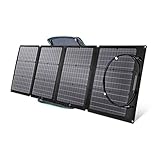
EcoFlow claims its River 2 series of portable power stations charge up to 80% capacity in less than 50 minutes. Furthermore, the base model charges from empty to full in only an hour, according to the company’s numbers. Even the Pro carries a 70-minute full recharge claim. In addition to charging from a mains outlet, you can also top up the power stations by using portable solar panels, which EcoFlow also sells.

Going back to the LFP battery longevity point, EcoFlow highlights that its new portable power stations are capable of 3,000 cycles. Even if you’re a heavy user, you should get plenty of use over a number of years. To back this claim up, EcoFlow offers a five-year warranty across all three of its entry-level models.

Both the base and Max River 2 models are available now from several retailers, including direct from EcoFlow. Other stores stocking the stations include Amazon, Harvey Norman, Anaconda, Total Tools, Battery World, and more. You’ll have to wait a bit longer for the Pro model, with the timing of its availability yet to be announced.

Read more power news on GadgetGuy

The post EcoFlow launches River 2 range of portable power stations locally appeared first on GadgetGuy.