
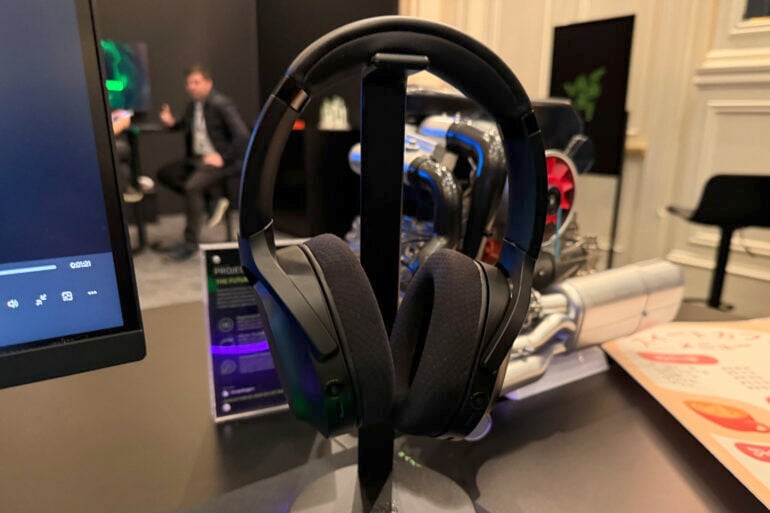
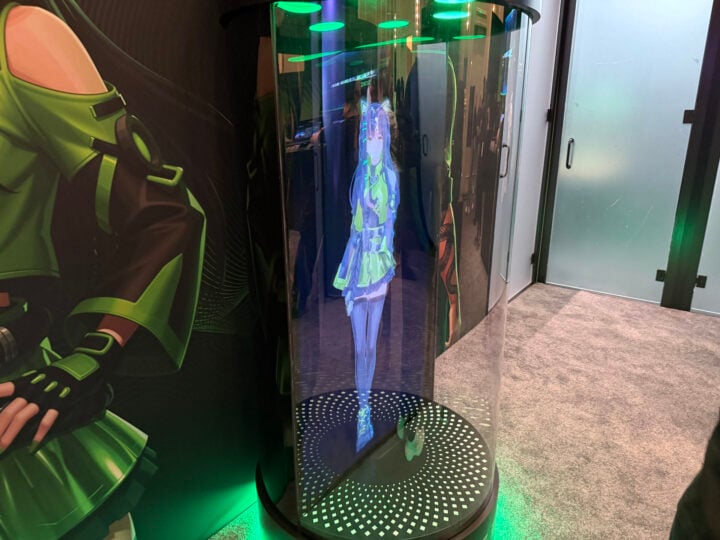
At CES this year, Razer did what it always does at the event in Las Vegas, and introduced a bunch of weird concept devices that may or may not make it to market. Its devices included an anime waifu that can live on your desk and relies on xAI’s Grok (best known for creating non-consensual pornographic images of children and adults), an “immersive” chair, and an interesting take on the AI headset.
Most AI headsets are glasses, but unfortunately, most nerds already wear prescription glasses, which makes the whole thing awkward. Instead of glasses, Project Motoko is a pair of headphones with built-in cameras that connect to your choice of AI platform, including ChatGPT, Gemini, and Grok. Headphones make a lot more sense from a form factor perspective, but during the demo, it was difficult to imagine a likeable person using these.
The demo started with the Razer employee showing me a trailer, which features a young, fit, seemingly able-bodied man who is apparently incapable of doing anything or thinking about anything for himself. The headset reads his book for him, tells him what to cook, tells him which ingredients he has in front of him, and reminds him of people’s names.
AI headsets and privacy
While the idea of headphones that remind you of a person’s name sounds very tempting, the concept of everyone having to be part of a facial recognition database for it to work is the stuff of dystopian novels.
Plus, the fact that it’s almost impossible to see the cameras on the headset — the small light that flashes when it takes a photo is easy to miss — it looks like a privacy nightmare. It’s easy to make cameras look obvious, and it’s interesting that Razer has apparently chosen not to do this.
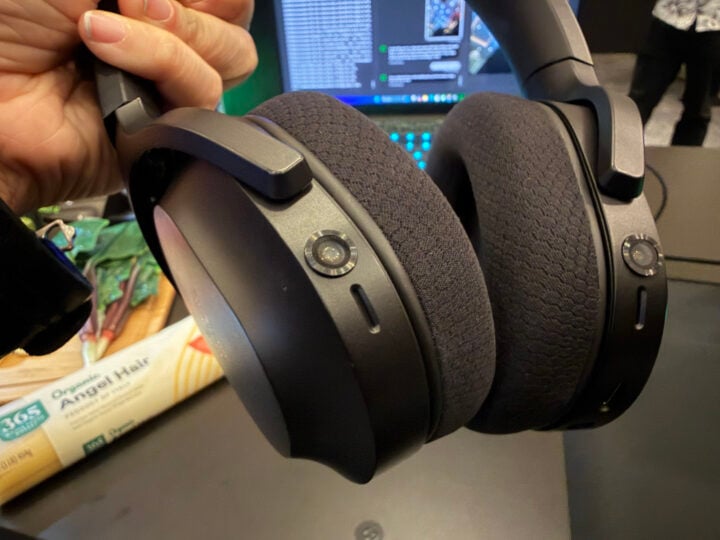
It’s the kind of gadget that I think (with limitations and safeguards) could make an extremely useful assistive device for blind people, or others with cognitive disabilities. But it’s not being marketed as an accessibility tool, and it doesn’t have the kinds of guardrails that would make it safe to use in public for those around it.
Project Motoko seems to be marketed directly towards people who are happy to outsource every small decision they could make, and how they interact with information and the outside world to a chatbot like Grok, which is certainly A Choice.
The Grok problem
Speaking of Grok, I heavily question the decision-making of the developers who chose to use Grok as the AI partner of its desk companion and as an option for the Project Motoko headset. Razer CEO Min-Liang Tan said in an interview with The Verge that the choice was made because Grok was the most conversational choice. This makes me wonder what kind of conversations Razer is imagining people having with its AI-powered tech.
The choice of Grok is controversial, given how frequently Elon Musk and others tweak Grok so it praises Hitler, spreads misinformation about Apartheid in South Africa, makes non-consensual pornographic images of women (including very disturbing ones), generates child sexual abuse materials, and is frequently manipulated to boost Musk’s apparently fragile ego.
The uproar over Grok generating child abuse material was happening during CES, and I don’t know about you, but if I was working with a company to use their chatbot as a key part of my devices, and that chatbot was shown to be easily manipulated by its egotistical owner, trained on racist data, and frequently generated child sexual abuse material, I would simply not use that chatbot and I’d issue an apology.
But I guess my values are different to that of certain tech companies
Thoughts on Project Matoko
All up, while I was impressed with the headset’s ability to recognise ingredients, its long battery life, and its ability to translate menus without interacting with a screen, those features do not exist in a vacuum. This is a device that has to be considered in the context of how it could be used, not just how it’s intended to be used.
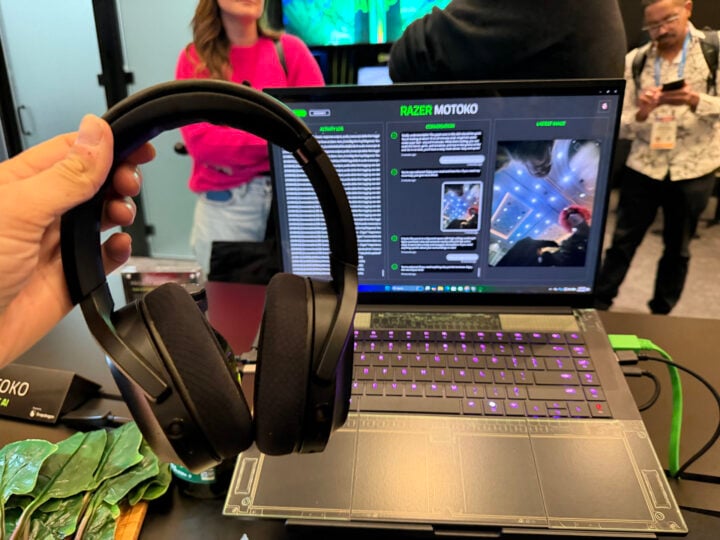
Enabling support for an LLM — one known for creating non-consensual semi-nude and violent imagery of women and children — in a device with hidden cameras, designed to look like a device that doesn’t usually have cameras, so most people won’t be aware of it, is an extremely irresponsible thing to do.
The tech demo may have been impressive, but I hope Project Motoko remains a prototype.
Alice travelled to CES as a guest of Lego and Intel.
The post Razer’s Project Motoko AI headset is treading a dangerous path appeared first on GadgetGuy.


0 comments:
Post a Comment