
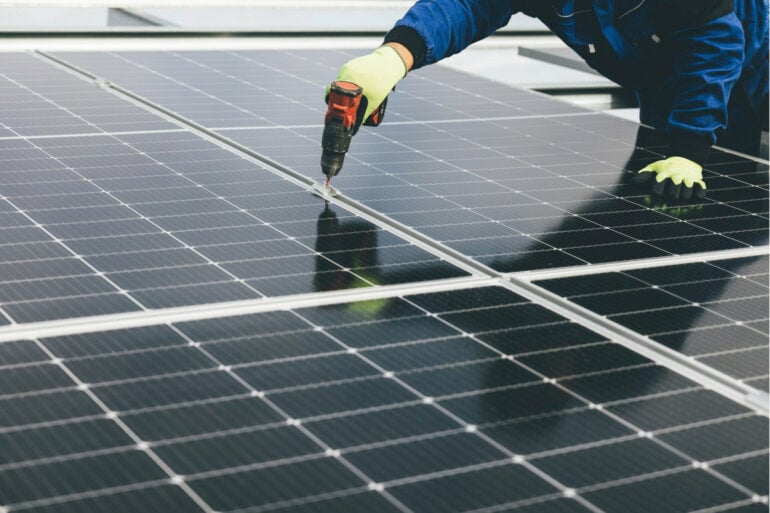
From road usage tax to higher grid supply fees, some Australians going all-electric cry foul when asked to help pay for infrastructure they use every day.
As Australia struggles to meet its targets in the push towards net-zero, more and more people are taking matters into their own hands by investing in electric vehicles, solar panels and home batteries.
The challenge for the government and private sector is to encourage early adopters to make these significant upfront investments, while still collecting enough funds to help pay for the roads and power lines on which we all rely.
It’s a difficult balance, but there’s been a lot of pushback recently against schemes that make life more affordable for EV and battery owners at the expense of other Australians.
How do Aussie EV and battery owners get a free ride?
Australia’s EV fringe benefit tax break was introduced back in 2022 to encourage EV adoption by reducing the cost of a novated lease. Take-up has been far greater than expected – costing taxpayers $1.35 billion in the 2025-26 financial year alone. There are calls to scrap the tax break, especially when 30 per cent of EVs bought under the scheme have gone to people earning more than $190,000 a year, according to the AFR.
Plus, there’s debate as to whether the government should be providing $40 million to expand Australia’s public EV charging network for those who can afford to go electric.
Then there’s the ongoing argument over when Australian EV drivers should start paying a road user tax of a few cents per kilometre. The tax is designed to make up for the fact EV owners don’t pay the fuel excise tax, which helps fund the nation’s road infrastructure.
Separately, the government is about to rein in the solar home battery rebate, to stop well-off early adopters buying giant batteries and making a profit selling power back to the grid during peak demand. The average size of the almost 200,000 systems installed since December is a hefty 32 kWh, according to the AFR.
On top of this, there’s outcry over the latest proposal from the Australian Energy Market Commission (AEMC) to charge all households much higher daily supply fees, in place of high per kW usage fees.
The idea is to more evenly spread the cost of supplying power – reducing energy costs for homes that can’t afford solar panels and batteries, not to mention renters and apartment owners who have no choice. In return, it would wipe out the significant energy usage savings that battery early adopters are relying on to make it a worthwhile long-term investment.
How do we strike the right balance?
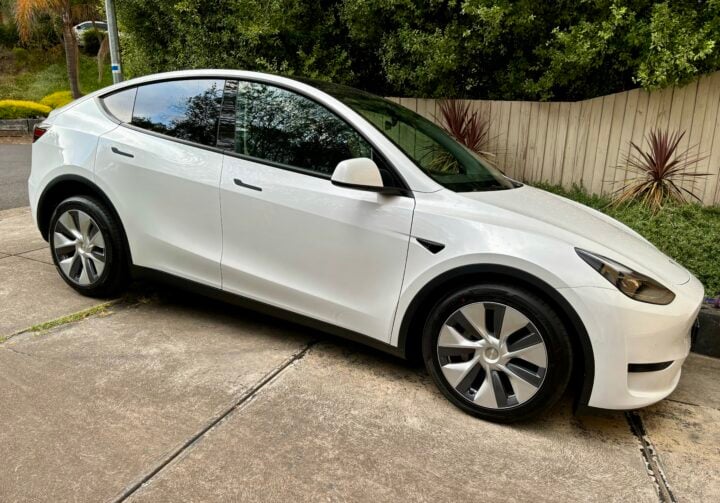
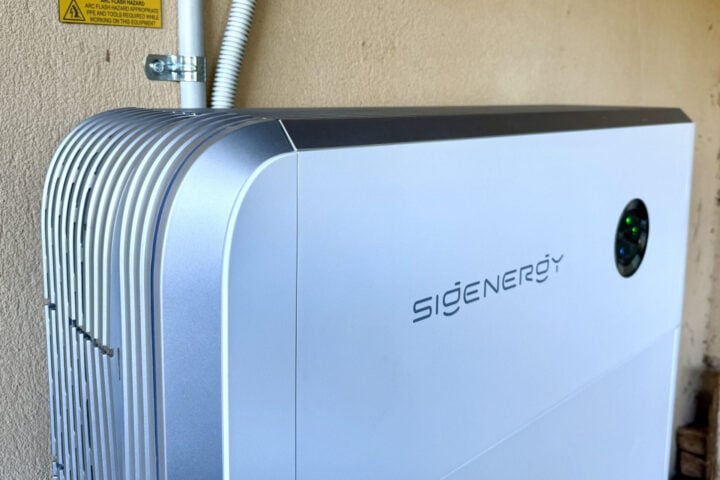
At this point, I need to declare that I have some skin in the game, with a Tesla Model Y parked in the driveway, solar panels on the roof and a Sigenergy home battery down the side of the house.
All of these were a stretch financially, made possible thanks to various government rebates designed to encourage early adopters like me, who certainly aren’t rich but can’t exactly cry poor.
While I’m keen to reduce my household’s reliance on petroleum and coal, I was also motivated by saving money in the long-run.
Considering all this, you’d expect me to be vehemently against any push to increase costs for EV and battery owners. Extreme points of view are all the rage these days, but I think Australia needs to strike a sensible compromise when it comes to giving electrification early adopters a leg up.
EV and battery owners like me certainly don’t deserve a free ride, considering that we expect the roads and electricity grid to be maintained, even if it’s just to sell back power.
I have no problem paying a few hundred dollars a year in road usage tax for my Tesla. It’s a bill that I’d say most Australian EV owners could pay without too much financial distress, especially when you consider how much they’re saving on petrol right now.
One of the reasons why this seems fair is there was always going to be an EV road usage tax; it was just a question of when.
Likewise, I don’t have a problem with gradually scaling back the EV FBT tax rebate and home battery rebate for new customers, to ensure that well-off early adopters don’t chew up all the funds that could instead help lower-income households buy more modest EVs and batteries. That’s fine, as long as the changes didn’t retrospectively hit those who have already made the investment.
It’s a different story when you’re talking about changing home power bills and pulling the rug out from under people who calculated they could only afford a battery based on reasonable assumptions around long-term savings.
For example, I’m halfway through a five-year novated lease on my Tesla, which provides me with the certainty of fixed monthly costs when it comes to car repayments and running costs.
I’m certain the government won’t take away my tax break in the middle of my lease, bumping up my locked-in monthly costs. Instead, it would be fairer to apply the change to new leases after a certain date, so people could make an informed decision before signing on the dotted line.
Home battery owners deserve similar consideration when it comes to dramatically changing grid supply costs. They signed up for a battery in good faith, assuming they would make their money back in lower power usage fees.
Early EV and home battery adopters shouldn’t get burned
Don’t get me wrong, I don’t have a problem with EV and battery-friendly electricity plans changing slightly higher daily supply and usage fees, to help offset the fact you’re paying a lot less overall.
When I got my Tesla, I changed to an electricity plan with a free charging window in the middle of the day. When I got the Sigenergy home battery, I switched to a plan that added a cheap charging window in the middle of the night. My daily supply and per kWh usage charges increased each time, but overall, I was still much better off.
Those increases are not the same as potentially jacking up everyone’s daily supply charges so high that it practically eliminates the benefit of the home battery rebate. If these changes were made overnight, many Australians would have lost thousands of dollars, wasted on batteries with a return on investment now much longer than the actual life of the battery.
Any dramatic changes to the structure of Australian power bills need to be phased in very gradually, to ensure battery early adopters who’ve already spent a lot of money don’t get burned.
Aussie EV and battery owners don’t deserve a free ride, but they also don’t deserve to be taken for a ride by dramatic changes after they’ve taken the plunge, punishing them for doing the right thing and leading the charge to abandon fossil fuels.
The post Do Aussie EV and home battery owners deserve a free ride? appeared first on GadgetGuy.


0 comments:
Post a Comment