
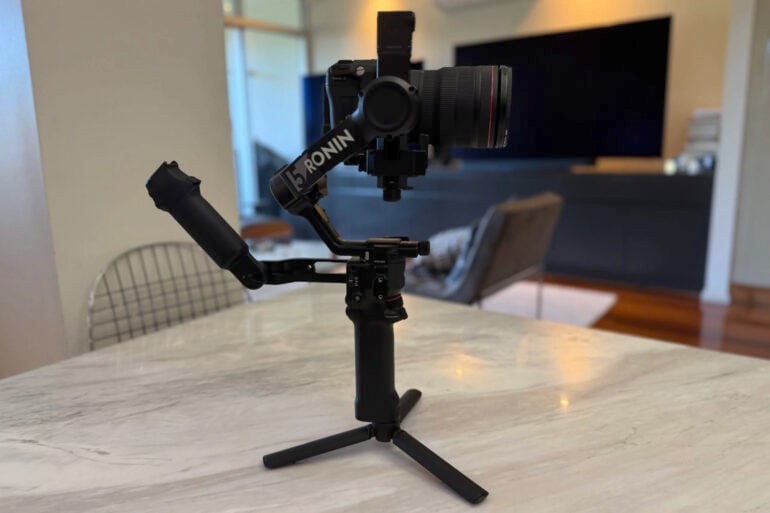
Over a few short years, DJI has refined the Ronin RS gimbal series into what is arguably the best camera stabiliser ecosystem available for independent videographers and content creators. With each generation, the RS line has become smoother, smarter and more capable, and the RS5 continues the trend.
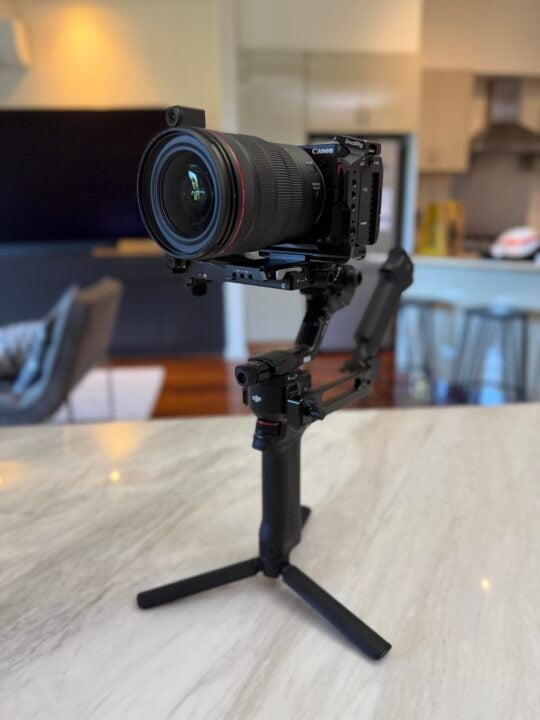
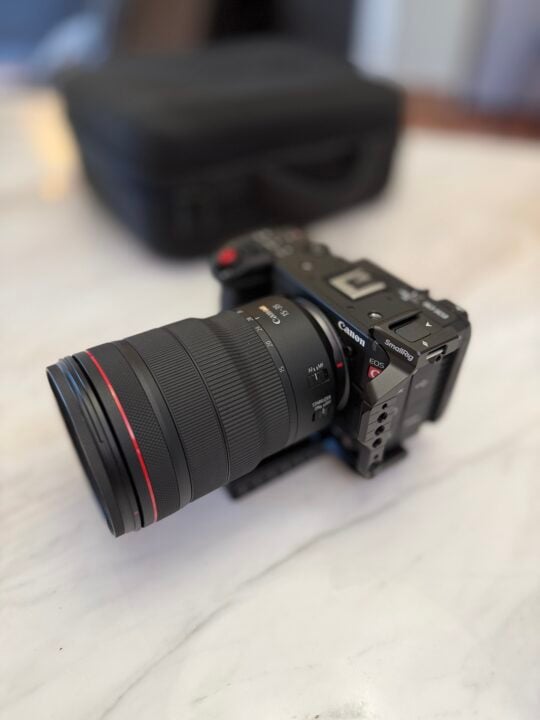
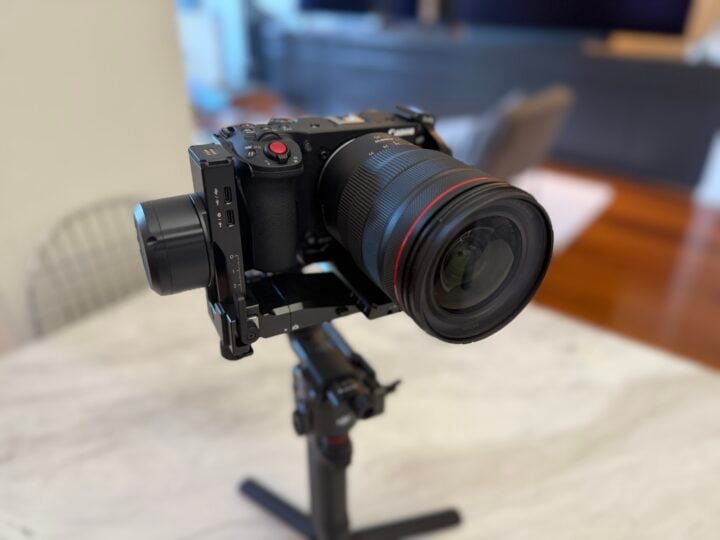
I tested the DJI RS5 Combo, which bundles the gimbal with the RS Enhanced Intelligent Tracking Module and the Electronic Briefcase Handle, pairing it with the new Canon EOS C50. Having previously used the DJI RS4 and RS2, I had a clear baseline for evaluating what’s actually new and how much it matters day to day.
Table of contents
- What’s new on the DJI RS5?
- DJI RS5 specifications and price
- Setting up the DJI RS5: familiar, with a few smart additions
- DJI RS5 Tracking Module: how well does it work?
- The Electronic Briefcase Handle: what does it actually add?
- DJI RS5 shooting performance
- DJI RS5 battery life: all-day and then some
- DJI RS5 ecosystem and connectivity
- DJI RS5 vs RS4: should you upgrade?
- Who is the DJI RS5 for?
What’s new on the DJI RS5?
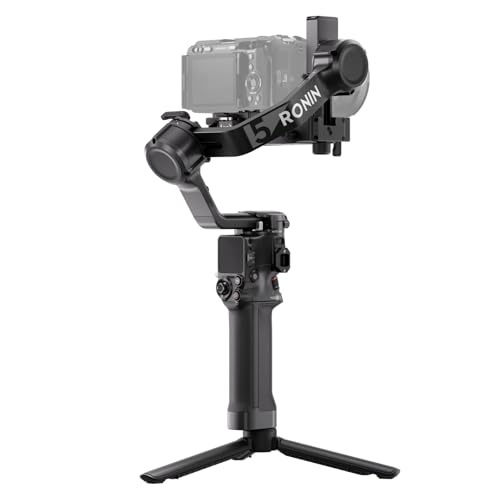
The RS5 is a 3-axis gimbal stabiliser with a 3kg payload capacity, matching the RS4. Standout features of the RS5 include:
- 5th-generation RS stabilisation algorithm with 50% increased peak motor torque
- RS Enhanced Intelligent Tracking Module – magnetic attachment, tracks people, vehicles, pets and objects up to 10 metres (Combo kit)
- Electronic Briefcase Handle for one-handed overhead and low-angle joystick control (Combo kit)
- Fine-tuning knobs with Teflon coating on all axes for smoother, more precise balancing
- Full charge in approximately 1 hour using a 65W PD charger (up from 2.5 hours for the RS4)
- About 14 hours of standby runtime with the included BG33 grip; up to 30 hours with the optional BG70
- On-Screen Z-Axis Indicator – real-time visual feedback on vertical bounce to improve walk-and-talk footage
- Expanded Bluetooth camera control now includes Panasonic and Fujifilm alongside Sony, Canon, and Nikon
- 3rd-generation Native Vertical Shooting for portrait content
- Auto axis locks, dual-layered quick-release plates, and full Ronin ecosystem compatibility
DJI RS5 specifications and price
| Payload | Up to 3.0 kg (6.6 lbs) |
| Gimbal weight | Approx. 1,193 g (incl. upper/lower QR plates) |
| Grip weight (BG33) | Approx. 274 g |
| Tripod weight | Approx. 149 g |
| Battery | LiPo 4S, 2,150 mAh, 33.29 Wh |
| Standby time | Approx. 14 hours (BG33) | Up to 30 hours (BG70) |
| Charging time | Approx. 1 hour (65W PD charger) |
| Stabilisation | 5th-Gen RS Algorithm, 50% peak torque increase vs RS4 |
| Max rotation speed | Pan / Tilt / Roll: 360°/s |
| Mechanical range | Pan: 360° continuous | Roll: −95° to +240° | Tilt: −112° to +214° |
| Axis lock | Auto |
| Vertical shooting | Supported (3rd Gen) |
| Connectivity | Bluetooth 5.0, USB-C |
| Accessory ports | RSA/NATO port, 1/4″-20 mount, Cold shoe, USB-C camera control, USB-C multifunctional |
| Operating temperature | −20° to 45°C |
| Dimensions (folded) | 247.4 × 115.7 × 258.7 mm |
| Dimensions (unfolded) | 223.2 × 192.2 × 418.8 mm |
| Tracking module weight | Approx. 19 g | Tracking range: 0.5–10 m |
| Briefcase handle weight | Approx. 230 g |
| Price (RRP) | $839 (Standard) | $999 (Combo) |
| Official website | DJI Australia |
| Warranty | 12 months manufacturer warranty (consumer use) |
Setting up the DJI RS5: familiar, with a few smart additions
If you’ve used the RS4, the RS5 will feel immediately familiar. The balancing process follows the same logic, the controls are in the same places, and the second-generation automated axis locks, which let you lock or unlock each axis independently while adjusting balance, are carried forward and still excellent. Many of the processes refined across previous RS generations are inherited here, which is a strength rather than a criticism.
The most notable change in day-to-day handling is the new fine-tuning knobs with Teflon coating across all three axes. Rebalancing for a different lens, or nudging the tilt axis after mounting a new camera, is noticeably smoother and more precise. For anyone who shoots with multiple lenses or frequently swaps cameras, this is a welcome practical improvement.
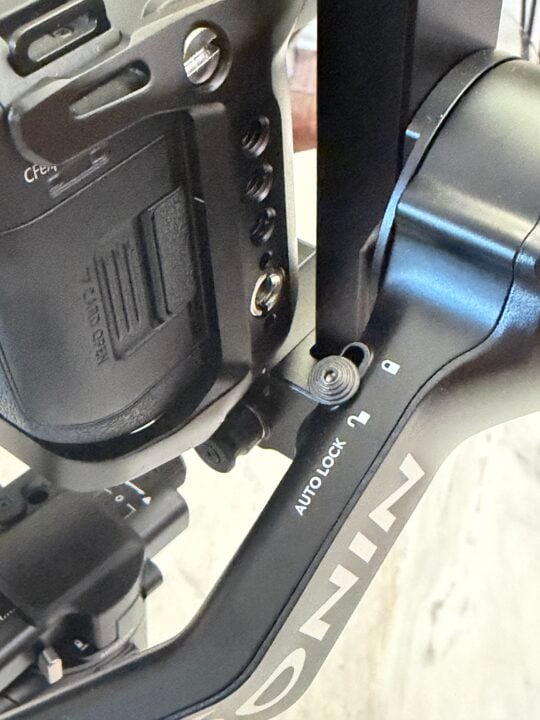
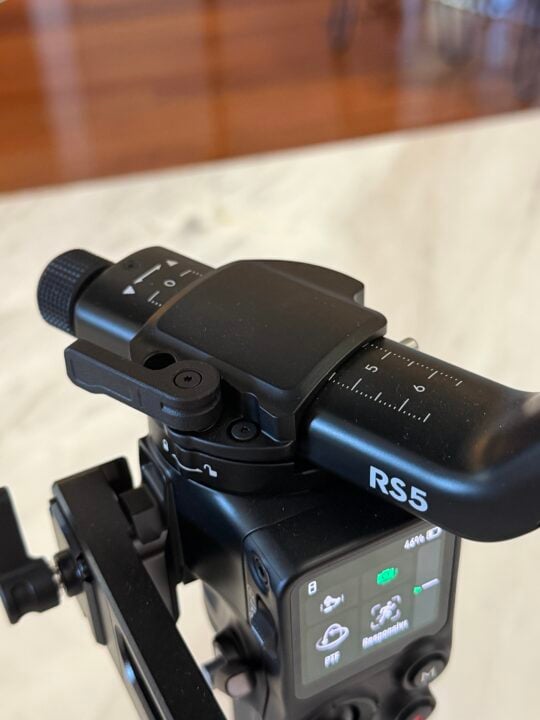
The on-screen Z-zxis indicator is a subtle but useful addition. It gives real-time visual feedback on how much vertical bounce is occurring, effectively coaching you to adjust your gait while walking with the gimbal. I didn’t notice the updated stabilisation algorithm doing anything dramatically different, but that’s rather the point; the footage just came out steadier. If you find yourself running with the gimbal, this is where you’d likely notice it more.
One unexpected issue I encountered was with extreme low-angle shots: specifically, holding the gimbal with the handle pointing downward to get the camera close to the ground. I ran into this problem when filming a robot vacuum cleaner, where I wanted to get the camera down close to the unit. This repeatedly triggered a balance warning and eventually put the system into sleep mode. My Canon C50 setup is well within the RS5’s 3kg payload limit, and the RS5 supposedly delivers more torque than its predecessor, so this was a surprise. It may be a settings issue or simply a limitation of the gimbal’s intended operating envelope at extreme angles. The solution wasn’t immediately obvious, but worth considering if extreme low-angle work is part of your regular shooting style.
DJI RS5 Tracking Module: how well does it work?
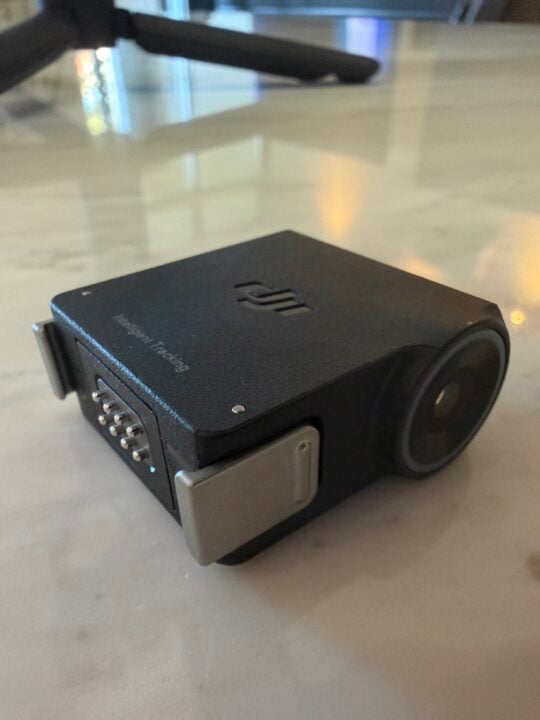
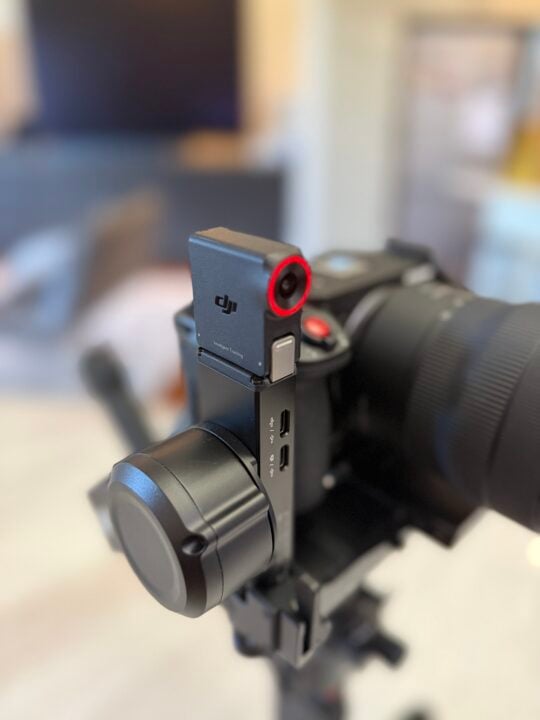
The RS Enhanced Intelligent Tracking Module is the headline addition of the Combo kit, and it works well for solo shooters. It attaches magnetically to the front of the gimbal, weighs just 19 grams, and lets you select a subject directly on the RS5’s touchscreen. Once locked, the gimbal follows that subject within a 10-metre range and automatically reacquires them if they step out of frame.
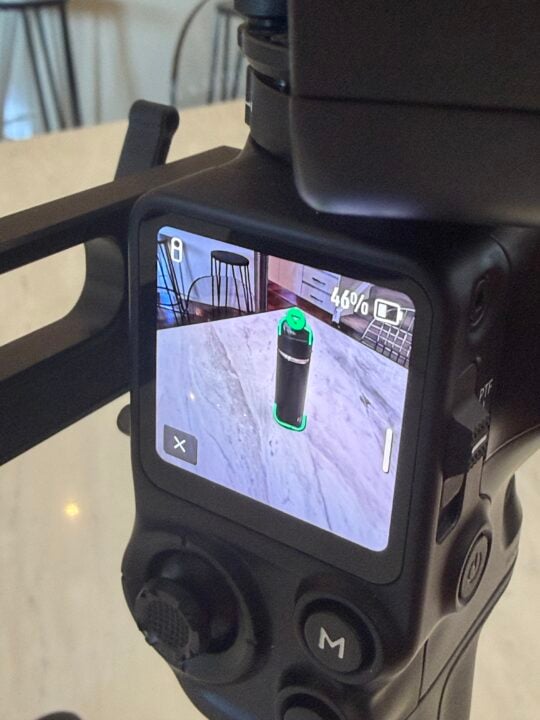
In practice, the tracking held up well. Standing about five metres from the camera, the module picked up my face and body automatically without me needing to draw a box. It stayed locked on as I walked briskly towards the camera from the left and continued tracking as I moved all the way across to the right, not always facing directly towards the lens. Movement was smooth, comparable to a competent camera operator, though not perfectly uniform. You can also draw a shape around any object you want to track, and the module will auto-identify faces and other subjects, which gives you flexibility beyond just people. It’s not perfect; however, we can expect a few tweaks via software updates along the way.
Another thing to keep in mind is that the tracker’s screen uses a wide-angle lens, so you’ll also get the best match with wider-angle lenses on your camera. Otherwise, the tracker’s framing may not resemble, say, an 80mm lens, but you can just zoom this in a bit or change your distance to get the tracking to match up, and then return to your desired focal length and go from there.
Two details worth calling out: there’s a red/green LED ring on the module so you know at a glance whether tracking is engaged, and hand gestures can be used to start and stop tracking and, on compatible cameras, trigger recording. Being able to walk in front of the camera, raise a hand, and have both tracking and recording start without touching anything can really help on solo shoots.
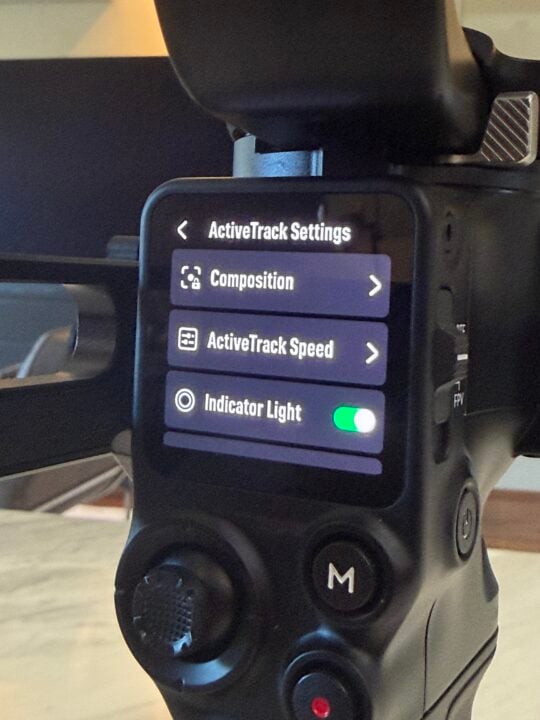
You also have control over framing: the RS5 can maintain whatever composition you’ve set, keeping your subject at the same position in frame, or you can switch to auto-centre if you’d rather the subject always be centred. That flexibility is useful depending on the shot.
One important caveat: the module requires more than 20 lux of ambient light to function, which means it won’t track effectively in dim environments. It’s primarily a daylight or well-lit indoor tool. DJI keeps the design modular, so if you don’t need tracking on a given shoot, you simply leave the module off. It doesn’t change the physical profile of the gimbal when absent.
The Electronic Briefcase Handle: what does it actually add?
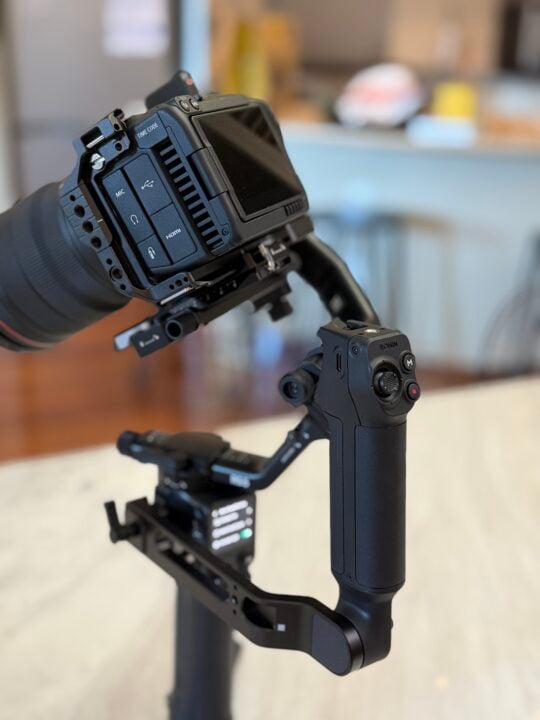
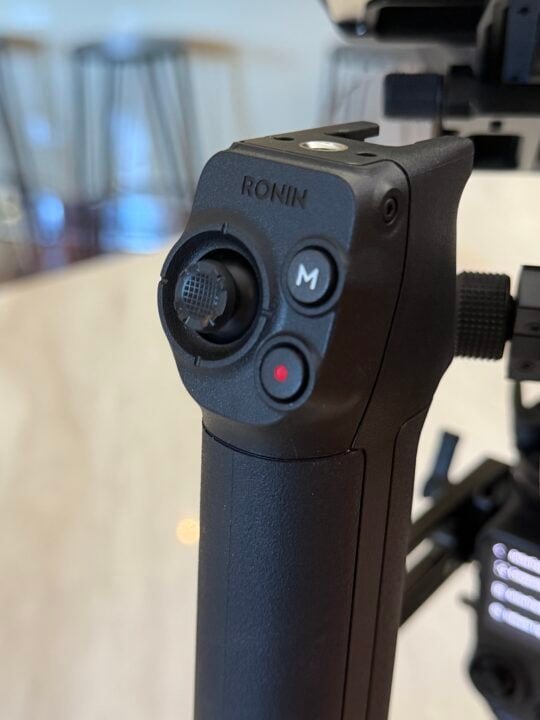
Also included in the Combo, the Electronic Briefcase Handle is worth calling out separately. It attaches via the RSA port and adds a second grip with a joystick and dedicated buttons, built for situations where you need to hold the gimbal away from your body for overhead or angled shots. Think low-angle footage at arm’s reach, or holding the rig up high without having to strain to reach the main controls.
The RSA connection also means the handle communicates electronically with the gimbal rather than just acting as a physical extension, so the controls are responsive and integrated.
DJI RS5 shooting performance
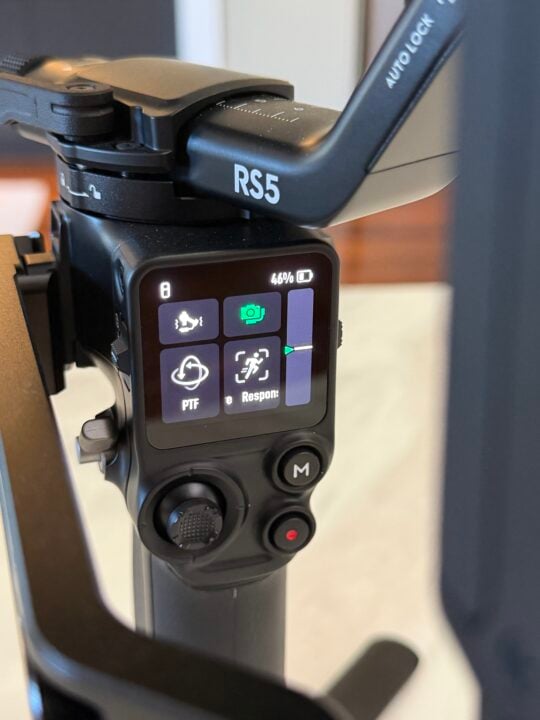
Using the RS5 with the Canon EOS C50, the gimbal delivered smooth, responsive footage across Pan Tilt Follow and FPV modes. Walk-and-talk shots, push-ins and tilt moves all handled well. The improved torque made the system feel confident, and I didn’t notice any strain at my shooting weight. The balance indicator, which provides a real-time visual read of how stable the gimbal is, remains a useful feature that helps you improve technique rather than just trusting the system to compensate.
DJI RS5 battery life: all-day and then some
Battery life is a clear step forward. With the included BG33 grip, the RS5 is rated for approximately 14 hours of standby. Across full shooting days, I had no battery concerns. The one-hour fast charge is a notable improvement; being able to top up the gimbal during a lunch break rather than waiting 2.5 hours as with the RS4 changes how you plan a shoot day.
For extended shoots or events, the optional BG70 High-Capacity Battery Grip extends runtime to up to 30 hours.
DJI RS5 ecosystem and connectivity
The RS5 connects to DJI’s professional ecosystem in the same way as the RS4, with support for Focus Pro Motors and LiDAR, RSA communication ports for accessories, and DJI SDR Transmission for live monitoring and remote control. The expanded Bluetooth support for Panasonic and Fujifilm cameras is a welcome addition for shooters in those ecosystems, and the open RS SDK allows third-party developers to build custom functions on top of the platform.
A frustration for Canon cinema camera users is the compatibility situation. The Canon EOS C50 is not on DJI’s compatibility list for Bluetooth or USB-C control. Features like wireless shutter triggering and USB-C record start/stop that work seamlessly with Sony cameras simply aren’t available. DJI’s compatibility list favours Canon’s hybrid stills/video range (the R series) over their cinema-dedicated C series. Whether this is Canon’s issue to fix or DJI’s is unclear, but the practical reality for C50, C70, and C80 shooters is that they’re missing some of the RS5’s more useful connected features. So if you plan to shoot with one of these cameras, it’s worth thinking about before you take the plunge.
Accessory ports include RSA/NATO communication ports, 1/4″-20 mounting holes, cold shoe, USB-C camera control, and a multifunctional USB-C port, the same comprehensive ecosystem that made the RS4 a strong professional option.
DJI RS5 vs RS4: should you upgrade?
If you’re already on the RS4, this is an evolutionary rather than revolutionary update. The shooting experience is very similar, the controls are in the same places, and the overall performance difference is noticeable in specs but subtle in practice. The main reasons to consider upgrading are the Intelligent Tracking Module for solo shooting, the improved battery and charging, and the fine-tuning knobs if you’ve found balancing fiddly in the past, but I didn’t struggle with this on the RS4.
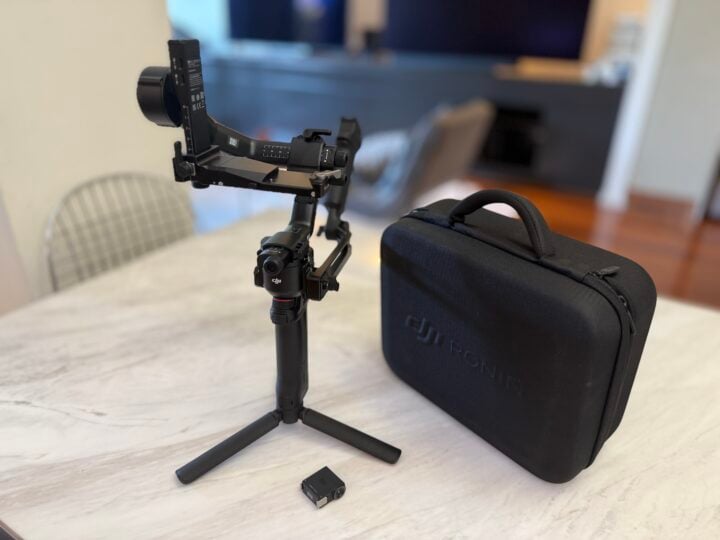
If you’re coming from an RS2 or earlier, the RS5 is a far more significant leap in algorithm quality, build refinement, feature set and ecosystem integration, and would be a clear recommendation.
It’s also worth noting that at the time of writing (March 2026), there is no announced RS5 Pro. Given DJI’s habit of releasing Pro variants, one is likely in the pipeline, but for those who need higher payload now, the RS4 Pro remains the current option at $1,299.
Who is the DJI RS5 for?
For videographers and content creators working with smaller mirrorless cameras, the DJI RS5 is the strongest version of DJI’s mainstream gimbal yet. The tracking module is a real step up for solo operators, the battery life is considerably better, and the fine-tuning knobs make the whole balancing process less of a chore. All the things that were good about the RS4 are still here.
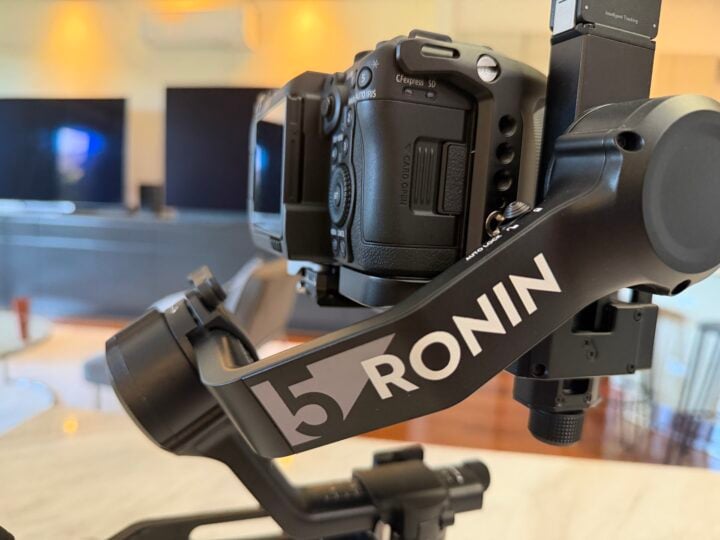
The RS5 gets even more functional and capable while keeping all the good things that have been refined over the model generations. For anyone buying into the ecosystem for the first time, or stepping up from an older model, it’s a confident recommendation.
One last note on the Combo kit: at $160 more than the Standard, the addition of the tracking module, briefcase handle, and carry case is good value if tracking and creative shot control matter to your workflow. If you’re a straightforward tripod-and-gimbal operator, the Standard at $839 is the right call.
GadgetGuy occasionally uses affiliate links and may receive a small commission from purchased products.
The post DJI RS5 review: Smarter tracking and more power for solo creators appeared first on GadgetGuy.


0 comments:
Post a Comment