
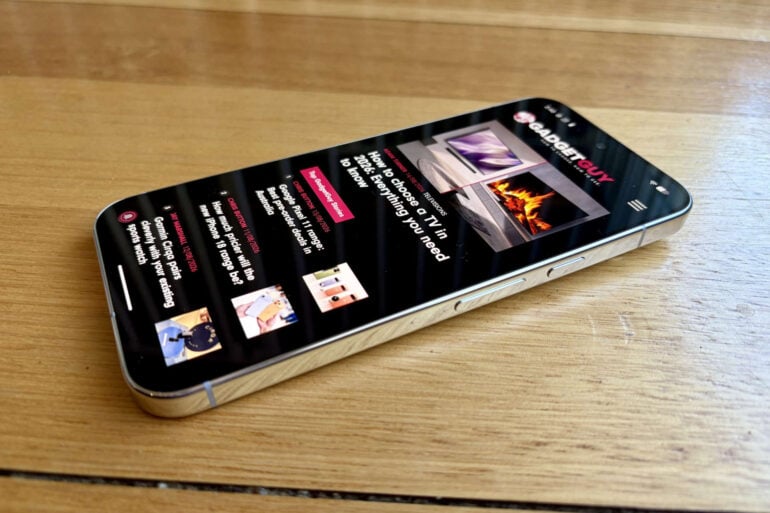
Combining Gemini’s latest smarts with iterative hardware upgrades that add AI grunt, the plus-sized Google Pixel 11 Pro XL continues to hone a winning formula.
After eleven generations, Google’s Pixel range understandably delivers few surprises these days when it comes to hardware – it’s identical to last year’s Pixel 10 Pro in many ways.
Set in its ways, Google has even resisted the introduction of genuinely useful additions like Action or Camera Control buttons, although I’m sure the Pixel faithful would argue they’re not necessarily.
Instead, the new Google Pixel 11 Pro XL is primarily a shiny new lamp playing home to Google’s AI genie Gemini. If you’re all-in on AI and on Team Google, then the Pixel range is hard to beat.
Starting at a hefty $2,099, the Pixel 11 Pro XL has seen a $100 price jump on its predecessor, with the entry-level model now getting less precious RAM than the others, to help keep down the price tag.
Table of contents
- First impressions
- Specifications and price
- Features
- Pro Res Zoom 120x
- AI features
- Who is the Google Pixel 11 Pro XL for?
Google Pixel 11 Pro XL first impressions
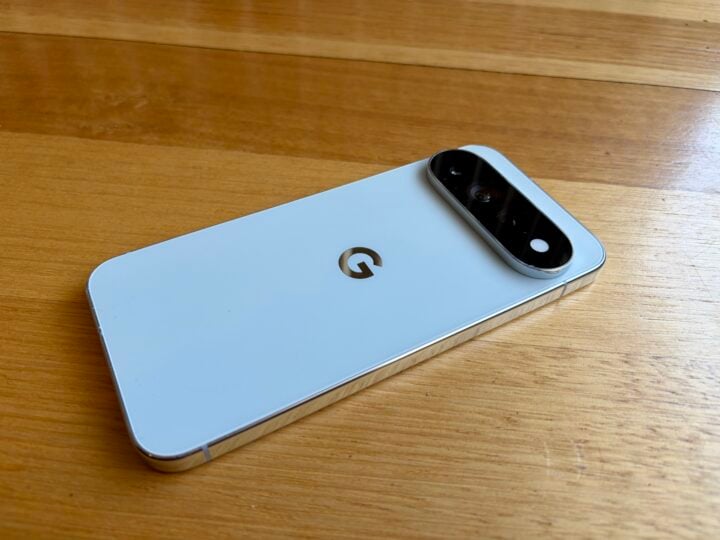
At first glance, very little has changed with the Google Pixel 11 Pro XL compared to its predecessors. It retains the utilitarian design adopted back with the Pixel 9 Pro, with tweaks to the rear camera array betraying that it’s this year’s model.
Sticking with old-school straight edges and curved corners, Pixel 11 Pro XL retains understated style. The polished aluminium frame still catches the eye, accompanied by a premium glass front and back.
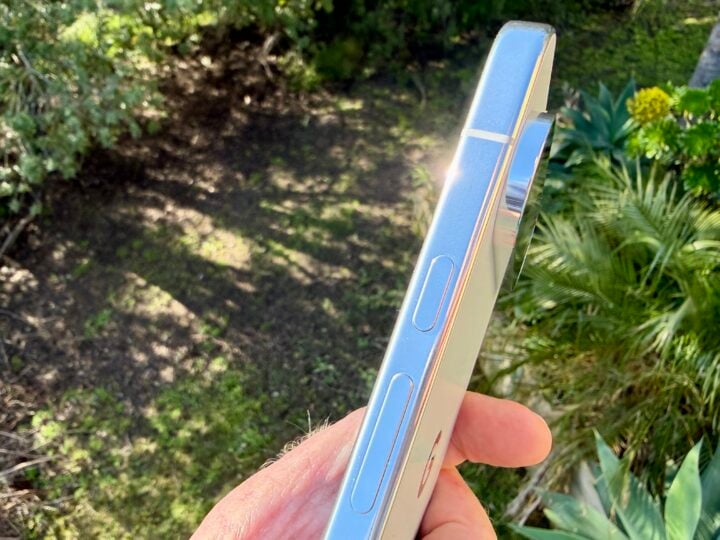
Despite the generous 6.8-inch display, the slimming 20:9 aspect ratio ensures that the phone is not too cumbersome to hold. It’s a smidgen smaller and lighter than the Pixel 10 Pro XL, while the camera bump is a fraction larger.
Bucking the Android trend, the Pixel range continues to place the power button above the volume buttons rather than below. Double-tapping the power button still launches the camera, but it seems we can give up hope of seeing an additional Action or Camera Control button, as found on iPhones and many Android rivals.
The fingerprint reader is built into the display, still higher up the screen than most Android handsets, so it’s not too difficult to reach with your thumb.
Down below, you’ve still got speakers on either side of the USB-C 3.2 port, while the SIM card tray remains at the top, supporting single nanoSIM and eSIM.
Fire up the Pixel 11 Pro XL, and it retains that stunning 2,992 x 1,344-pixel LTPO OLED Super Actua screen, offering an impressively crisp 486 pixels per inch. There’s still the benefit of a 1 to 120 Hz adaptive refresh rate to ensure silky smooth scrolling.
As you expect with LTPO OLED, the contrast ratio remains at an impressive 2,000,000:1. The only change in the display is another boost in brightness – bumping it up to 2,400 nits for HDR content and 3,600 nits peak brightness for outdoor viewing. You’ve got the advantage of HDR10+ at your disposal when watching the likes of Netflix, but not Dolby Vision.
The Pixel 11 Pro XL’s screen coating is now twice as scratch-resistant. Google says you “throw your phone in your bag with your keys and not worry about it”, but I don’t think I’d be that brave after spending this much money on a phone.
Google Pixel 11 Pro XL specifications and price
| Display size | 6.8-inch, 20:9 aspect ratio |
| Display resolution | 2,992 x 1,344 pixels, 486 ppi |
| Display technology | Super Actua LTPO OLED Up to 2,400 nits (HDR) and up to 3,600 nits (peak brightness) 2,000,000:1 contrast ratio 1-120Hz Variable Refresh Rate |
| Bands | 2G GSM, 3G UMTS, 4G LTE, 5G Sub-6 |
| Chipset | Google Tensor G6 Titan M3 security coprocessor |
| Rear cameras | 50 MP Octa PD wide camera ƒ/1.68 aperture 82° field of view 1/1.3″ image sensor size multi-directional PDAF, and OIS |
| 48 MP Quad PD ultrawide ƒ/1.7 aperture 123° field of view 1/2.51″ image sensor size dual pixel PDAF Macro Focus Optical + Electric image stabilisation | |
| 48 MP Quad PD telephoto camera ƒ/2.8 aperture 23° field of view 5x optical zoom 1/1.95″ image sensor size Optical + Electric image stabilisation 120x Pro Zoom | |
| Front camera | 42 MP Dual PD selfie camera with autofocus ƒ/2.2 aperture 103° ultrawide field of view |
| RAM | 12GB /16GB |
| Onboard storage | 256GB / 512GB* / 1TB* * Zoned UFS for faster performance |
| microSD slot | N/A |
| SIM | Dual SIM (single nanoSIM and eSIM) |
| Charging | USB-C 3.2 Fast charging – up to 75% in about 30 minutes – using 45 W USB-C PPS charger or higher, sold separately Pixelsnap wireless charging (Qi2.2-certified) up to 25 W |
| Battery | Typical 5115mAh (minimum 5000mAh) 30+ hour battery life |
| Wi-Fi | Wi-Fi 7 (802.11be) 2.4 GHz, 5 GHz, 6 GHz 2×2 MIMO |
| Bluetooth | Bluetooth 6 with antenna diversity for enhanced quality and connection |
| Ultra-wideband | Yes |
| Operating system | Android 17 |
| Security | Fingerprint Unlock, Face Unlock Titan M3 security chip VPN by Google |
| Ruggedness | IP68 dust and water resistance Corning Gorilla Glass Vuctis 2 cover glass with anti-scratch coating |
| Dimensions | 162.7 x 76.5 x 8.5mm |
| Weight | 226gm |
| Colours | Canyon, Olive, Fog and matte Obsidian |
| Price | from $2,099 RRP |
| Warranty | 2 years |
| Official website | Google Australia |
Features
The Google Pixel 11 Pro XL naturally runs the shiny new Android 17 out of the box with no bloatware. It’s reassuring that Google still promises an industry-leading seven years of OS updates, security fixes and “Pixel Drop” feature updates – putting most Android vendors to shame.
Under the bonnet, the Pixel 11 Pro XL packs Google’s new 3nm Tensor G6 powerplant, accompanied by 12 or 16GB of RAM and a wide choice of 256GB, 512GB or 1TB of storage. Take note that the cheapest model is no longer blessed with 16GB of RAM like its more expensive siblings.
As is Google’s way, the real attraction here is not the Pixel’s hardware but more that the Tensor silicon is optimised for AI to underpin the advanced Pixel magic.
As with its predecessors, the Google Pixel 11 Pro XL’s Geekbench 6 scores are decent but not best in class, returning 2,656 single-core CPU, 7,210 multi-core CPU, and 7,655 OpenCL GPU results. Using the recently launched Geekbench 7, it produced scores of 2,264, 6,737 and 3,229, respectively.
| Device | Geekbench 6 CPU Single-Core | Geekbench 6 CPU Multi-core | Geekbench 6 GPU |
| Samsung Galaxy Z Fold 8 Ultra | 3,712 | 11,513 | 25,049 |
| Samsung Galaxy S26 Ultra | 3,770 | 11,422 | 23,805 |
| Samsung Galaxy Z Fold 8 | 3,573 | 10,314 | 24,707 |
| iPhone 17 Pro Max | 3,768 | 9,443 | 45,451 |
| Oppo Find X9 Pro | 3,165 | 9,418 | 20,447 |
| Motorola Signature | 2,609 | 9,391 | 17,415 |
| Motorola Razr Fold | 2,617 | 9,177 | 17,754 |
| iPhone 17 | 3,520 | 9,057 | 37,161 |
| Honor 600 Pro | 3,053 | 9,039 | 17,990 |
| Google Pixel 11 Pro XL | 2,656 | 7,210 | 7,655 |
| Google Pixel 10 Pro | 2,317 | 6,455 | 3,233 |
When it comes to runtime, the 5,115mAh (typical) battery is a fraction smaller than the 10 Pro XL, but Google still cites a 30+ hour battery life, likely thanks to the processor’s improved efficiency.
When it’s time to top up, fast wired charging speeds jump to 45W, although there’s no AC charger in the box. The Qi2.2-certified Pixelsnap magnetic wireless charging, Google’s equivalent to MagSafe, steps up to 25W.
In terms of connectivity, there’s a new MediaTek cellular modem for sub-6 5G, which can combine multiple 5G channels. Plus the benefit of Wi-Fi 7, Bluetooth 6 and UWB (ultra-wideband) for precise tracking in Google’s Find My Device app and acting as more reliable digital car keys.
Pro Res Zoom 120x
When it comes to the cameras, the Google Pixel 11 Pro XL’s rear array looks different now that the flash and spectral sensor are in line with the three rear lenses, all behind dark glass.
Here you find a quirky new feature in the “HiLight” ambient LED in the camera array. It can flash in a range of patterns and colours, to indicate who is trying to contact you when the screen is face down.
Some people would find HiLight useful, even though it only works with a few apps. Others might find it goes against the principle of putting your phone face-down on the table as a show of good faith to those people who are expecting your full attention.
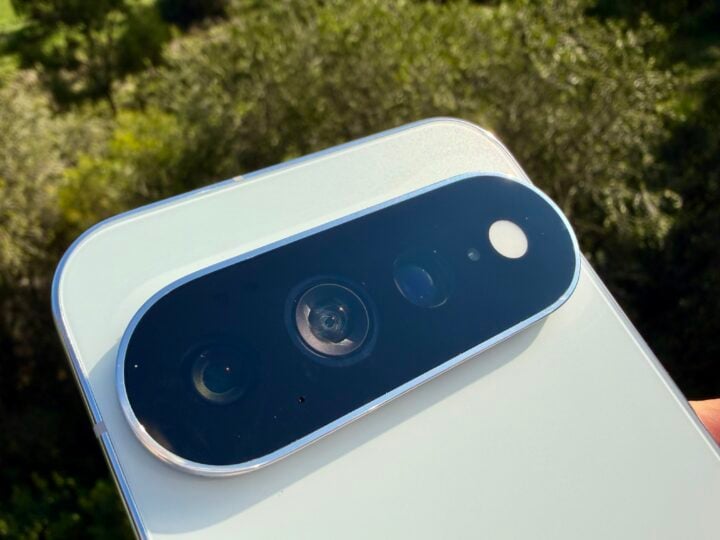
This aside, the Google Pixel 11 Pro XL sticks with 50MP Wide, 48MP Ultrawide with Macro and 48MP 5x Telephoto rear lenses, plus a 42MP selfie camera around the front.


The upgraded 48MP telephoto lens has a larger sensor which now takes in 30 per cent more light. Combined with increased computational power, this helps Pro Res Zoom step up from 100x to 120x – bringing it into line with other super-zoom options.
Pro Res Zoom is still assisted by generative AI and the results are very impressive, but the final quality depends on the predictability of the scene. Put to the test, this man’s face from around 75 metres away looks better than what the Pixel 10 Pro produced.

Looking further afield, the four-wheel drive below is more than 300 metres away. It appears amazingly sharp thanks to generative AI filling in the gaps, but the license plate and other areas with writing betray the fact that it’s still taking educated guesses.

Enhanced sensor capabilities and Tensor G6 processing also allow low-light Night Sight to operate up to 4.5 times faster, which is now visible directly in the viewfinder before hitting the shutter.
Its performance is impressive in challenging lighting conditions, like the street scene below left. Yet, it still leaves a night sky full of stars looking overblown (below right) compared to best-in-class efforts from the iPhone Pro and Galaxy S Ultra, which leave the sky darker.


AI features
That beefed-up Tensor G6 in the Google Pixel 11 Pro XL powers Google’s most advanced on-device AI to date. It runs faster and more efficiently to save battery while also reducing the need to send processing off to the cloud.
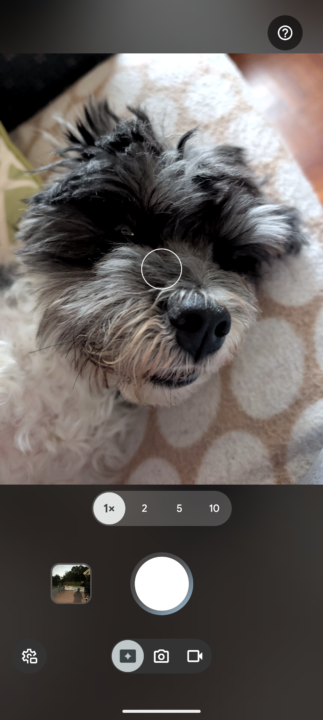
When it comes to multimedia, one key addition is Magic Capture, which adds a third icon alongside the traditional Photo and Video icons.
Selecting Magic Capture and pressing the shutter button captures photos and video simultaneously – all you need to do is keep the camera pointed at the subject (preferably doing something interesting).
Once you’re done, Magic Capture selects and polishes the best shots, along with producing a few highlights video clips. While the idea is sound, handing your creative choices to AI produces mixed results, and anyone who likes to craft their multimedia will likely be underwhelmed.
Then there’s Gemini, which gets a bit confusing. “Gemini” is an overarching name that refers to Google’s family of AI tools, while “Gemini Intelligence” refers to the proactive, Agentic AI built into Android devices.
You’ve got smart assistants like “Gemini Live”, built into the latest Google Home Speaker, but “Gemini Intelligence” is more than just a bot that answers your tricky questions. Agentic AI can also execute actions on your behalf across multiple applications, making it a powerful tool for getting things done – more like a true assistant, rather than simply an advisor.
For starters, Gemini on the Google Pixel 11 Pro XL underpins a range of enhanced features, many revolving around multimedia.
You’ve got automatic real-time audio dubbing and translation for videos and podcasts, along with an on-screen teleprompter in the Creator Suite which scrolls your pre-written script as you record a piece to camera.
Meanwhile, Rambler takes audio transcription to the next level. Built into the on-screen Gboard keyboard, it is designed to cope with the way people actually talk rather than taking each “um” and “ahh” literally.
To be fair, iOS’ dictation also cuts out those kinds of filler words, but Rambler goes a lot further. It cleans things up if you stumble on a word and even corrects the text if you change your mind. For example, “I think I’ll go on Monday, nah, Tuesday” becomes “I think I’ll go on Tuesday”.
Meanwhile, the underwhelming Magic Cue feature from the Pixel 10 range has been rebranded as Proactive Assistance. It’s gradually getting smarter at surfacing useful information, such as contact details for someone when you mention them in a conversation.
Then you’ve got Gemini Intelligence, which supports continued conversation and contextual follow-up questions for in-depth discussions. Plus you can opt into Gemini Personal Intelligence, which also taps into data from your private Google apps.
Who is the Google Pixel 11 Pro XL for?
If you’re a fan of Google’s AI ambitions and fancy a plus-sized display, then the Google Pixel 11 Pro XL is the best way to keep Gemini in your pocket.
That said, iterative hardware improvements make it difficult to justify upgrading from last year’s model, or even the year before, considering the hefty price tag. If you’re after a real Android powerhouse with plenty of grunt, you might look elsewhere.
GadgetGuy occasionally uses affiliate links and may receive a small commission from purchased products.
The post Google Pixel 11 Pro XL review: Dial it up to eleven appeared first on GadgetGuy.


0 comments:
Post a Comment