
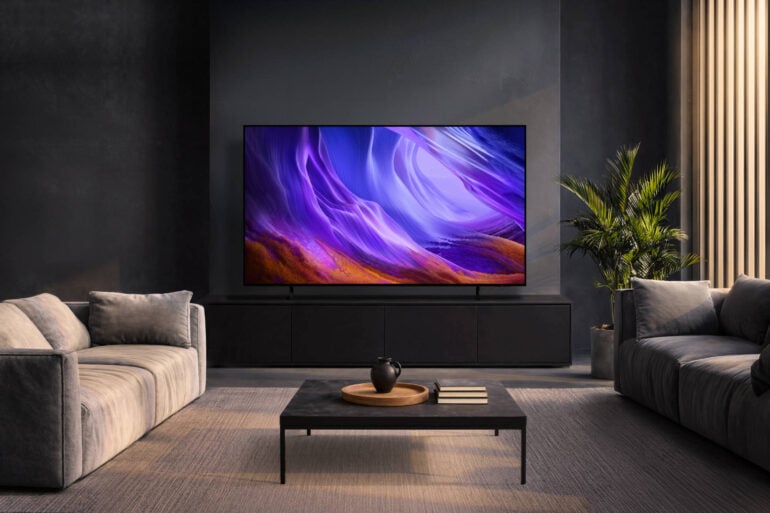
The latest format war is off and running, as Samsung-backed HDR10+ Advanced takes on rival Dolby Vision 2 when it comes to helping blockbuster content look its best on smart TVs.
Improving High Dynamic Range (HDR) contrast, colours and motion on a scene‑by‑scene basis, HDR10+ Advanced launched on Amazon Prime Video this month on compatible 2026 Samsung TVs.
How does HDR work?
Rather than make an image sharper, HDR reveals more detail in the brightest highlights and deepest shadows, as well as displaying more vivid colours.
The HDR10 standard launched in 2015, applying a fixed dynamic range – the difference between the brightest white and the darkest black – for an entire movie. As the old adage goes, the great thing about standards is that there are so many to choose from.
Dolby Vision, actually launched before HDR10, uses dynamic metadata (information embedded in the video) to adjust the dynamic range for each scene or frame. It also demands that compatible televisions support higher brightness and more colours.

While most television makers embraced Dolby Vision, it requires hardware chips and royalty fees from manufacturers.
Samsung chose to back the rival royalty-free open-standard HDR10+ format, which launched in 2017. It also optimises dynamic range on the fly, but falls short of Dolby Vision when it comes to colour range and maximum brightness.
How does HDR10+ Advanced improve picture quality?
Almost a decade later, HDR10+ Advanced ups the ante by using richer metadata and advanced AI processing to optimise every scene.
Expanding the metadata available to filmmakers, HDR10+ Advanced pinpoints brightness within specific regions of each frame to provide more details in the picture. It also focuses on AI-powered optimisation, particularly to improve motion smoothing according to genre to limit its impact on overall picture quality.
Key improvements over HDR10+ include enhanced overall brightness, intelligent motion smoothing, local tone mapping, genre-based optimisation and advanced colour control, according to a spokesperson for Samsung Australia.
“Australians watching HDR10+ Advanced content will see brighter highlights in daylight scenes, more detail in dark shadow areas, preserving the cinematic feel of film content while delivering smooth, natural motion for sports, action and other fast-moving scenes,” they said.
“Because the format uses dynamic metadata and AI‑driven processing, each scene is optimised to look closer to how the creator intended.”
“To achieve these enhancements, Samsung trained AI models to identify the best‑performing networks and develop algorithms that act on HDR10+ Advanced metadata for optimal on‑screen representation.”
Do I need a new television to watch HDR10+ Advanced content?
Yes, HDR10+ Advanced content is not simply a software update; it requires specific hardware processing capabilities.
For now, HDR10+ Advanced is available on Samsung’s 2026 range of Neo QLED, OLED and Micro RGB TVs. Compatible Australian models include the following:
- Neo QLED QN80H
- Micro RGB R95H
- Micro RGB R85H
- OLED S95H (read the S95H review)
- OLED S90H
- OLED S85H
- The Frame series (2026)

Entry-level TVs with peak brightness and colour gamut limitations are unable to display HDR10+ Advanced’s full potential “at this time”, according to Samsung Australia.
Meanwhile, Panasonic, Hisense and TCL support both HDR10+ and Dolby Vision, and will likely inherit both their successors over time. Hisense is first cab off the rank, bringing it to select 2026 models this month via a firmware upgrade,
Just as Samsung has shunned Dolby Vision, rivals LG and Sony are the major hold-outs on HDR10+.
Which streaming services offer HDR10+ Advanced content?
HDR10+ Advanced content began rolling out on Amazon Prime Video in the first week of August.
Content creators and streaming platforms need to integrate HDR10+ Advanced metadata into their production and encoding workflows, but existing HDR10+ content can be upgraded.
Prime Video plans to convert its entire HDR10+ content library to HDR10+ Advanced within the next few months. A full list of supported titles is yet to be released but, over the coming weeks, Prime Video will label compatible content, with more titles to come throughout the year.
HDR10+ Advanced content will likely come to most major streaming platforms over time, given that the likes of Apple TV, Netflix, Disney+ and Paramount+ already support HDR10+.
These streaming services also support Dolby Vision and will likely support Dolby Vision 2, with Peacock the first major Western streaming service to embrace it.
GadgetGuy occasionally uses affiliate links and may receive a small commission from purchased products.
The post HDR10+ Advanced debuts on Samsung TVs: What does it do? appeared first on GadgetGuy.


0 comments:
Post a Comment