Everyday Mobile, the mobile virtual network operator (MVNO) run by the Woolworths Group, will stop supporting some legacy long-expiry prepaid SIM plans still used by customers.
The move impacts plans no longer sold to new customers, including a $170 annual plan and a $75 180-day plan. In a series of emails sent to affected customers, recharges for legacy plans will stop on 2 March.
In a statement to GadgetGuy, a Woolworths spokesperson explained that its telco arm of the business aims to provide “a flexible range of plans to suit different needs and budgets”.
“Just like other providers, we periodically refresh our plan range to offer greater consistency across plans,” the spokesperson said.
As an alternative, Everyday Mobile has offered these customers an exclusive plan while their auto-recharge remains active. This plan costs $20 per 30-day recharge, which includes 15GB of data and a 10 per cent discount that can be used once a month in Woolworths stores.
Over 12 months, the new plan roughly works out to be $240, a $70 increase compared to the legacy 365-day plan, and $90 more expensive than the annual equivalent of the 180-day plan. In the email received by affected customers, Everyday Mobile described the change as “a small price adjustment”.
“This recent change offers existing customers a special alternative plan designed to minimise any cost impacts,” the Woolworths spokesperson said. “Customers are also encouraged to consider our other plans, which all offer simple pricing, strong data inclusions and Everyday Rewards benefits.”
Everyday Mobile’s transition offer is cheaper than its standard base plan, which costs $25 per 30-day recharge and includes 22GB of data.
In September 2024, Everyday Mobile increased the prices of its long-expiry plans by as much as $100. Simultaneously, it removed the 10 per cent monthly Woolworths discount previously available with its long-expiry plans. Now, the discount is only included with the telco’s 30-day or monthly SIM plans.
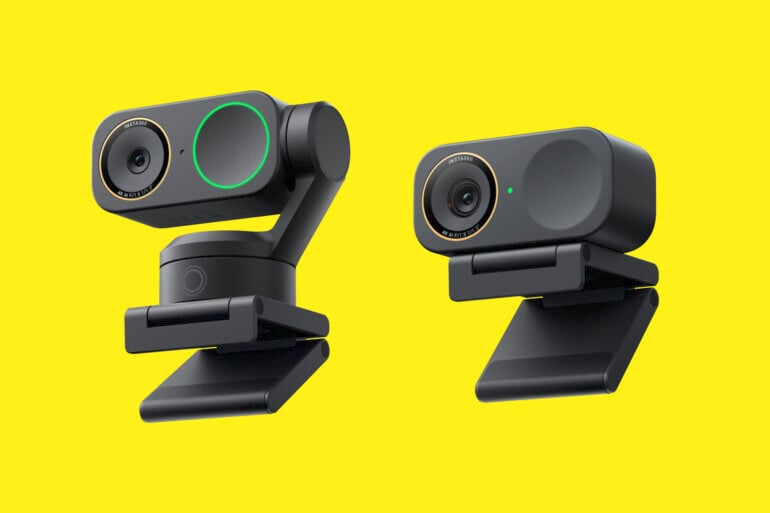
You know Insta360, the brand that makes all those whizz-bang action cameras? It’s also in the webcam business, and recently launched two 4K models that might help your video calls look nicer.
Included in the latest Insta360 webcam range are the Link 2 Pro and Link 2C Pro, both of which are aimed at business types and content creators alike. They’re definitely on the higher end of the scale, with the Link 2 Pro costing $439.99, and the 2C Pro priced at $349.99 in Australia.
According to Insta360, what makes these peripherals stand out is that they’re “AI webcams”. In real terms, they use various AI technologies to improve picture quality, automatically track your face, and intelligently focus on in-person visuals, like whiteboards. Four different audio modes also help block out, or let in, background sound, including a “Focus” setting that isolates a single speaker’s voice.
Insta360 also advertised the webcams as integrating with “InSight”, the brand’s AI software that acts as a meeting assistant. It records meetings, and then transcribes and summarises conversations for future reference.
Teachers might find the Link 2 Pro helpful for showing diagrams. Image: Insta360.
But software isn’t the only thing these cameras have going for them. Both have a large 1/1.3-inch sensor, helping to capture more light, even in dim rooms. They each support HDR and 4K recording at up to 30fps. A magnetic mount ships with both cameras to place them on top of monitors or anything metallic.
Gimbal functionality is the main separator between the two models. Of the webcams, the Insta360 Link 2 Pro has a two-axis gimbal, capable of physically tracking your movements. While the 2C doesn’t have a gimbal, it can still track subjects to an extent via digital zoom.
Both webcams are available in Australia from the Insta360 website. A gimbal webcam may seem niche, but it could be handy for teachers and presenters. Or for folks who just can’t sit still.
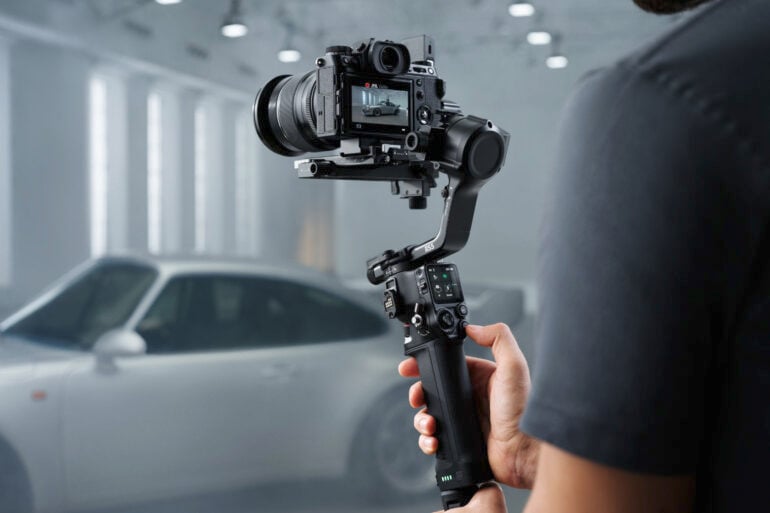
DJI has upgraded its DSLR camera gimbal, releasing the RS 5 overnight, aimed at making it easier to record smoother video.
Made to help DSLR cameras record steady footage, it’s an upgraded version of last year’s DJI RS 4 gimbal, which the company says has improved tracking, along with more stability than the previous model.
Based on DJI’s figures, the gimbal’s improved stabilisation algorithm boosts the peak motor torque by 50 per cent. That doesn’t mean it moves 50 per cent faster, as such, but it should help keep the camera steadier while moving. For example, if you need to run or quickly change direction with the camera in hand, the resulting footage shouldn’t include jerky motion.
With the RS 5, DJI has added an “Enhanced” version of its tracking module, as an optional add-on, which supports subject tracking via the gimbal’s 1.8-inch OLED touchscreen. It now supports pet and vehicle tracking, in addition to the existing person tracking functionality. DJI’s tracking technology is designed to lock focus on subjects up to 10 metres away, including automatically reframing them if they leave and re-enter the shot.
Faster charging also comes to the DJI RS 5, reaching full battery capacity in under an hour with a 65W charger. According to DJI, that’s 60 per cent faster charging than the RS 4.
The DJI RS 5 is available in Australia now via DJI’s online store and various tech retailers. It costs $839 for the gimbal, which comes with a battery grip, or $999 for a bundle that includes the tracking module and a new electronic briefcase handle. The handle includes buttons and a joystick for one-handed use.
DJI also still sells the previous-gen RS 4 gimbal, now at a cheaper $679 price than the $799 RRP it launched with.
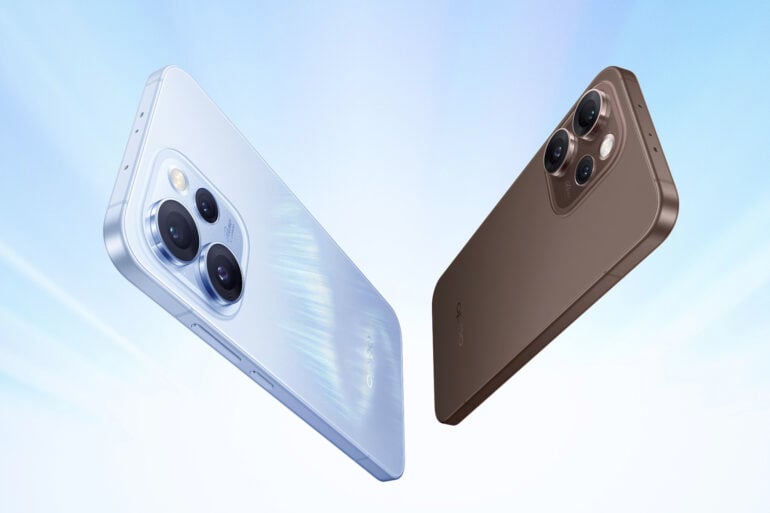
Oppo skipped a generation of its mid-range devices in Australia, but is now back with the Reno 15, a series of phones aimed at the photo- and video-taking masses.
Last year, Oppo brought three Reno 13 phones to Australia, skipped the Reno 14 locally, and is now launching two Reno 15 variants: the Reno 15 F 5G and the Reno 15 Pro 5G. The ‘F’ model costs $679 in Australia, while the Pro costs $1,399, spanning the full scale between mid-range and the same price as a standard iPhone 17.
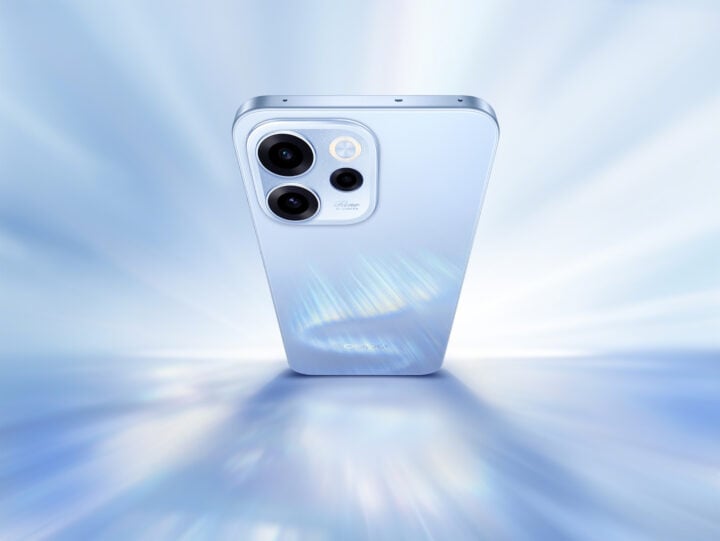
The cameras on Oppo’s Reno range typically punch above their weight, with this year’s main upgrade coming in the form of a new 50MP ultra-wide (100-degree field of view) front camera. Both phones get the new and improved camera — including 4K front video support on the Reno 15 F — while it’s the Pro that benefits from a 200MP main rear sensor, plus a 50MP telephoto camera.
Even the label on the back of the phone calls it an ‘AI camera’. Image: Oppo.
More than just the hardware, Oppo is leaning heavily on AI software to help boost photo quality. In addition to post-processing to help adjust under- or overexposed images, the phones’ rear lights are designed to flash more softly for better lighting. There’s also a front flash to help with selfies, too.
Reversing a common market trend of more powerful phones taking up more space, the Reno 15 Pro sports a 6.32-inch AMOLED screen, while the larger 6.57-inch glass goes to the cheaper Reno 15 F.
On the inside, the Pro model uses the MediaTek Dimensity 8450 chipset, with 12GB of RAM and 512GB of storage. That’s a bit beefier than what the Reno 15 F gets, which is the Qualcomm Snapdragon 6 Gen 1 processor, plus 8GB of RAM and 256GB of built-in storage.
However, the Reno 15 F takes a slight battery advantage: 6,500mAh capacity, compared to the Pro’s 6,200mAh battery.
Oppo Reno 15 price and availability in Australia
Both of the Oppo Reno 15 phones coming to Australia will be available on 5 February from various retailers. Each one comes with a case and an 80W charger in the box.
The Pro model comes in either Aurora Blue or Dusk Black colours from JB Hi-Fi and Oppo’s online store. Meanwhile, the Reno 15 F also comes in Aurora Blue and a slightly different Twilight Black finish. On top of JB and Oppo, it will also be sold at Officeworks, Big W, Harvey Norman, and The Good Guys.
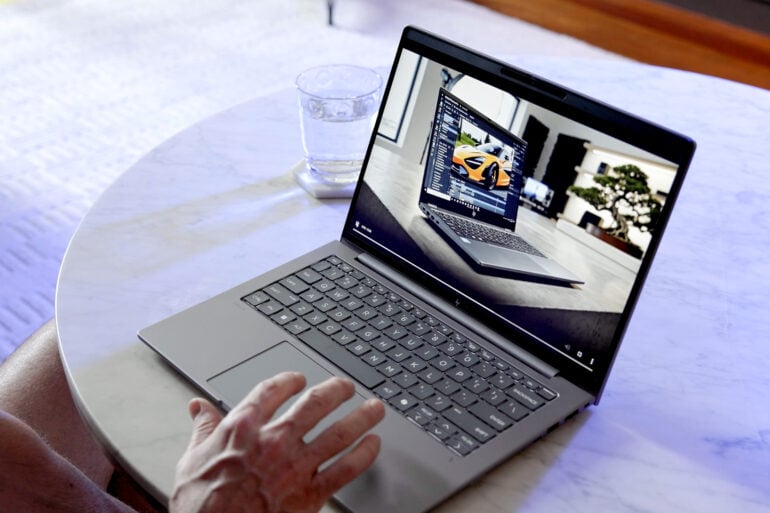
If it looks and functions like a laptop, then it’s probably a laptop. But HP prefers to call its high-end HP ZBook 8 G1ak AI PC a ‘mobile workstation’. Whatever you want to call it, it’s a powerful PC.
A more affordable companion to HP’s EliteBook X G1a work-focused laptop, the ZBook 8 G1ak shares plenty of similarities. It uses a similar AMD Ryzen AI 7 Pro chipset with up to 32GB of RAM and a 14-inch display.
It feels nice to type on, plus it has plenty of ports. You don’t want to underestimate how important a full range of ports is for a work laptop. Here, you get a full HDMI 2.1 slot, along with two Thunderbolt 4 ports, making it easy to connect external displays or high-speed storage.
In all my years of gaming, I hadn’t come across GameSir before. Despite the Chinese brand being around since 2013, I hadn’t tried any of its accessories until recently.
If you’re like me, and haven’t come across GameSir before, it makes a range of gaming peripherals for PC, Xbox, Switch, mobile and more. With such a huge lineup of accessories, I was keen to take them for a test run.
Compatibility
Being mostly a PC gamer — with the occasional Nintendo Switch gaming session thrown in — I wasn’t too sure I would be able to test out these products. Was GameSir primarily a console-based brand, or did it cater to PC players too?
The good news was that I had no problem testing out its gear on PC. GameSir have smartly made a lot of their gaming controls cross-platform. In other words, one controller is compatible with a number of devices.
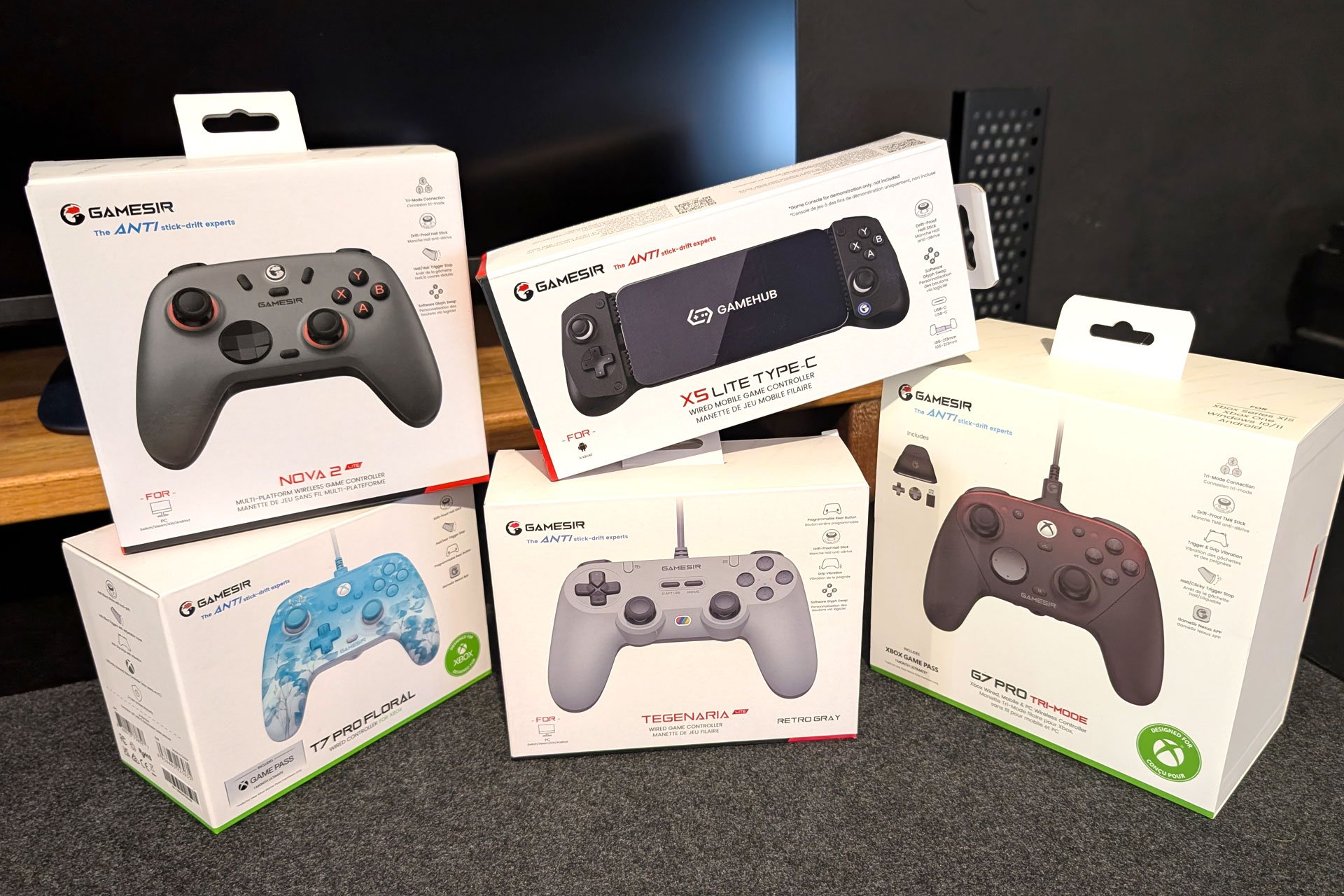
A good example of this is the high-end GameSir G7 Pro controllers. The G7 Pro retails for $159.95 and has the stylish look of an Xbox controller, yet it also works with PC and mobile as well. Depending on the platform, the G7 Pro connects either wirelessly or via a cable.
Another great example is the Nova Light 2, retailing for $59. This one works with PC, Switch and mobile, with fantastic flexibility across multiple devices for a very reasonable price. Fantastic!
Image: Jay Marshall.
The GameSir controller range
Outside of the more modern-looking high-end wireless controllers mentioned above, GameSir also offers some wired-only alternatives. Firstly, there is the T7 Pro Floral retailing for $89, which has a rather unique blue floral pattern — hence the name. This is sure to be its main selling point, as this controller will attract a lot of attention with its striking aesthetic design.
We then have the controller that instantly grabbed my attention: the GameSir Tengenaria Light. This light grey, symmetrically shaped controller will pull you right back to the 90s with its retro styling that is absolute nostalgia. And for just $39, you can’t go wrong. I almost want to display this on a shelf instead of using it!
Image: Jay Marshall.
While basically all of the previously mentioned controllers are compatible with mobile, there is one that’s purpose-built for your phone: the GameSir X5 Lite, which retails for $44.99. It instantly turns your mobile device into a landscape gaming platform that really enhances the experience of playing games.
Within a few seconds, you can attach buttons, joysticks and triggers to your phone for a comfortable gaming session. I should note that this version is Type-C, so it’s specific to Android phones or the latest iPhones with USB-C ports.
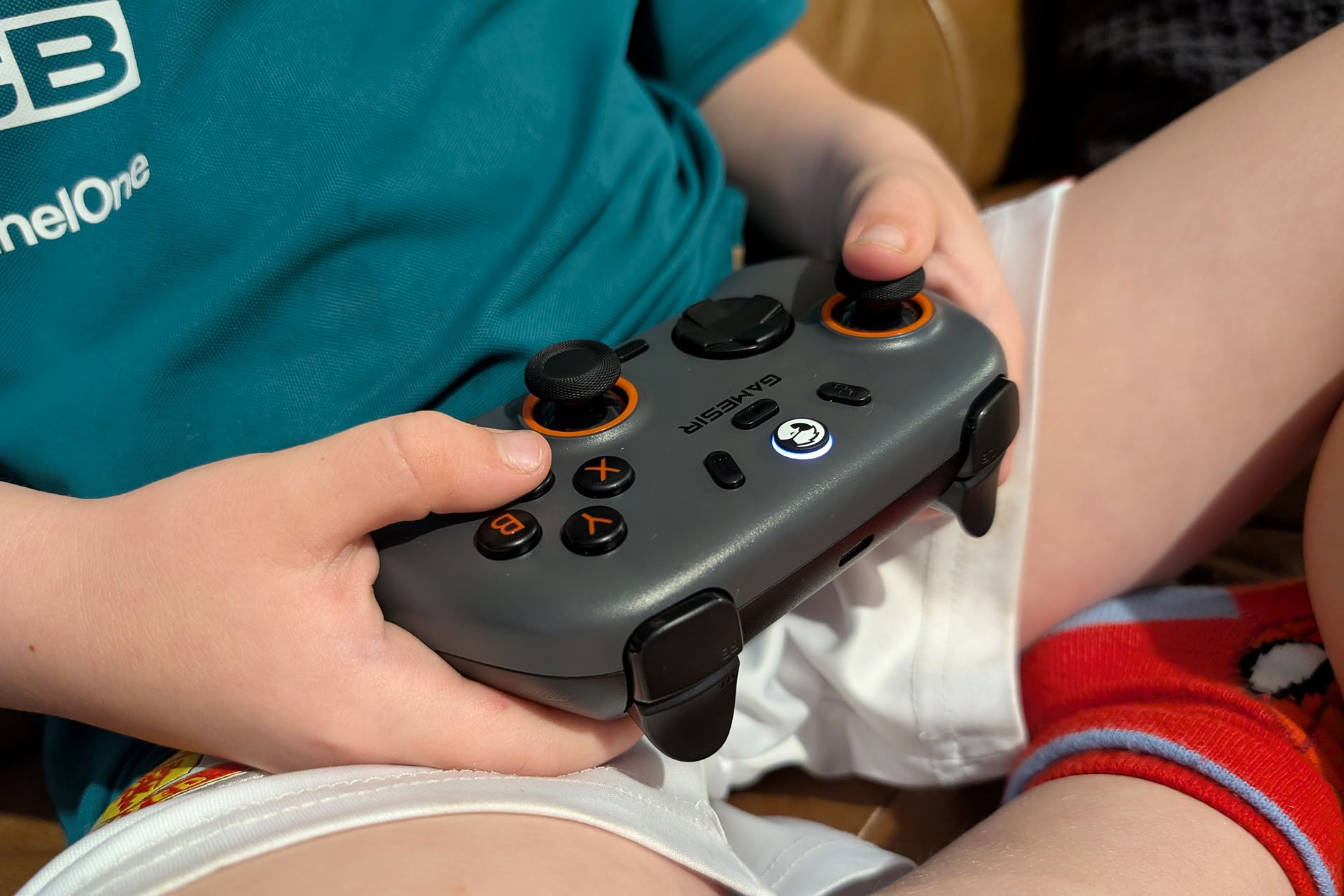
GameSir Nova Lite 2 (Midnight Grey)
I want to dive a little deeper into the controllers I got the most use out of while testing the GameSir range. Now this will be different for everybody, as the different products will be suitable for your different consoles and gaming room setups.
For me, doing a bit of casual couch gaming on my Nintendo Switch was the order of the day, and GameSir has a few options there. I ended up gravitating to the Nova 2 Lite mostly because of its wireless capabilities. There is nothing better than putting your feet up while you play your favourite gaming titles on a large screen, unrestricted by cables.
Images: Jay Marshall.
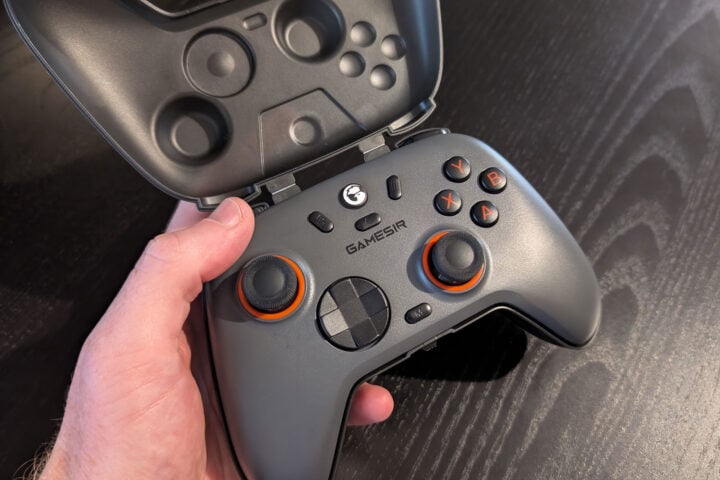
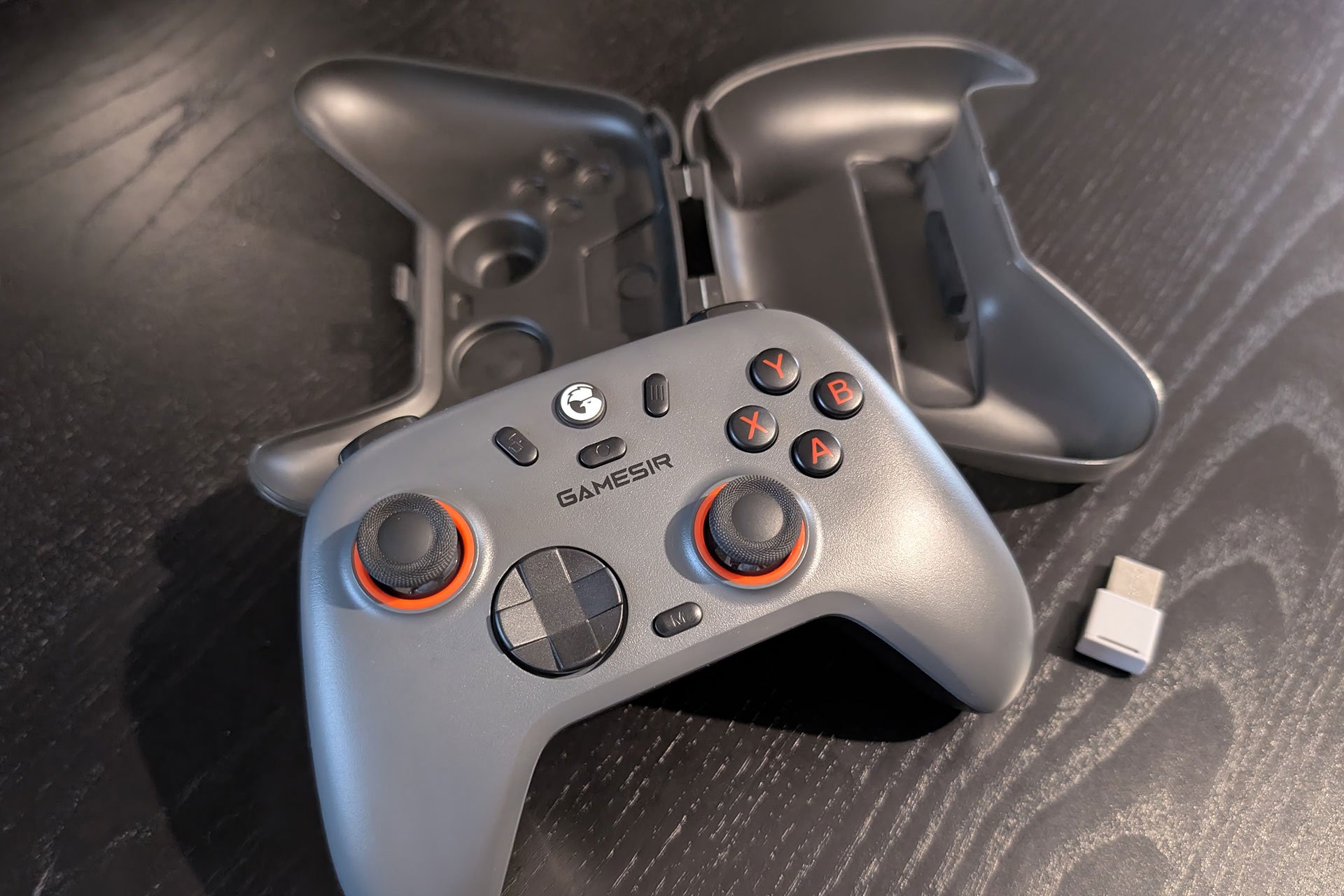
Right off the bat, I noticed the GameSir Nova Lite 2 comes with a few additional items in the box. The main one is a plastic storage case, which is a cool little addition. It helps protect the controller when not in use, and also gives you somewhere to keep the included USB dongle that is for added compatibility for devices like PC.
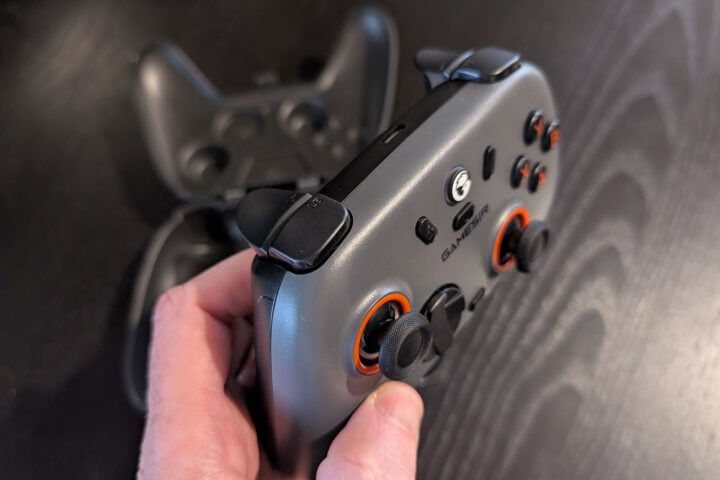
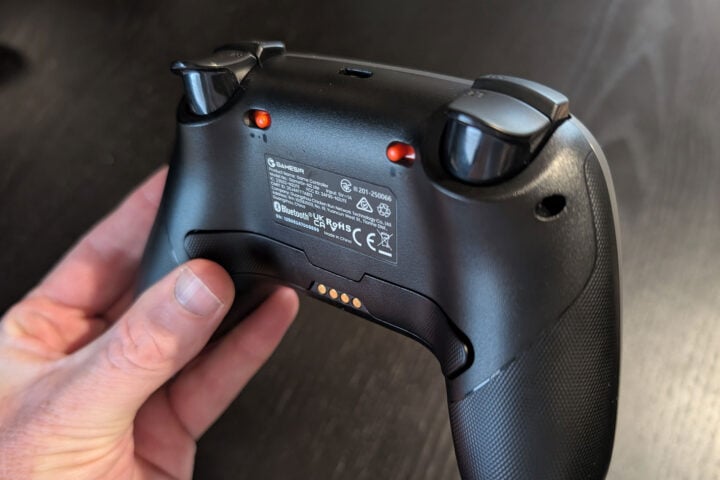
The controller is rather high overall, with low button and stick latency. It also has a very comfortable feel in hand, with ergonomic button, trigger and stick positioning. It also has some sneaky buttons on the back that I almost didn’t realise were there. The dual rumble motors give this controller a more immersive experience, and the built-in 600mAh battery means it won’t die on you mid-game.
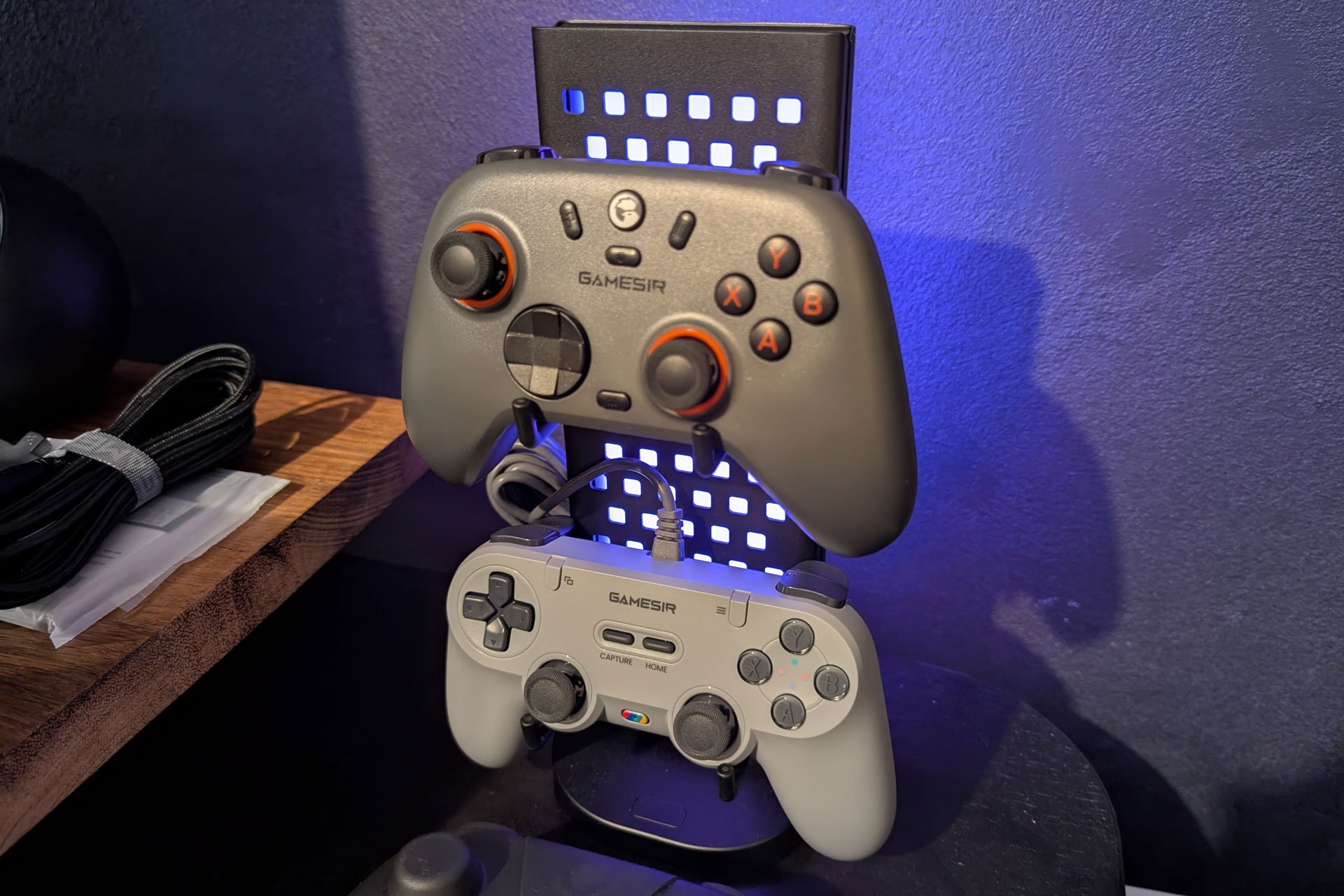
The GameSir Nova Lite 2 can be charged on a charging station, yet these are sold separately. I’ll admit that the grey with orange highlights isn’t my favourite colour for a gaming controller. Having said that, it’s hard to complain when this device packs in so much functionality for such a reasonable price. There are also other colours to choose from, like a bright white and a shiny gold.
Playing games on my big TV from anywhere I like, using an affordable wireless controller. Now that’s the real story here!
Image: Jay Marshall.
GameSir G7 Pro (Shadow Ember)
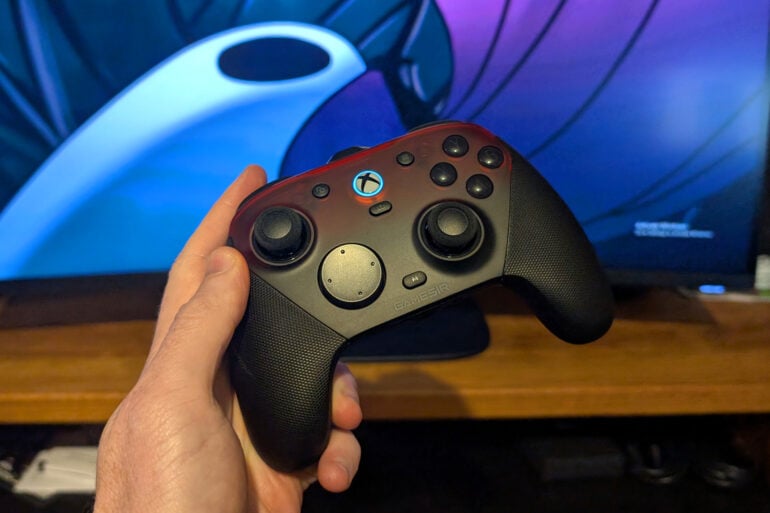
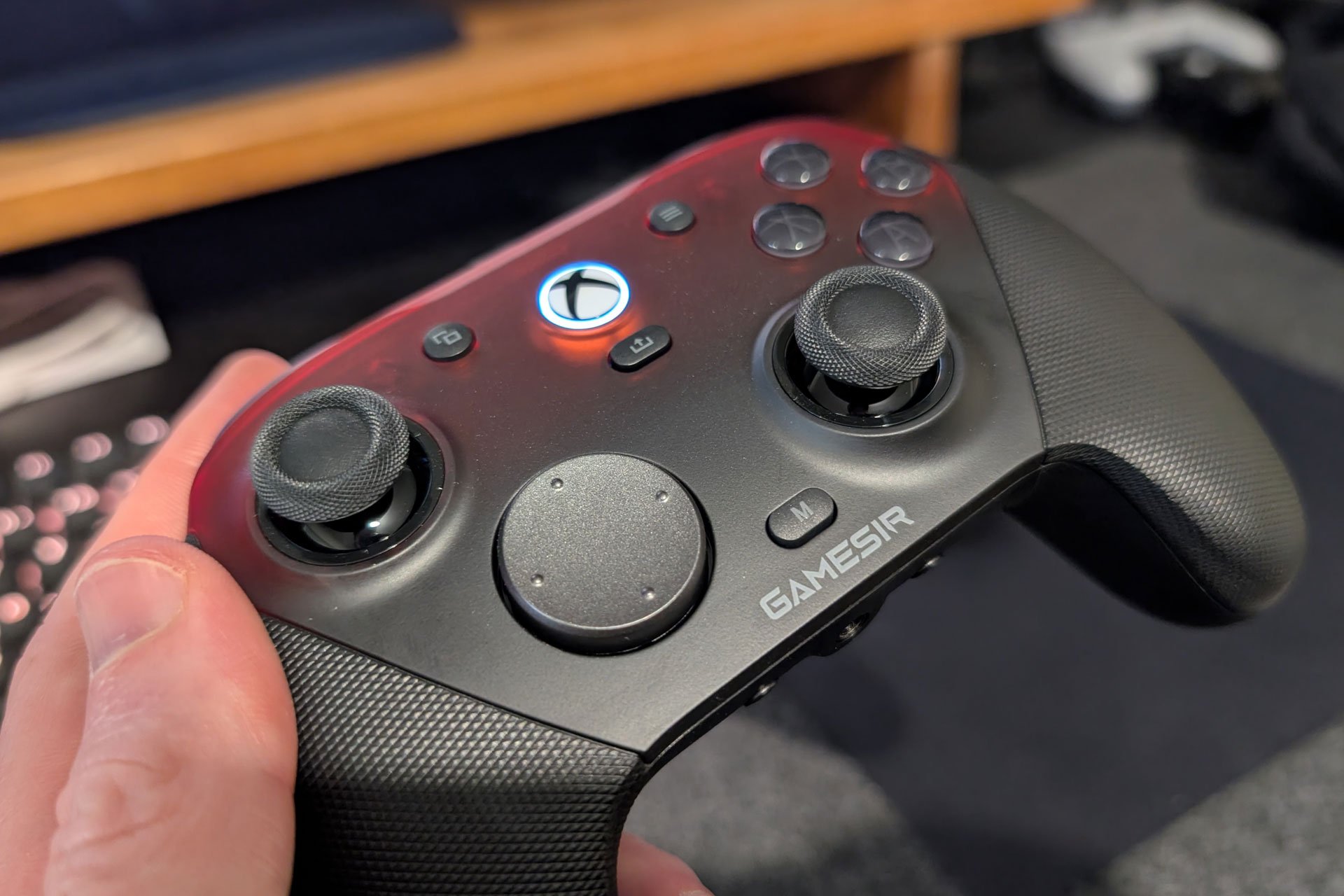
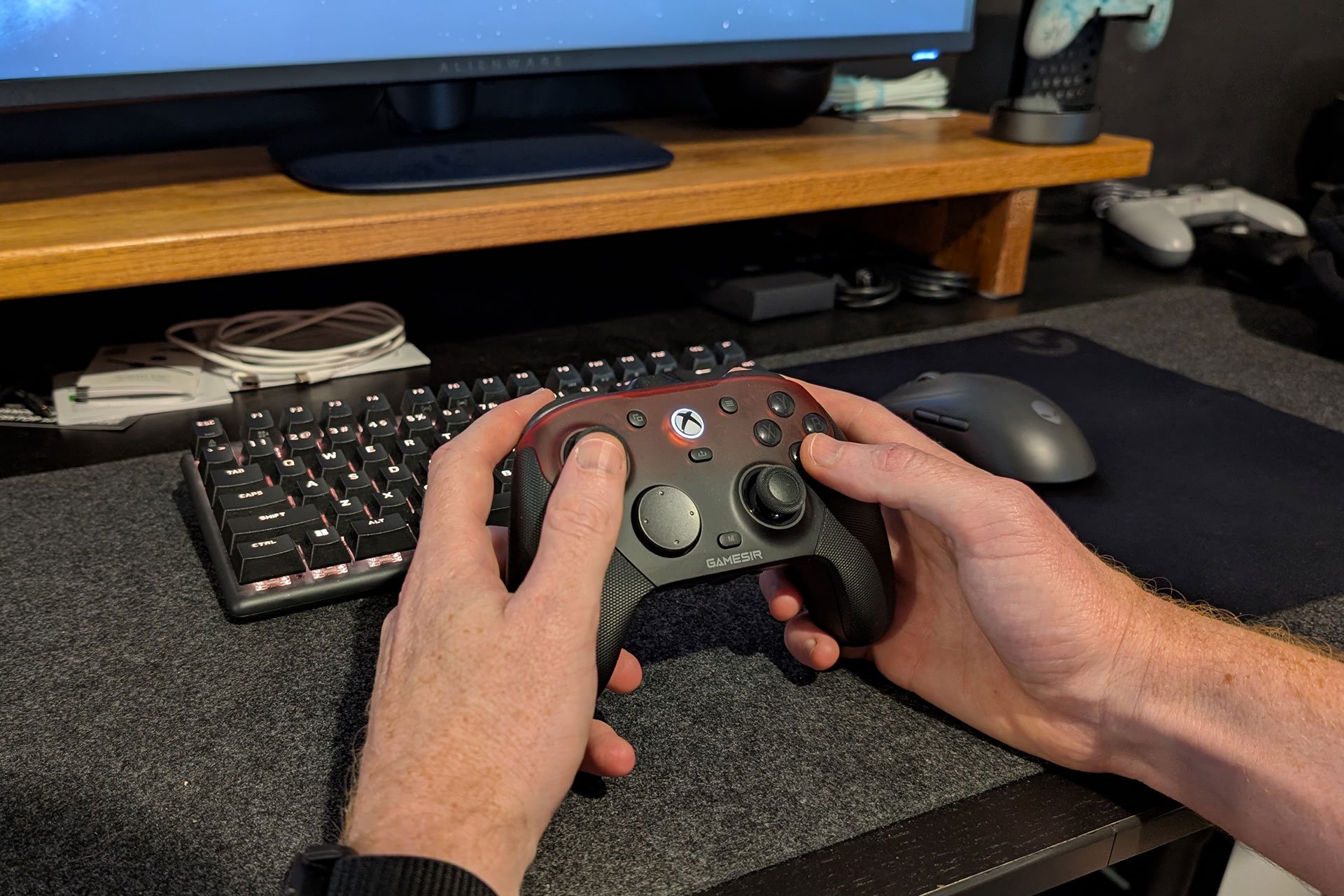
Moving over to my PC setup now, and I had to give the top-of-the-range G7 Pro a spin. This is a more expensive controller, which is reflected in its extra quality and features.
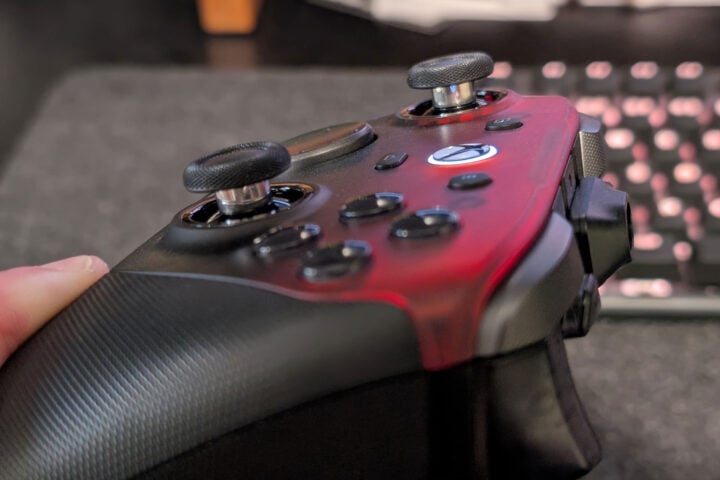
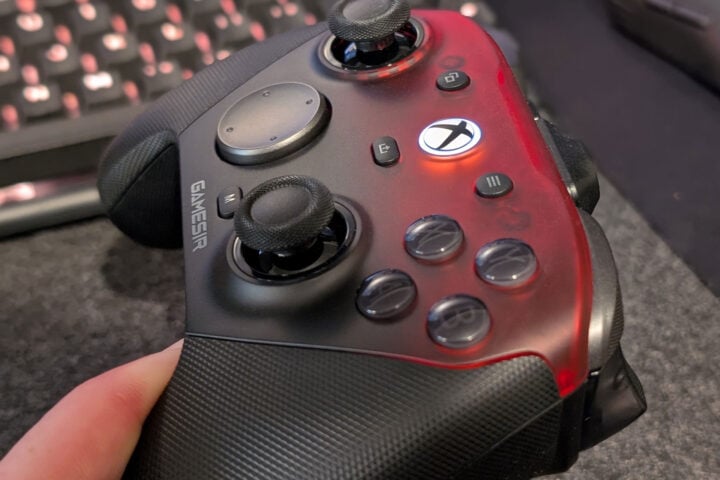
It’s wireless like the Nova Lite 2, yet it certainly sets itself apart. Right away, I noticed the quality of the controller itself. The premium feel in hard was very satisfying, and I would say it is on par with a standard Microsoft Xbox controller. Possibly better.
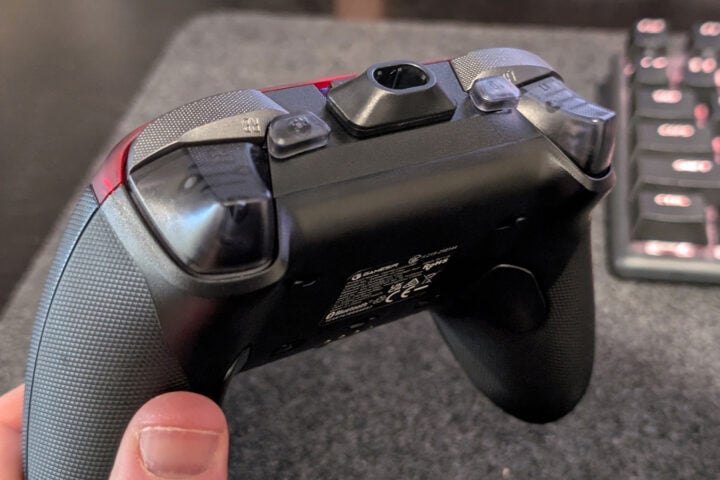
The G7 Pro again has a fantastic ergonomic shape, making it fit comfortably in hand. The button, triggers and sticks are all right where you want them, ready to deliver. For the more technical specs, the GameSir G7 Pro has Mag-Res TMR sticks and a 1000hz polling rate for insanely responsive gameplay.
Images: Jay Marshall.
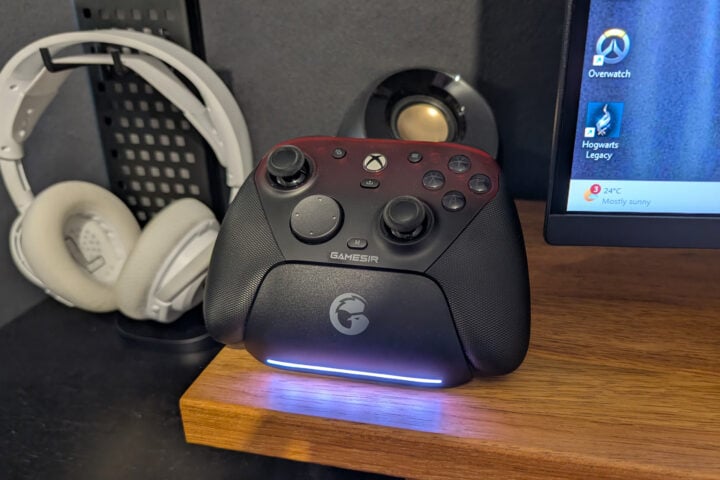
The G7 Pro comes with a USB dongle, some swappable direction pads, and a charging dock. The charging dock has to be one of my favourite pieces, as the quality of life it provides is remarkable. No need to fiddle with cables to charge your controller. Simply place it down on its dock each time you are finished with it, and it’s ready to go when you pick it up.
It also has a built-in 1200mAh battery, so you certainly don’t need to charge it very often. With four rumble motors for realistic and immersive haptic feedback through trigger and grip vibration, your hands will love a long gaming session with this beauty. Also, the ability to switch the G7 Pro to wired for Xbox compatibility makes it a fantastically flexible product.
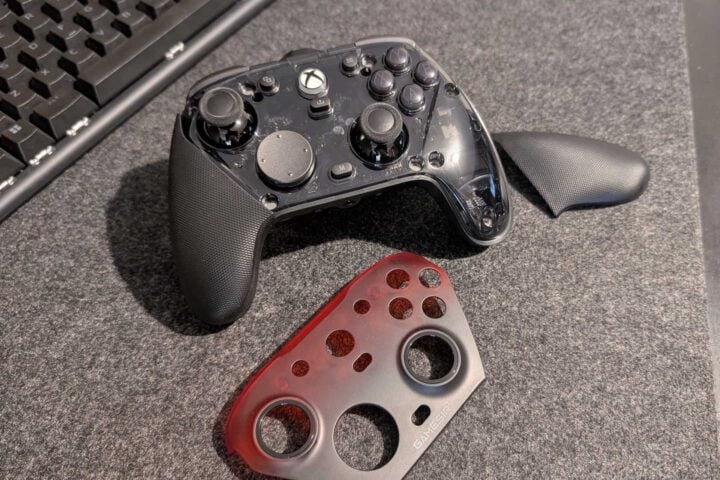
Another reason I loved using the G7 Pro is the comfortable rubber-like textured grips. Again, something you would only find on expensive gaming peripherals. In terms of aesthetics, I personally really like the deep red gradient of the Shadow Ember edition. It’s subtle and elegant, while still giving gamer vibes. If you prefer a cleaner, more sleek look, there is also a nice Mech While colour option. I even saw a recent release of a Wuchang version that I am obsessed with! The front of the controller is also removable in three sections so you can mix and match to make your own unique colourway.
Images: Jay Marshall.
Would I recommend GameSir controllers?
I’m rather impressed by the quality of GameSir’s controllers. The high-quality materials and outstanding functionality across the range are remarkable. And in terms of value for money, it’s a low-risk option to test one out, as they are inexpensive compared to first-party brands.
Telstra has warned customers that “some older Apple devices” are unable to connect to its network, impacting the ability to contact emergency services.
In a notice that went out late yesterday, Telstra identified a recent software update across several legacy iPhones as potentially causing network connectivity issues. The iPhone 8, iPhone 8 Plus, and iPhone X on iOS 16.7.13 were specifically named as devices that “may be impacted”.
According to Telstra, the telco is investigating with Apple to resolve the issue. This includes Apple pausing a rollout of iOS updates to older devices, including the following software versions:
iOS 18.7.4
iOS 16.7.13
iOS 15.8.6
iOS 12.5.8
Telstra communicated that calls to Triple Zero will automatically connect to another network if available. This will happen when ‘SOS Calls’ appears in the top corner of the iPhone’s screen. However, in such instances, Telstra warned that it could take up to a minute for an impacted device to connect to another network.
A support page on Apple’s website lists a wider range of devices, including some Apple Watches, as potentially being affected by issues connecting to Triple Zero. However, this appears to be separate from Telstra’s recent advice, considering that Apple’s support page directs users to update to the latest available software updates.
At the time of writing, Telstra said it was “working on [the issue] as a priority with Apple”, and that impacted customers “delay updating the software on their device”, until the network issue is resolved.
Various devices have encountered network connectivity issues in Australia over the past few months. In October, Telstra advised customers to update various older Samsung handsets, or to replace them entirely if updates were not available. This was due to an issue where affected handsets did not connect to another network in an emergency situation.
It’s been a couple of weeks since the excitement of CES in Las Vegas, and I’ve thought a lot about the many weird and wonderful gadgets on show.
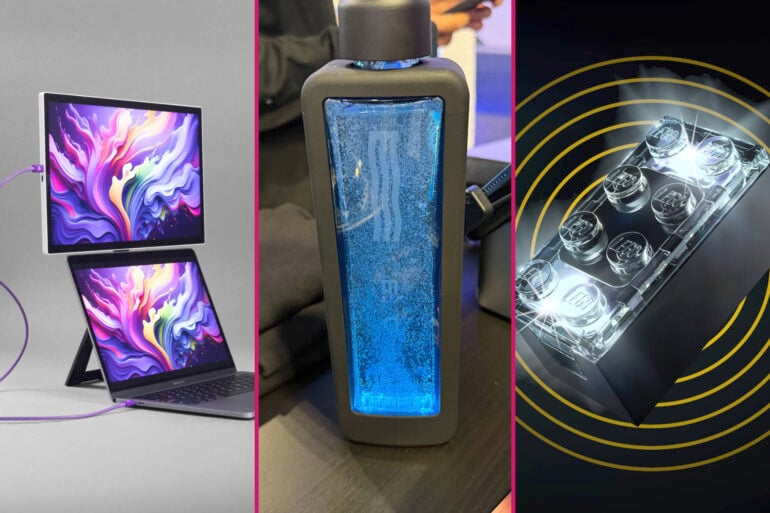
Of everything I saw at CES 2026, these were the best, the worst, and the weirdest gadgets from one of the biggest consumer tech shows on earth.
The Best
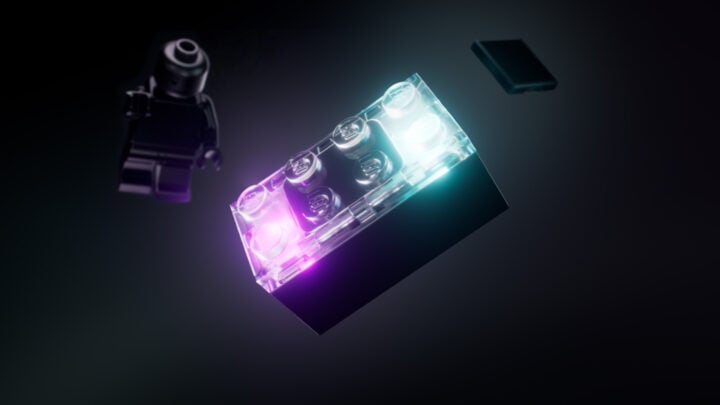
Lego Smart Play System
Image: Lego.
Lego is touting this as the biggest update to the Lego system of play since the 1970s. At first, I was sceptical about that massive claim, but the more I interact with it, the more I can see that this is a huge shift in how kids interact with Lego.
I love that it doesn’t have any way to connect to a screen or app, so there’s not going to be any begging to use mum’s phone. It’s just about building and playing with Lego, and that’s such a smart move for the brand. I can’t wait to see what kids make with it.
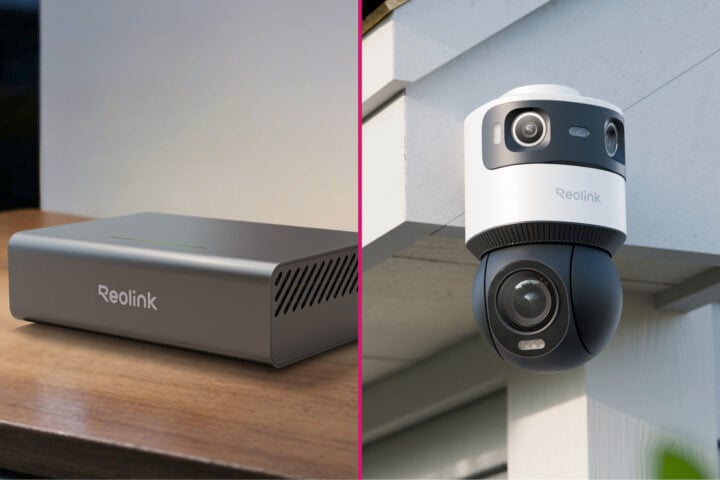
Reolink’s subscription-free home security ecosystem
Images: Reolink.
I’m so sick of every single thing requiring a subscription, and so many security cameras uploading footage to the cloud. Reolink’s whole deal is about not doing any of that. It’s got old-school features (like a box that is in your home which can record your footage, no internet connection requirement, and no subscription fees) with modern features like AI people detection, the option to have wired or wireless cameras, and optional solar panels.
It’s a bit more expensive to get started because you’re buying everything up front, and they’re not selling your data for advertising purposes. But if you like the idea of buying security cameras once and owning them forever, this is the brand to watch.
Samsung’s big TV
Image: Alice Clarke.
I love a big TV. I love a pretty TV. Samsung launched a massive 130-inch Micro RGB TV at CES, and while there’s no universe in which I will be able to afford it, I just enjoy living at the same time as a TV that big, which looks that good. It seems right.
I can’t wait for 2040 when every home has a 100-inch screen.
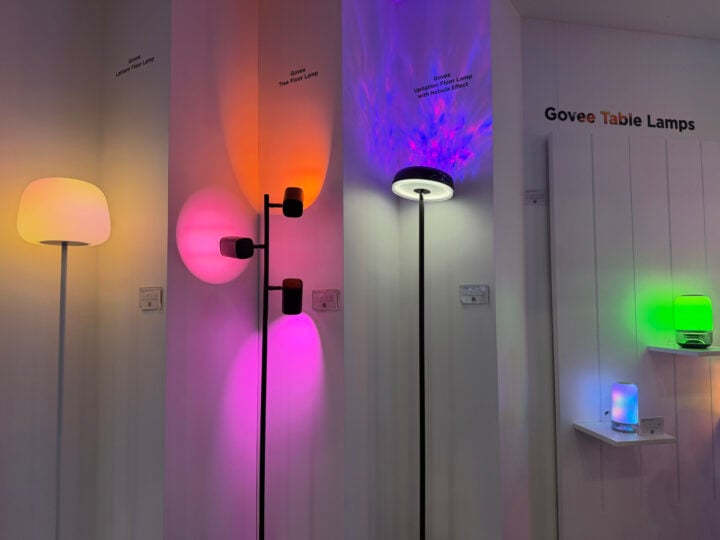
Govee Uplighter Floor Lamp with nebula effect
Image: Alice Clarke.
Sure, this is just a lamp, but it looks so beautiful that I couldn’t not feature it.
By day, it’s just a really nice lamp, but by night, it’s a really nice lamp that also projects a nebula effect on the ceiling. I’m here for the aesthetic, the whimsy, and the practicality. It’s the mullet of lamps, and it’s already on my birthday wish list.
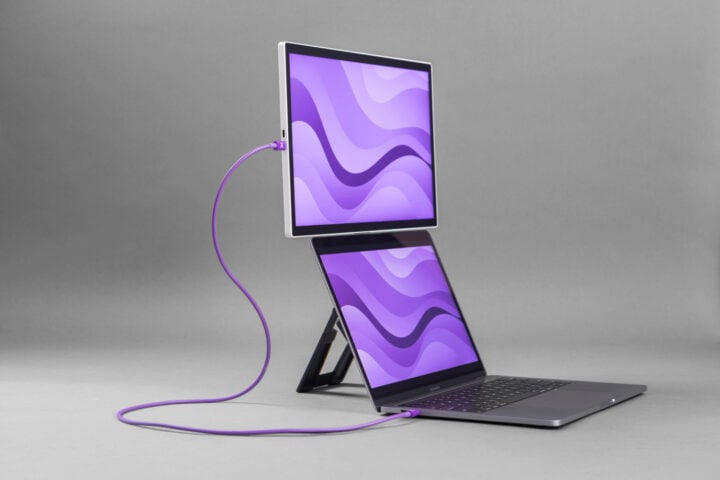
Espresso Displays’ more affordable portable monitor
Image: Espresso Displays.
I love Espresso Displays. It’s exciting to see a small Aussie hardware company do well on the global stage, and it helps that they make a damn good product.
However, for those who balk at the idea of spending $669+ on a portable display, they’ve just announced the new Espresso Lite 15. It’s still thin, light and Full HD, while omitting a few of the top-tier models’ premium features to sell for US$249 (which translates to around AU$360).
I can’t wait to get my hands on the new screen to put it through its paces.
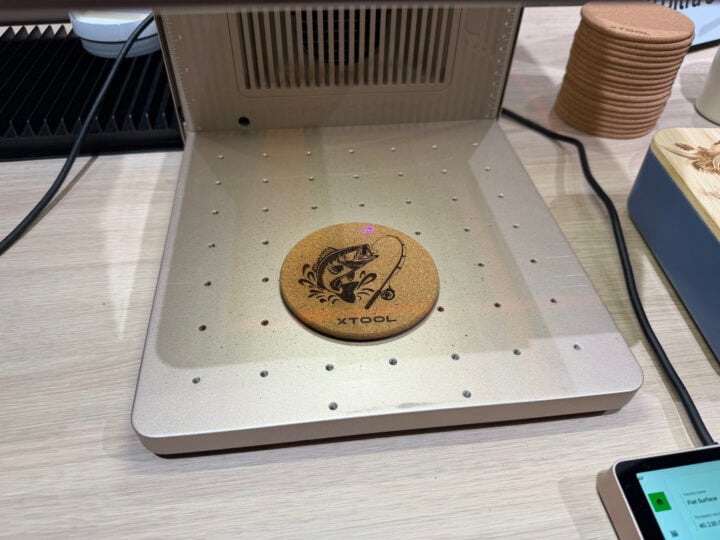
xTool
Image: Alice Clarke.
I have been watching xTool videos for ages and always wanted to try a machine in person. There was one at CES, and it didn’t disappoint.
xTool makes a wide range of crafting tools, and I tried the F2 Ultra UV, which has a ridiculously tiny laser for engraving. I watched it engrave a name on a pendant in less than three seconds. It also did a detailed engraving on a large cork coaster in under three minutes.
Because it has such a tiny laser dot, it’s capable of doing small, detailed work as well as (if you’re patient) larger images. It’s able to laser engrave products with writing or images so small it can only be seen with a microscope.
It was extremely impressive for a hobby product. The applications are fascinating, and hopefully, I’ll get to go hands-on with more of xTool’s range this year.
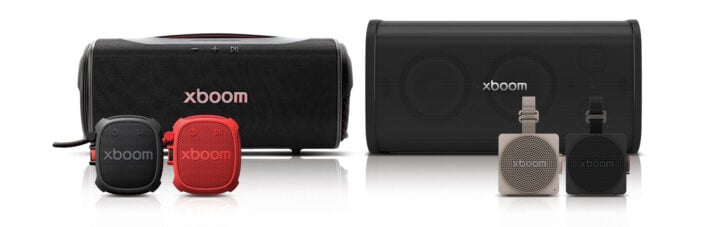
Second-generation LG Xboom Speakers
Image: LG.
Look, I will admit that when LG first announced the Xboom speakers, I didn’t think they were worth paying attention to. I still hate the AI radio station element, but having now sat down with will.i.am and had him take me through what he looks for when tuning the speakers, and hearing his passion for them (and how good they sound), I’m keen to get my hands on them.
They’re such a great-sounding speaker for the size and price. Keep an eye out for that interview coming soon, and a review later in the year.
Corsair Galleon 100 SD
Image: Corsair.
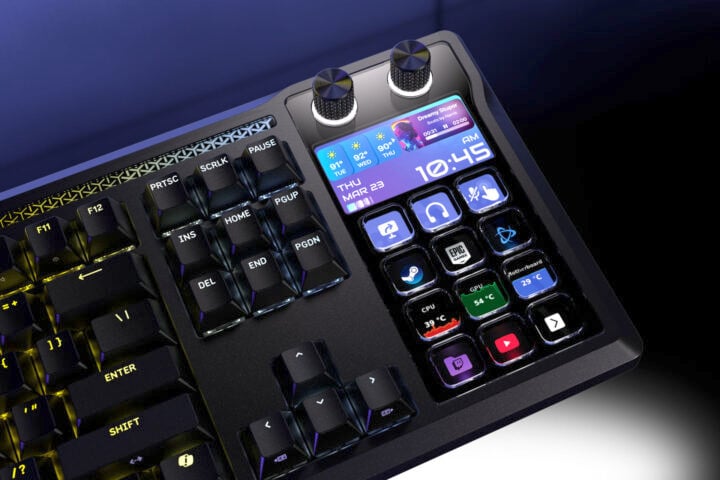
This keyboard was one of my highlights of the show. There are just so many uses for a precise keyboard with an Elgato Stream Deck+ built in. It’s going to be amazing for gamers, streamers, editors, and people who have to work with a lot of shortcuts. Also, people who just like shiny things.
We’re going to have a review of this coming up really soon, so that’s something to look forward to.
The Worst
Generative AI everything
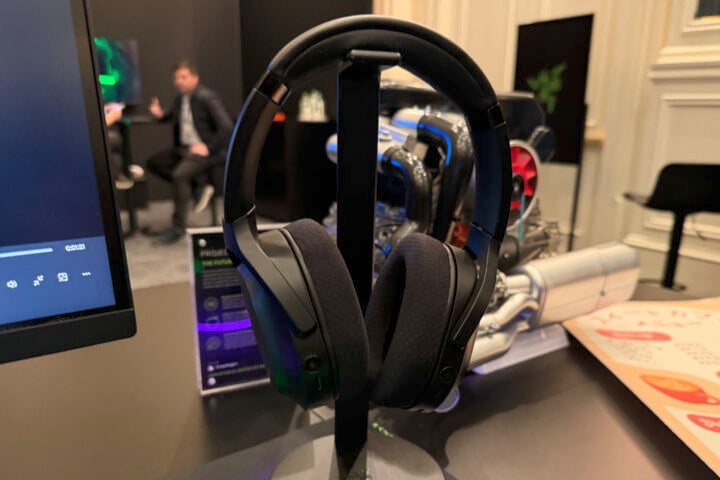
Project Motoko, Razer’s concept AI headset. Image: Alice Clarke.
Fun fact: if you made a drinking game out of taking a sip every time someone mentioned AI at CES, you would die. I’m not even talking about alcohol poisoning; you’d overdose on water.
I’ve mentioned numerous times why I dislike generative AI so much, but what really got me at CES was how irresponsibly the technology is being used. We’ve had it around for long enough now that we know the potential risks and harms, and instead of building against that, the trend of desktop anime waifu holograms with ChatGPT or Grok powering them seems designed to make people lonelier and worsentheirmentalhealth.
Not to mention all the AI glasses and AI headsets that are a privacy nightmare. Having all these announcements happen at the same time as the scandal of Grok’s new image creation tool being used for exactly what you’d expect (making disturbing deepfake images) was just such a disconnect.
Seeing the companies hoping to make a quick buck off a fad just ignoring the real-world harms of child sexual abuse material being created at an alarming rate by the technologies they were touting was just absolutely shameful.
The Weirdest
Hydrogenated water bottles
Image: Alice Clarke.
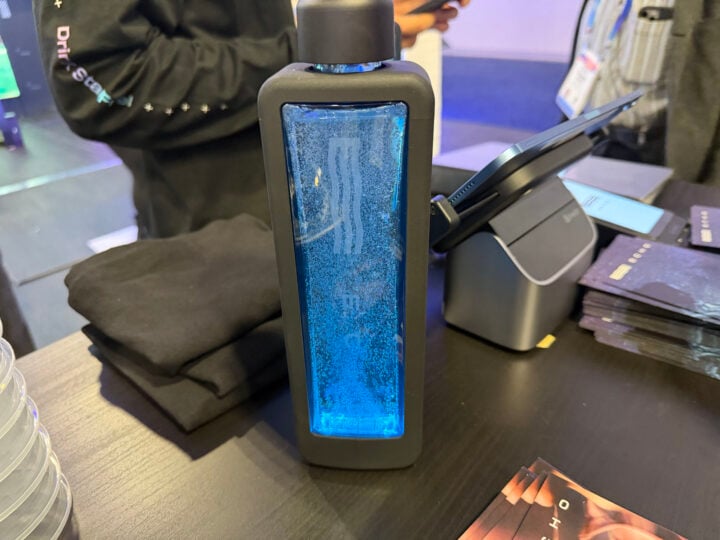
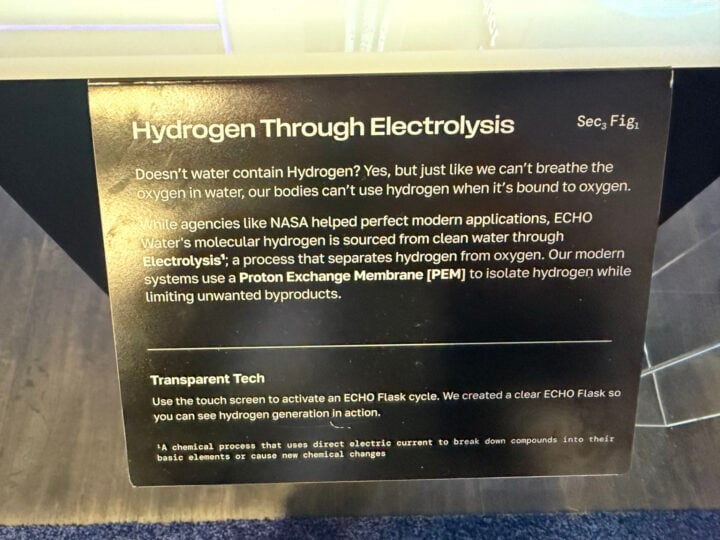
How much would you pay for a water bottle that, according to the woman leading the demonstration, removes some of the oxygen and hydrogen from your water, and then only puts back the hydrogen?
Before you answer, what if I also told you that it’s touted to possibly cure COVID-19, help you heal from cancer, reduce pain, reduce inflammation, improve flexibility and cognitive performance, reduce allergy severity, boost mitochondrial health, slow aging, speed up wound healing, make your skin glow, improve your gut health, improve your immunity and help you lose weight (all things mentioned by people working on the booth)?
So far, there’s no firm evidence that hydrogen water is anything more than a placebo for humans. But it sounds fancy, it’ll give some people hope of impossible cures or improvements, and it’s very expensive. So, there’s probably a market for it if they sell it with Ivermectin.
The woman at the booth assured me that the water isn’t changed in any way, that it’s still the same water, just with more hydrogen. I drank some, and it tasted a bit gassy but otherwise fine.
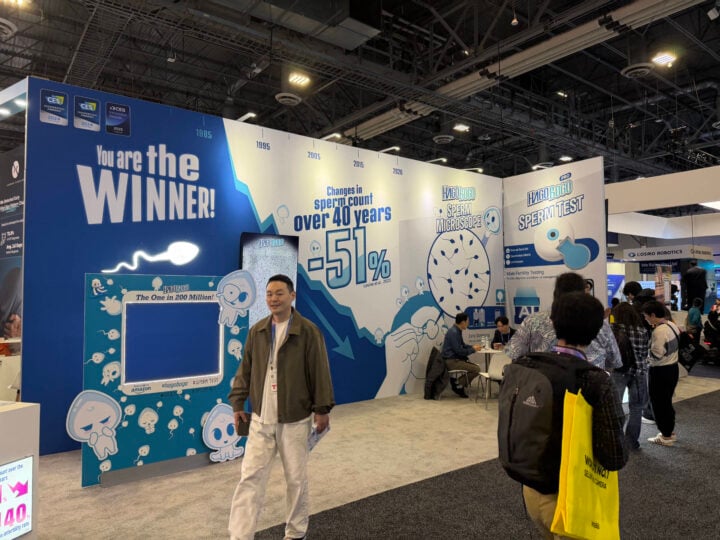
Hago Bago sperm microscope
Image: Alice Clarke.
If you ever wanted to know your sperm count and how your swimmers are doing, you could go to a fertility specialist to get it professionally tested. Or you can buy a US$20 kit on Amazon and use an app to take a photo of it and analyse it for you. Korean health tech company Intin has just the thing.
Is it accurate? Who can say? I have my doubts about my iPhone’s ability to moonlight as a microscope. But it seems like a good place to start if people are having trouble with their fertility.