
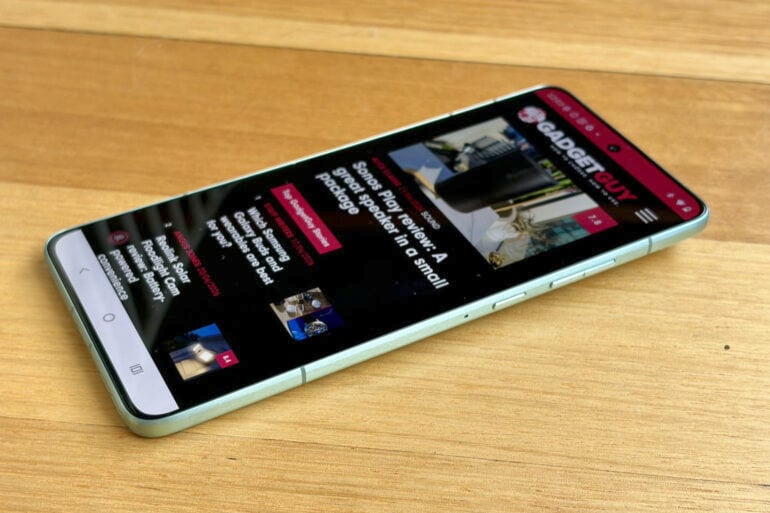
Amazingly thin and light, the Motorola Edge 70 is quite the fashion statement.
Motorola is one of the most prolific handset makers, while the Edge range sports premium styling to help it stand out from the crowd.
Over the years, we’ve seen various variants of the Edge 30, Edge 40 and Edge 50 released in Australia. Last year’s standard Edge 60 didn’t make it to our shores, but we did get the $699 Edge 60 Fusion and $1,199 Edge 60 Pro.
If the standard Edge 60 had come to Australia, it likely would have cost $899, considering that the standard models tend to be $200 more expensive than the Fusion models. That was a $100 price jump on the previous year’s Edge 50 range.
This time around, it seems we’re only getting the standard $899 Edge 70 and the $699 Edge 70 Fusion. So the price hasn’t risen from last year’s Edge 60 range, but instead, Motorola has stripped out one key feature.
Table of contents
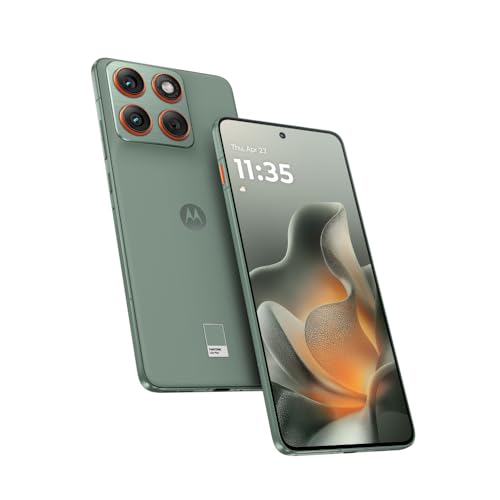
Motorola Edge 70 first impressions
It seems fairer to compare the new Motorola Edge 70 to the old standard Edge 60, even though it didn’t come to Australia, rather than compare it to the Edge 60 Fusion. The Fusion models tend to sacrifice a few features to keep the price in check.
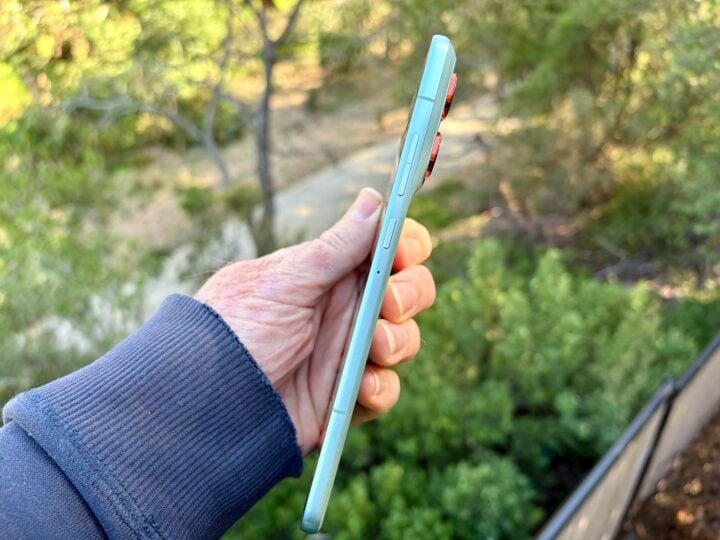
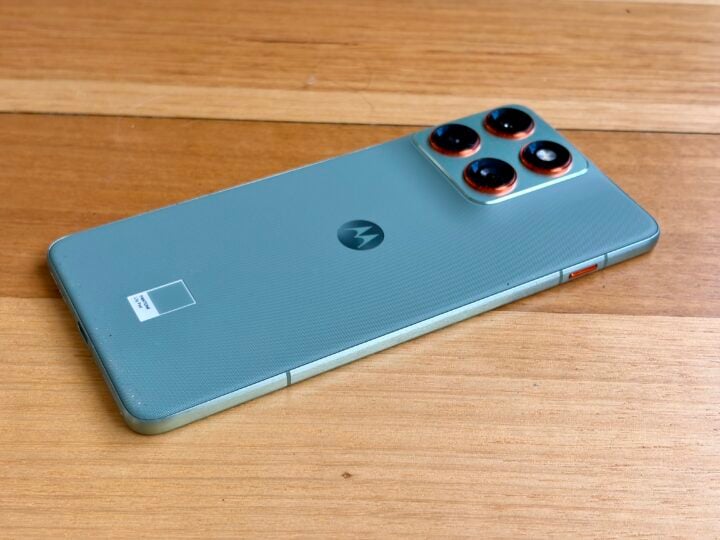
Impressively, Motorola has managed to trim an already slender design, making the Edge 70 only 5.9 mm thick while tipping the scales at 159.9 g. Of course, this ignores the prominent camera array, which roughly doubles the thickness of the handset, but the body still feels impressively thin and light in your hand.
It features an aluminium frame and “nylon-inspired” silicone polymer back, with different finishes depending on the colour. The textured back helps add some grip to what could otherwise be a very slippery handset.
There’s even a $1,099 “Crystals by Swarovski” version which features real Swarovski crystals and a soft Pantone Cloud Dancer finish, if you’re into that sort of thing.
The biggest change compared to the old Edge 60 (and Edge 50) is that the new Edge 70 has lost the standalone 10 MP telephoto lens with 3x optical zoom.
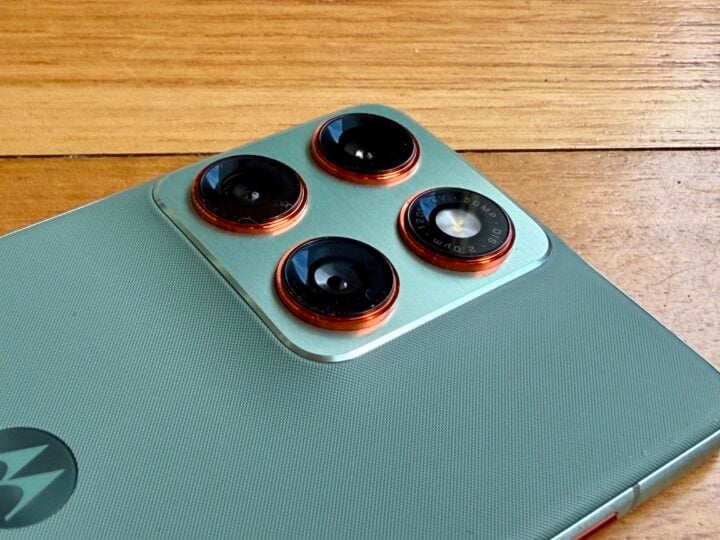
Instead, the Edge 70 only features 50 MP wide and 50 MP ultrawide rear lenses, plus a 50 MP selfie lens. It’s a major blow for those who love a good triple-camera rear array.
While the rear array would appear to feature three lenses and a flash at the top right, the bottom right sensor is actually a light/depth sensor to support enhanced portrait, bokeh and exposure.
Turn the Edge 70 phone over, and you see that it’s still an impressive 2712 × 1220-pixel, 6.7-inch display. It sticks with the Edge 60’s decision to abandon the “Endless Edge” screen with bevelled edges, meaning it looks a little less elegant.
The Edge 70’s screen technology sticks with pOLED, delivering 4,500 nits brightness to support High Dynamic Range. This reveals more details in the brightness highlights and deepest shadows, with support for HDR 10+ but not Dolby Vision.
You’ve also got stereo speakers supporting Dolby Atmos, but no old-school 3.5 mm headphone jack.
The handset retains the Motorola standard configuration of a well-placed power button on the right, with volume buttons above, and a fingerprint reader is built into the screen.
The big addition is the introduction of a dedicated Moto AI button on the left, following the trend of most Android makers to put AI features at your fingertips.
Motorola’s AI features revolve around note-taking and summarising notifications, along with accessing Copilot and Perplexity – all pretty standard stuff these days.
Like most Motorola phones, the Edge 70 comes with a basic transparent protective case. It also features an IP68 rating to ensure it’s dustproof and waterproof up to 1.5 metres for 30 minutes – meaning it should survive an unexpected swim.
Motorola Edge 70 specifications and price
| Display size | 6.7-inch, 20:9 aspect ratio |
| Display resolution | 1220 x 2712 pixel, 448 ppi |
| Display technology | Extreme AMOLED 100% DCI-P3 colour space 10-bit; Over a billion shades of colour Refresh rate up to 120 Hz Peak Brightness: 4500 nits Touch sampling rate: up to 300 Hz |
| Bands | 2G GSM, 3G WCDMA, 4G LTE, 5G Sub-6 |
| Chipset | Snapdragon 7 Gen 4, 8-core QTI SM7750 |
| GPU | Adreni 722 |
| Rear cameras | 50 MP wide 2.0 µm Ultra Pixel All-pixel focus f/1.8 aperture OIS |
| 50 MP Ultrawide 12mm focal length 1.28 µm Quad Pixel 120° field of view f/2.0 aperture Auto focus Macro |
|
| Front camera | 50 MP 1.28 µm Quad Pixel f/2.0 aperture |
| RAM | 8 GB LPDDR5X |
| Onboard storage | 256 GB uMCP |
| microSD slot | No |
| SIM | Dual SIM (1 Nano SIM + eSIM) |
| Charging | USBC-2.0 68 W TurboPower 15 W wireless |
| Battery | Silicon-Carbon 4800 mAh |
| Wi-Fi | Wi-Fi 6E – 802.11 a/b/g/n/ac/ax 2.4 GHz • 5 GHz • 6 GHz Wi-Fi hotspot |
| Bluetooth | 5.4 |
| Operating system | Android 16 |
| Security | On-screen fingerprint reader Face Unlock ThinkShield |
| Ruggedness | IP69/IP68 underwater protection MIL-STD 810H Corning Gorilla Glass 7i |
| Dimensions | 159.9 x 74.3 x 5.99 mm 159.9 x 74.3 x 6.33 mm [Crystals by Swarovski] |
| Weight | 159g 163g [Crystals by Swarovski] |
| Colours | Pantone Lily Pad, Pantone Gadget Grey, Pantone Cloud Dancer, Pantone Bronze Green |
| Price (RRP) | $899 |
| Warranty | 2 years |
| Official website | Motorola Australia |
Features
The Motorola Edge 70 ships with Android 16, although the once-low bloatware count has started to creep up. It offers the option to unselect bloatware during set-up, yet somehow those apps are still installed.
The good news is that the handset gets four years of OS upgrades and five years of security updates, which is not the best around but is far more generous than what you get with the cheaper Motorola handsets (yes, I’m looking at you, Moto G57). For comparison, the high-end $1,499 Motorola Signature gets seven years of updates.
Peeking under the bonnet reveals that the Edge 70 has switched back from MediaTek Dimensity to Qualcomm Snapdragon silicon. The Snapdragon 7 Gen 4 powerplant is accompanied by 8 GB of RAM, plus the option to commandeer another 2 GB of virtual RAM from the 256 GB of internal storage.
When it comes to connectivity, the Edge 70 supports Australia’s sub-6 GHz 5G networks but not faster millimetre wave 5G. It’s accompanied by Wi-Fi 6e and Bluetooth 5.4.
To keep things chugging along, there’s a 4,800 mAh battery, a slight drop from what you’d expect. It’s a silicon-carbon (Si/C) cell, which offers a greater energy density and assists with the slender design. The handset should easily be able to go for 24 hours before recharging if you don’t push it too hard.
When it comes to recharging, you’ve got the advantage of 68 W TurboPower fast charging via USB-C 2.0, but no AC adaptor in the box, or 15 W wireless charging.
Quality
Put to the test, the Motorola Edge 70 returns reasonable Geekbench 6 scores of 1,324 single-core, 4,122 multi-core and Open GL 4,726 – enough for day-to-day tasks.
| Phone | CPU single-core | CPU multi-core | GPU |
| Apple iPhone 17 Pro Max | 3,768 | 9,443 | 45,451 |
| Oppo Find X9 Pro | 3,165 | 9,418 | 20,447 |
| Apple iPhone 17 | 3,520 | 9,057 | 37,161 |
| Samsung Galaxy S25 Ultra | 2,360 | 8,911 | 14,671 |
| Google Pixel 10 Pro | 2,317 | 6,455 | 3,233 |
| Oppo Reno 15 Pro | 1,555 | 6,330 | 11,828 |
| Apple iPhone 16e | 2,679 | 6,144 | 23,732 |
| Motorola Edge 60 Pro | 1,432 | 4,695 | 9,107 |
| Google Pixel 10a | 1,730 | 4,501 | 8,795 |
| Samsung Galaxy A57 | 1,389 | 4,435 | 6,674 |
| Motorola Edge 70 | 1,324 | 4,122 | 4,726 |
| Samsung Galaxy A56 | 1,364 | 3,898 | 6,539 |
| Samsung Galaxy A37 | 1,148 | 3,445 | 4,046 |
| Motorola Edge 60 Fusion | 1,050 | 3,014 | 2,581 |
Those single/multi-core figures put it close to the similarly priced $749 Samsung Galaxy A57 and $849 Google Pixel 10a – both of which are arguably more attractive Android handsets, even if they don’t look as pretty. It’s worth noting those handsets seriously outgun the Edge 70 in terms of GPU graphics grunt.
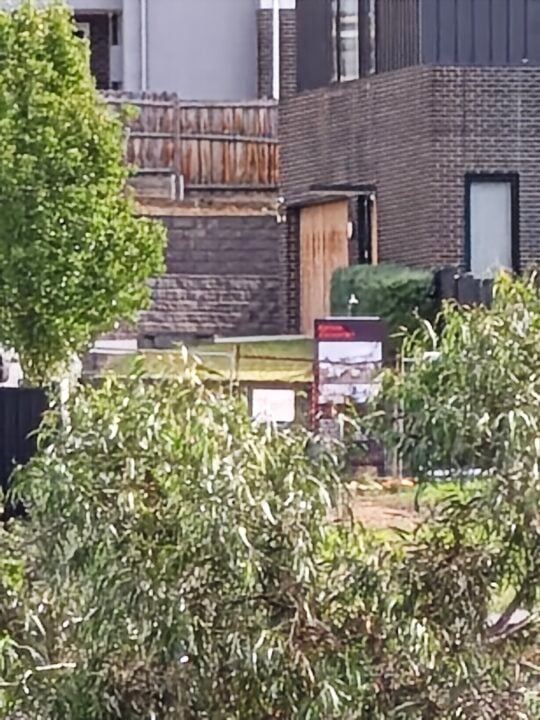
When it comes to photography, the 50 MP main shooter offers decent results, with plenty of contrast and detail, even if things look a tad too processed and the colours a fraction overblown.

It’s great to see no drop in quality when switching between the wide and ultrawide lenses. Of course, there’s no optical zoom – 2x digital still looks great, but things get murky at the maximum 20x digital, especially when you don’t have AI helping fill in the details like on the 100x super zoom handsets.
Portraits and selfies offer natural-looking bokeh thanks to that extra sensor. It’s great to see Motorola hasn’t enabled aggressive selfie beautification by default, revealing life’s little imperfections.
Whenever you’re taking a selfie in low-light conditions, the screen around your face brightens up to shed a little more light on the situation.

Who is the Motorola Edge 70 for?
If you’re looking for a very slim and sexy handset that offers change from a thousand bucks, the Motorola Edge 70 is very tempting. But if you care more about substance than style, it’s worth playing the field.
Two rear 50 MP lenses and a third around the front sounds impressive, even though we all know megapixel counts aren’t everything. Losing that dedicated telephoto lens is a major blow to the Edge 70’s value proposition, even if it was only 3x optical zoom.
Without a telephoto lens, it’s much harder to stand out from similarly priced dual-lens competitors like the Samsung Galaxy A57 and Google Pixel 10a – both of which are better all-rounders with more graphics grunt that get more years of OS updates.
GadgetGuy occasionally uses affiliate links and may receive a small commission from purchased products.
The post Motorola Edge 70 review: Sleek and slender appeared first on GadgetGuy.


0 comments:
Post a Comment