
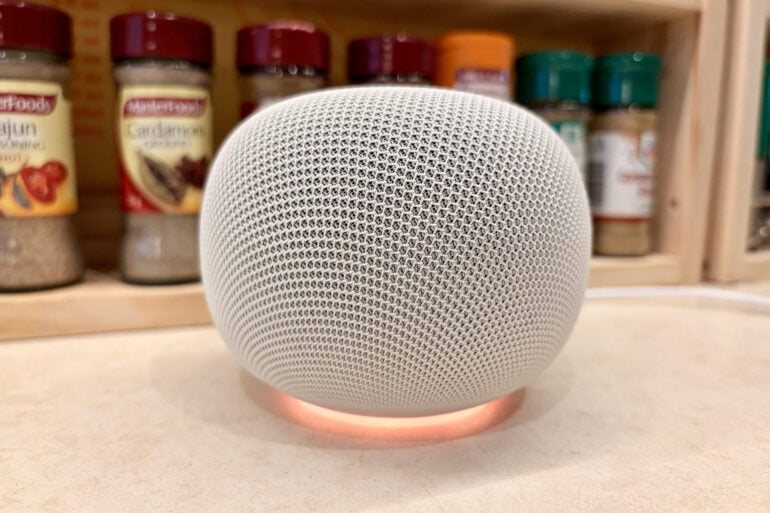
Bringing Gemini Live to life, the latest Google Home Speaker is ready to engage in deep and meaningful conversation.
It’s almost a decade since the original Google Home smart speaker was unveiled, reaching Australia before the Alexa-powered Amazon Echo and later joined by Apple’s Siri-powered HomePod.
All three talkative smart assistants have gradually grown smarter and more life-like over the years. Not only in their ability to perform more complex tasks, but also in their ability to engage in natural language conversations.
Over that time, we’ve seen smart speakers and screens of all shapes and sizes. The new $199 Google Home Speaker is the first from Google since the launch of the $149 Google Nest Audio back in 2020.
The new Google Home Speaker costs more than the old Nest Audio, and you get a lot less actual speaker in return, but the focus is less on sound quality and more on a shiny new lamp for Google’s more powerful genie.
Table of contents
- First impressions
- Specifications and price
- Google Home Speaker safety briefing
- Gemini versus Gemini Live
- A meeting of two minds
- Who is the Google Home Speaker for?
First impressions
I honestly laughed aloud when I opened the box to discover that the latest Google Home Speaker looks a hell of a lot like the snowglobe-style Apple HomePod Mini and Amazon Echo (4th Gen).
I laughed not only because Google’s smart speaker design team has fallen into line with its rivals, but also because the size of the Google Home Speaker immediately looks like a major step down in sound quality compared to the much larger Google Nest Audio – which has lived in the corner of my kitchen bench for six years, since it usurped the original Google Home.
It’s a valid first impression; once you fire up the new Google Home Speaker, you soon discover its 360-degree sound is absolutely no match for the old Google Nest Audio – especially when it comes to the low end. The sound is a bit brash and flat, especially once you crank the volume, and you miss out on graphic equaliser settings.
This new speaker has no chance of stealing the Nest Audio’s pride of place in my small kitchen. It’s no surprise, considering the Google Home Speaker packs a single 58 mm driver, while the Nest Audio packs a 75 mm mid-woofer and a 19 mm tweeter.
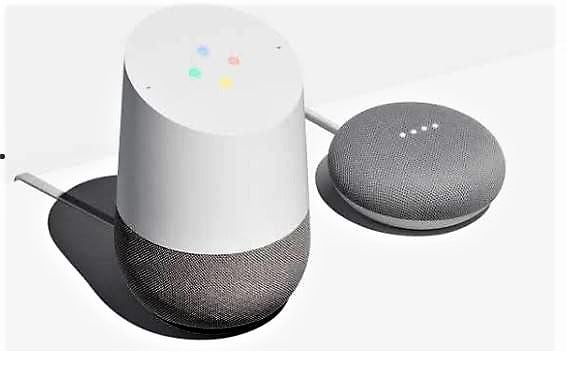
The new Google Home Speaker is actually much closer in size and style to the 2019 Google Nest Mini that lives on the sink in the children’s bathroom. The Google Home Speaker has a slightly larger footprint and stands about twice as tall as the Nest Mini, so it needs a little more space.
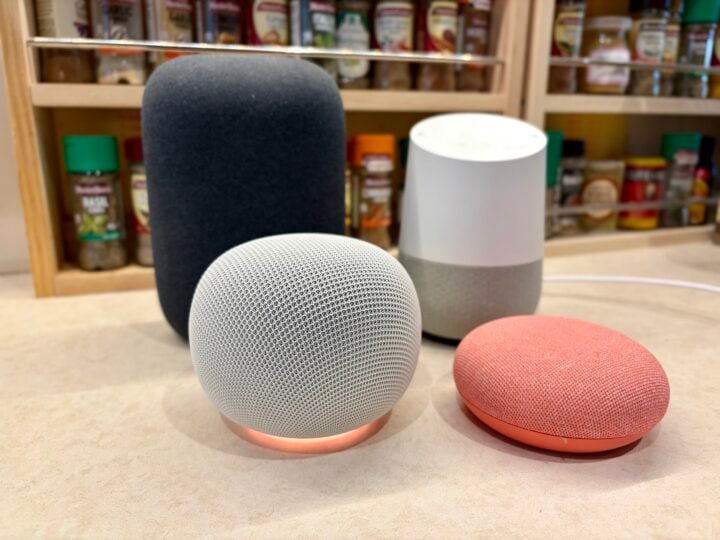
It’s no surprise that Google spruiks its new speaker’s audio credentials by comparing them to the Nest Mini, boasting a driver twice the size and 2.5x stronger bass. Yes, the new Google Home Speaker certainly does sound better than the Nest Mini, let’s just forget to mention the superior Nest Audio.
Shying away from sound quality in favour of a compact design has been the trend for several years, with Google abandoning the Sonos-esque Google Home Max and Amazon retiring many of the larger Echos. Only Apple has stuck to its guns by releasing the beefy HomePod 2 alongside the HomePod mini.
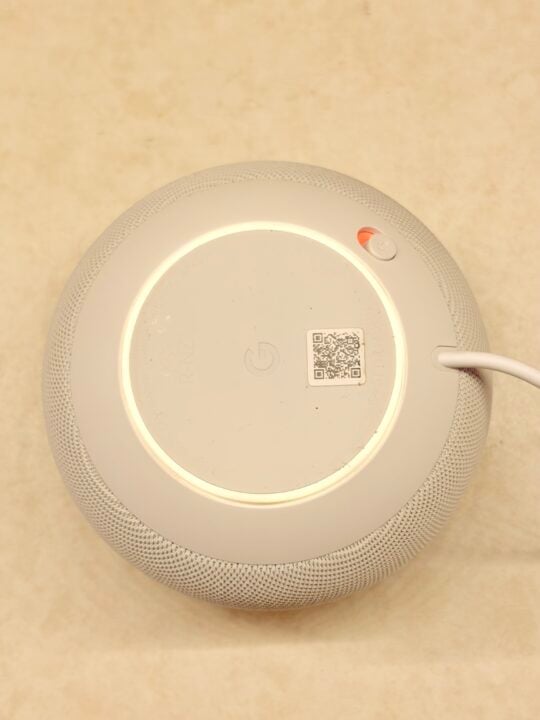
The new Google Home Speaker retains the same design as the Google Nest Mini, with tiny light-up touch-sensitive volume buttons and a central play/pause button hidden under the mesh. There’s still a mute switch at the rear, plus Google has added an Echo-style glowing status ring to the base.
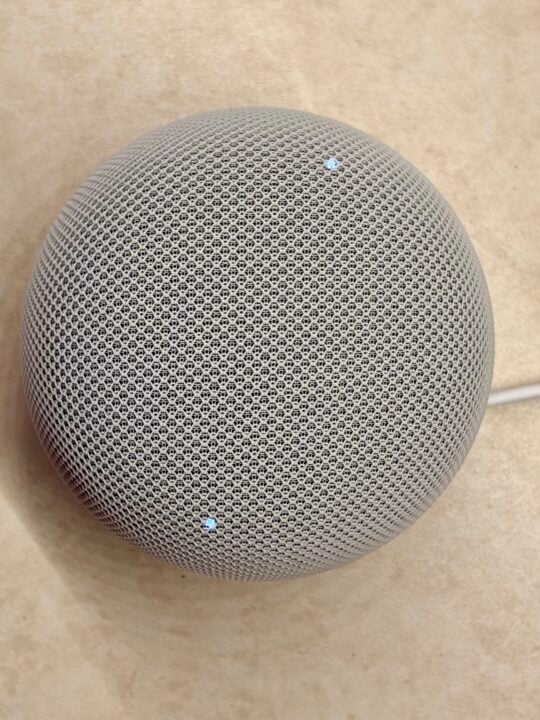
The new speaker isn’t prepared to share the stage, with Google recently discontinuing the Nest Audio and Nest Mini, leaving the Google Home Speaker as the tech giant’s only smart speaker. At $199, it’s now a lot more expensive to dip your toe into the Google speaker ecosystem than snapping up a $79 Nest Mini.
Those two old Nest speakers are still valuable, considering that mine seem perfectly capable of running the exact same Gemini and Gemini Live experience as this new Google Home Speaker.
The only improvements are that the Google Home Speaker steps up to Wi-Fi 6 and Bluetooth 5.4, plus it is now a Thread border router as well as a Matter hub. This means it can connect to more third-party smart home gear, similar to the Google Nest Hub smart screen.
Google Home Speaker specifications and price
| Speaker | Omni-directional sound with 58 mm full-range driver |
| Microphones | 3 far-field microphones |
| Privacy | Physical mute switch |
| Chipset | Quad Core A55 2.0 GHz with NPU |
| RAM | 1 GB LPDDR4 |
| Onboard storage | 4 GB EMMC |
| Power | AC via 30-watt USB-C adaptor |
| Wi-Fi | Wi-Fi 6 802.11ax (2.4 GHz/5 GHz) |
| Bluetooth | Bluetooth 5.4 |
| Smarthome | Thread 1.3 border router (2.4 GHz) Works as a hub for Matter with Google Home |
| Dimensions | 86.6 mm height, 107 mm diameter |
| Weight | 396 gm |
| Colours | Hazel or Porcelain (Jade and Berry are US-exclusives) |
| Price | $199 RRP |
| Warranty | 2 years |
| Official website | Google Australia |
Google Home Speaker safety briefing
Setting up the Google Home Speaker is very straightforward, especially if you’ve already used the iOS or Android Google Home app to set up other smart home gear.
The catch is that adding the Google Home Speaker to your home will permanently replace Google Assistant with Google Gemini on all of your Google smart speakers. Thankfully, this doesn’t cripple third-party Google-compatible devices like the Lenovo Smart Clock in my kids’ bedrooms, even if they can’t run Gemini Live.
Google has recently been pushing homes with existing Google speakers to upgrade to Gemini, but I’ve been putting it off because these kinds of updates tend to break old features. So far, I haven’t encountered any glaring issues.
What is interesting is how much more Google is focused on warning people about the shortcomings of smart assistants, compared to when it launched its first smart speakers 10 years ago.
I was at Google I/O 2016 in California when they launched the original Google Home, and no one wanted to acknowledge the potential dangers of putting an all-knowing smart assistant in your home with absolutely no ability to restrict access for children.
These days, the new Google Home Speaker comes with copious warnings about not trusting Gemini or letting children speak to it unsupervised. Along with filters to restrict certain features and topics of conversation for children and voices it doesn’t recognise, Google’s extensive disclaimers include:
Gemini for Home isn’t a person: Teach children that Gemini for Home is a tool, not a person. Help them understand that even though they can chat with Gemini for Home, it doesn’t have feelings and isn’t a person to confide in.
Keep personal info private: Teach children that their private information should stay private. Remind them not to share sensitive details like their full name, home address, school name, phone number or family information in their chats.
Gemini for Home can make mistakes: Help children think critically about answers and encourage them to double-check responses from Gemini for Home.
Gemini for Home can make mistakes: don’t rely on it for professional advice.
That’s a lot of provisos and quid pro quos for an all-powerful genie. I don’t know, Abu, he probably can’t even get us out of this cave.
Gemini versus Gemini Live
With those extensive disclaimers out of the way, it’s time to start chatting with the Google Home Speaker. Of the smart assistant’s new personas, Calathea seems closest to the original female Australian voice (she might be called Eucalyptus on some devices). It’s still jarring if you’ve been listening to the old voices for a decade.
Gemini is determined to make things personal, so I’ll refer to Calathea as “her” rather than “it”. Just to confuse things, there are actually two genies of the lamp: you can choose between talking to Gemini or Gemini Live, even though they use the same voice.
Gemini is the replacement for the old Google Assistant, summoned as before with “Okay, Google” and performing the same tasks while speaking in a slightly more natural manner.
Like Google Assistant, she supports continued conversation, so you don’t need to keep saying “Okay, Google”, but she can handle more complex queries. Gemini also tends to offer longer answers to questions, speaking with authority on topics where the old Google Assistant would cite its source – something that rubs me the wrong way.
For example, ask Google Assistant “How many months in the Roman calendar?” and she responds. “10 months, according to the website webexhibits.org…” before launching into more detail. Meanwhile, Gemini simply launches into an answer with no acknowledgment of the source, perpetuating AI’s terrible habit of scraping information without attribution or permission.
Instead of chatting with Gemini, you can say “Okay, Google, let’s talk” to summon Gemini Live. It’s a much more conversational experience, which lets you interrupt and ask follow-up questions. She also copes better with conversations where you stumble and change direction mid-sentence.
A meeting of two minds
Rather than asking her for specific answers, Gemini Live is more useful for exploring topics. We started off talking about Iron Maiden’s early influences and then pivoted to a long chat about the Western Bulldogs’ chances of making the finals, including a look at our next few matches and an explanation of the AFL’s new Wildcard finals round.
Gemini Live doesn’t have strongly held opinions, which sometimes makes it difficult to have a real conversation.
When I slagged off the Wildcard finals round as a shameless grab for cash by the AFL, she didn’t disagree with me but said it was a controversial issue and presented both sides of the argument. That’s a diplomatic approach, but a real person would have an opinion of their own and take a stance, even if you both agreed to disagree.
If you push her for an opinion on most topics, she says “as a home assistant, I don’t have opinions” and gives you a balanced answer. But asked her opinion on whether the world is flat or 5G causes COVID, and she categorically states that the “scientific consensus” is otherwise.
Retort with “I disagree”, and she says “that’s fair” before steering the topic into safer waters. It would be interesting to know exactly which topics are locked down and how much leeway she gives crackpots and bigots.
Gemini Live handles flowing conversation and complex topics surprisingly well. What’s particularly interesting is that when the conversation reaches a natural pause, she often asks you an engaging follow-up question to seek your opinion and drive the conversation forward.
She impressed my wife, a high school librarian, with her ability to discuss authors and genres, while linking themes and making reading recommendations. Gemini Live throws in phrases like “oh, that’s such a good choice” when you mention your favourite books, leaning into those sycophantic tendencies that can make personable AI dangerous for some people.
It’s easy to get drawn into conversations with Gemini Live, although, as a cynical tech reviewer, it’s hard to shake the feeling that she’s simply telling me what I want to hear.
She’s also parroting ideas stolen from other sources, particularly scraping the work of my fellow journalists. Realistically, her thoughts on the Western Bulldogs’ chances of making the finals are actually sports journalists’ thoughts that she regurgitates without permission. When I called her out on this, we dove into a discussion on intellectual property, again without her taking sides.
Talking to Gemini Live would seem more natural if she could dial down the perkiness, dial up the moxie and occasionally adjust her tone to suit the topic at hand (think Tony Stark’s Jarvis). Instead, you get the exact same demeanour whether discussing baking a cake or burying loved ones.
Occasionally, she simply stops talking, and it’s hard to know whether you’ve stumped her, hit a nerve, or she’s just encountered a glitch. You sometimes get “sorry, something’s not right”, so we’ll assume it’s just teething issues.
Asking her to tell me about “Adam Turner the technology journalist” was a timely reminder that Gemini Live and her kind simply can’t be trusted to get their facts straight.
After detailing my work as a journalist and corporate writer, she confidently went on to discuss my supposed work as a cybersecurity researcher – the exploits of a different Adam Turner.
When I pointed out her error, she corrected herself and admitted the mistake, but it makes you wonder how much you can trust her when she spouts erroneous information with such an air of confidence. Interestingly, I asked her the same question the next day, and she didn’t make the same mistake.
It’s important to note that Gemini Live isn’t free; it comes with the Google Home Premium subscription – with Google throwing in six months for free if you buy a Google Home Speaker by September 30. Along with Gemini Live, some of the subscription-exclusive features include video storage for Nest cameras, smart notifications when the doorbell detects a person and quick summaries of the day’s events.
Who is the Google Home Speaker for?
The Google Home Speaker is a great fit for Google-centric homes like mine. That said, Apple’s Siri and Amazon’s Alexa are also getting smarter (even though Alexa+ isn’t yet available in Australia), so it’s worth weighing up your options if you’re just starting down the smart home path.
It’s just a shame about the Google Home Speaker’s lowly sound quality. It would be more forgivable if it were pitched as a replacement for the Nest Mini, with a Nest Audio replacement to come. Remember, if you already own a Google Nest Audio, with far superior sound quality, it will happily upgrade to Gemini and Gemini Live. So there’s absolutely no reason to upgrade to the Google Home Speaker, unless you desperately require a Thread border router and nothing else in your home can do the job.
Personally, I don’t think Gemini Live is worth paying for, but you might think otherwise or get value from other aspects of a Google Home Premium subscription.
Finally, just remember, even Google admits you should never completely trust the genie of the lamp.
The post Google Home Speaker review: Deep thought appeared first on GadgetGuy.


0 comments:
Post a Comment