

Qualcomm is everywhere in modern technology. The company’s Snapdragon range of processors is found in most Android phones, as well as other gadgets such as cars, PCs, smart glasses, headphones, and more. In my mind, having the latest processor is nice, but does it really matter?
Indeed, I am writing this on a two-year-old Chromebook. The demands on a processor were very different, even just a few years ago. A lot has changed in the last 12 months alone, primarily on the AI front.
While my attitude coming into this event was that the latest tech was only for heavy users, my mindset has changed. Like the shift from ‘dumb’ phones to smartphones, and petrol cars to electric vehicles, a similar technology shift is happening in the world of mobile processors.
The role of processors in the AI era
Chip manufacturers tailor processor designs to the latest needs of consumers. Now, the aim is to bring AI that people trust to more devices.
Many may resist change and resist AI; it is coming at us at a speed never before seen, and being left behind will happen faster than ever. Who knows where this will take us and how quickly we will need to adapt, but you will need the right gadgets to support this journey. In the minds of the folks at Qualcomm, this involves using the right processor. However, they are also promoting their future as open source, allowing others to join them on this journey.
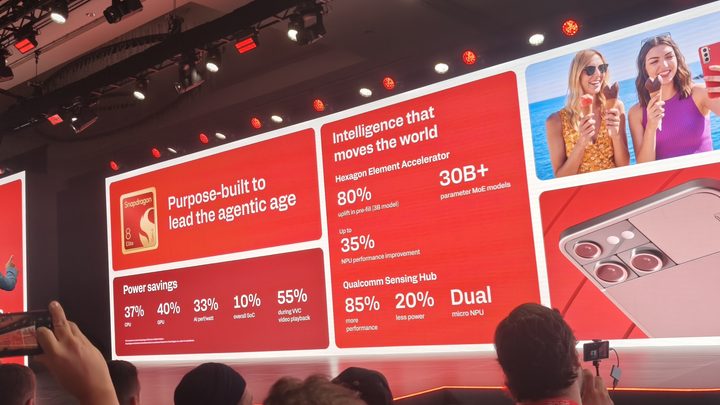
What does this mean for users? To start, companies such as Motorola and Xiaomi recently announced new smartphones that take advantage of the new Snapdragon 8 Elite Extreme Gen 6 and Snapdragon 8 Elite Gen 6 processors.
These phones benefit from reduced power usage and faster processing with record benchmarks driven by a 5GHz processor. They also have better camera support (200MP), the ability to create video in higher resolution up to 8K at 60 frames per second, and then edit that video all on the phone using professional tools including Adobe. Needing a PC to do all this is history.
Any intensive load, like gaming, traditionally creates heat and tends to slow compute power. Qualcomm has addressed this with better heat management, which also helps with battery life. As you would expect, the latest tech is built in to support satellite, Mobile phone, Wi-Fi 8, and Bluetooth, all of which come with industry improvements.
On-device AI improvements
The biggest change, however, is the architecture designed to support AI. A smartphone with Snapdragon 8 Elite Gen 6 technology has more support for on-device AI. Yes, it can happen in the cloud, but privacy and keeping your data local is much more trustworthy. The cloud also comes at a cost, while anything you do on your phone doesn’t require you to buy compute time.

AI agents essentially provide you with an assistant that gets to know you extremely well. The vision is that these agents can learn what your interests are, what you do and don’t like, and how you approach certain situations by watching your every move. This gives your phone context to help you without asking questions or suggestions it already knows the answer to.
With the new Snapdragon chips, a sensing hub is always on and, without needing to power the main processor, can identify individual voices and store context for AI, all within the privacy of the phone. Voice recognition continues to improve, ensuring others can hear you clearly whether that is on a phone call or recording a video clip without separate microphones.
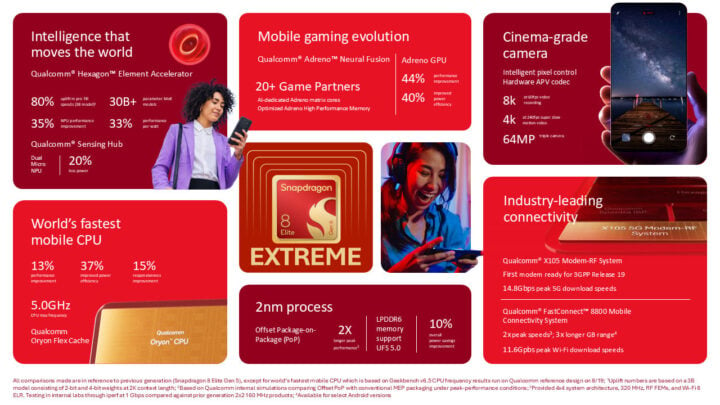
Again, this data and its processing can be housed on your phone, not in shared cloud solutions. This gives you data sovereignty for you only and other connected devices, such as your car, smart glasses, or perhaps a PC.
Snapdragon’s PC evolution
Qualcomm’s processor innovation doesn’t stop with the smartphone, with the latest Snapdragon X Elite chips powering more Windows and Google PCs. According to Qualcomm, the latest Microsoft Surface running a Snapdragon X2 Elite gets 40% more battery life, providing up to 22 hours of battery life, a 95% increase in AI speed, and 60% improved graphics performance. What was once only possible on a high-spec workstation can now be done in the seat of an aircraft from Sydney to London without recharging.

Google also recently launched its new Googlebooks, the company’s attempt at reinventing PCs and bridging the gap between smartphones. Instead of using a 20-year-old PC architecture designed long before smartphones and AI, Google created a PC based on Android that provides a seamless experience between an Android phone and a Googlebook.
You can start a task on one device and complete it on another Qualcomm-powered device. All Android apps will work on Googlebook, and many have already adapted to the desktop experience. Googlebook already shows faster processing, with real-world battery life of 19 hours in lightweight packages.
Modern chips in everyday smart gadgets
Our connected world is growing, and the smart glasses world is also on our doorstep. Meta’s new glasses also use Qualcomm processors. But these glasses are not an extension of our phones; they are a completely independent system because of their built-in processors. Smart glasses can process audiovisual information, providing real-time AI assistance while you wear them.
This same thought process is also added to headphones, earbuds and, in some cases, also with cameras. This technology is already ready to enable the AI world to assist in your day. And it all starts with a tiny chip that completely upends the traditional computing experience.
Angus Jones attended Snapdragon Summit 2026 in Hawaii as a guest of Qualcomm.
The post With powerful AI mobile processors, does a computer chip matter? appeared first on GadgetGuy.


0 comments:
Post a Comment