

Australia’s new emergency alerts system will get a workout next Monday, ahead of the official launch of AusAlert.
Scheduled for Monday 27 July 2026 at 2:00 PM AEST, AusAlert will send a test “Critical Alert” to every mobile device in the country. Devices — including phones, tablets, and smartwatches — will vibrate and play a siren-like sound for 10 seconds. Because it’s only a test, it won’t require any further action.
Designed to warn Australians during times of emergency, like a natural disaster, AusAlert will officially launch in October 2026 as the new national warning system. Monday’s test is part of ensuring it’s ready to go in a few months’ time.
Once fully operational, AusAlert will serve multiple purposes. As the national test will demonstrate, it can be used by the Australian government to warn people about national emergencies. For location-specific dangers, state and territory emergency services can also send an alert.
Alerts under the new system fall under two categories: Critical and Priority. Critical, the type being tested next Monday, indicates that immediate action is needed, like evacuating during a bushfire. Priority still refers to a high level of potential danger, but is intended as a “watch and act” warning to prepare for danger. Priority alerts can be disabled, but not Critical alerts.
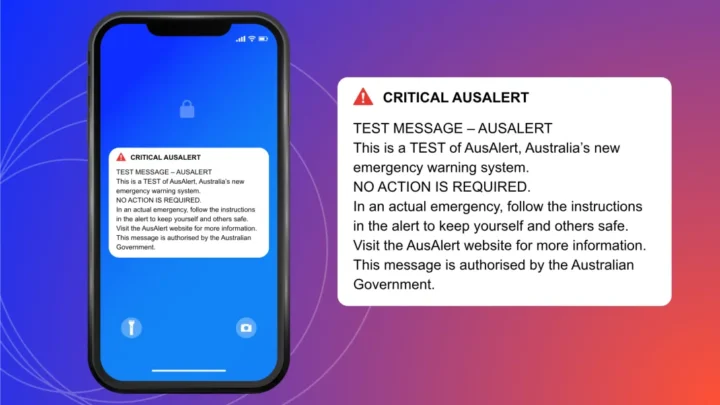
If Monday’s alert may impact someone’s safety, the AusAlert website states that they can either turn off their mobile device or enable aeroplane mode.
Schedule for the AusAlert test per state and territory
According to the official advice, some people will receive the test alert immediately, while others may get it later. Here’s when the test Critical Alert is scheduled for each Australian state and territory:
- Australian Capital Territory: 2 PM AEST
- New South Wales: 2 PM AEST
- Queensland: 2 PM AEST
- Tasmania: 2 PM AEST
- Victoria: 2 PM AEST
- Northern Territory: 1:30 PM ACST
- South Australia (including Broken Hill): 1.30 PM ACST
- Western Australia: 12 PM AWST
- Christmas Island: 11 AM CXT
Due to the nature of the test, some people may not receive the alert. This may stem from factors such as location, device, or not running the latest software.
As the government’s website explains, “the purpose of testing is to understand these real-world differences, confirm the system is working as intended, and improve public information before AusAlert is used in real emergencies”. There’s also a feedback form for those who encounter any issues with the test.
The post PSA: What you need to know about Monday’s AusAlert test appeared first on GadgetGuy.


0 comments:
Post a Comment